Brussels is currently witnessing one of the most effective corporate sleights of hand in recent memory. While you’ve likely heard about the European Union’s push to "green" its digital infrastructure, what you haven’t heard is how the teeth were pulled out of that legislation before it ever bit.
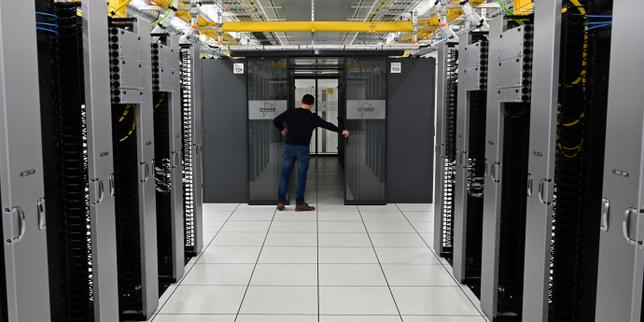
The European Commission recently launched a new rating scheme for data centers, supposedly to shed light on the massive energy and water consumption of these digital warehouses. But thanks to a quiet, surgical lobbying effort led by Microsoft and the trade group DigitalEurope, the public is essentially blindfolded.
Here's the reality: the very data that would allow researchers, journalists, and local communities to hold individual data centers accountable is now legally protected as a "trade secret."
The copy-paste job that saved Big Tech
In 2023, the EU updated its Energy Efficiency Directive (EED). It was a moment of optimism for environmentalists. The goal was simple: if you operate a data center with a power demand of over 500 kilowatts, you have to report your energy use, water consumption, and waste heat reuse.
But then came the "Delegated Act"—the fine print that actually dictates how the law is applied.
Investigative reports and leaked documents show that Microsoft and DigitalEurope didn't just suggest changes; they provided the script. They pushed for amendments that classified almost all Key Performance Indicators (KPIs) for individual facilities as confidential. The Commission didn't just listen; it adopted their wording nearly word-for-word.
Instead of a database where you can see exactly how much water a specific Microsoft or Google facility in Dublin or Frankfurt is sucking up, we're left with "aggregated" national data. It's like being told the average weight of everyone in a city instead of seeing the health report for the person living next door to you. You get the big picture, but you can’t spot the bad actors.
Why trade secrets are the new greenwashing
The industry’s defense is always the same: security and competitiveness. They argue that revealing the power density or cooling efficiency of a specific site would give away proprietary "innovations" to rivals or expose them to cyber threats.
Honestly, that's a stretch. Knowing a building’s water consumption doesn't reveal its source code or its server architecture. It reveals its environmental footprint.
By successfully labeling environmental impact as a "commercial secret," the tech lobby has created a loophole you could drive a truck through. It’s a direct hit to the Aarhus Convention—an international treaty the EU signed that guarantees the public’s right to access environmental information. Legal scholars are already sounding the alarm, noting that this level of secrecy for environmental data is basically unprecedented in the last twenty years of EU law.
[Image of a data center cooling system diagram]
The 36 percent problem
If you think the industry is self-regulating effectively, the numbers say otherwise. Current data shows that only about 36% of eligible data centers have bothered to comply with existing reporting requirements.
When compliance is low and the law is weakened by the very companies it’s meant to regulate, "transparency" becomes a buzzword rather than a policy. The Commission’s internal stance is even more cynical. Sources suggest they fear that if they make the data public, operators will simply stop reporting altogether. It’s a hostage situation where the regulators are afraid of the regulated.
What this means for your local community
This isn't just a wonky policy debate in Brussels. It has real-world consequences for where you live. Data centers are exploding across Europe, with capacity expected to triple by 2030. They compete with local residents for electricity and, more importantly, for water during increasingly common droughts.
- Local scrutiny is dead: Without site-specific data, local councils can’t accurately judge if a new facility is more efficient than the one built five years ago.
- Artificial Intelligence is hungry: The AI boom is fueling a massive construction surge. These "AI-ready" facilities often use even more intensive cooling methods, making transparency more critical than ever.
- Zero accountability: If a facility claims to be "net zero" but refuses to show the math for that specific location, it’s just marketing.
Stop letting them hide the bill
We’re currently in a feedback period for the EU’s rating scheme, which is scheduled for final adoption in mid-2026. If the current draft stands, the Microsoft-authored secrecy clause stays.
You can’t manage what you can’t measure, and you can’t measure what is hidden behind a legal "keep out" sign. If you’re a researcher, an advocate, or just a concerned citizen, the focus needs to shift from the broad "Energy Efficiency" headline to the specific "Confidentiality" clauses in the Delegated Acts.
Pressure works, but only when it's targeted. Demand that the European Commission justifies why a data center's water bill is a "trade secret" while your local factory's emissions are public record. The era of giving Big Tech a pass on environmental transparency needs to end before the concrete for the next thousand data centers is poured.