The structural duality of the North Korean economy defies conventional macroeconomic classification. Observers frequently frame the state through a binary lens of orthodox command socialism or emergent capitalism. This dichotomy obscures the underlying economic reality: a decentralized grey-market apparatus operating under the coercive umbrella of a state-controlled administrative structure. When the public distribution system collapsed following systemic shocks in the 1990s, individual survival shifted from state dependency to informal market entrepreneurship.
Deconstructing this hybrid environment requires analyzing three structural components: the privatization of risk, the regulatory rent-seeking hierarchy, and the state's information monopoly.
The Privatization of Risk and Informal Markets
The dissolution of the public rationing apparatus forced households to internalize survival costs. Without state-allocated caloric or material distribution, citizens turned to unofficial trading networks, known locally as jangmadang. These markets operate on quasi-capitalist principles—private capital accumulation, decentralized price discovery, and localized supply chains—yet exist within a hostile legal framework.
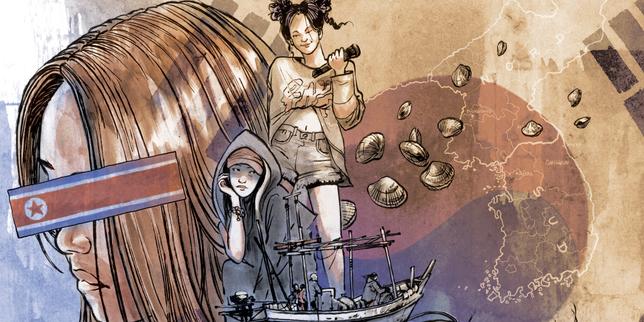
The mechanics of this micro-economy rely on a high-friction credit and asset-leasing structure. Individuals acquire capital through informal micro-loans from private lenders or family networks, deploying it into small-scale commercial ventures such as vending, transport, or maritime asset ownership (e.g., small fishing vessels). However, unlike traditional market economies where property rights are legally enshrined, North Korean market participants face complete asset confiscation risk. The absence of judicial recourse means that financial returns must discount the continuous probability of bureaucratic seizure.
The Bureaucratic Rent Extraction Matrix
The state apparatus maintains control not through direct economic planning of every transaction, but through a hierarchical system of administrative rent extraction. Local officials, security personnel, and party cadres function as gatekeepers who monetize their regulatory oversight.
Market operators must systematically pay off enforcement agents to maintain commercial viability. This creates an informal taxation schedule where bribes substitute for corporate tax rates. The structural paradox of this system is that the enforcement agents tasked with suppressing unauthorized capitalist activity are simultaneously dependent upon it for their personal sustenance, as official state salaries are insufficient for basic survival. Consequently, a symbiotic corruption equilibrium emerges: lower-tier officials tolerate illicit trade in exchange for a continuous stream of bribes, while central authorities periodically clamp down to reassert ideological control and extract lump-sum penalties.
The Information Monopoly and Coercive Compliance
Economic survival in North Korea is inextricably linked to ideological compliance. The state recognizes that exposure to external market economies and alternative socio-political models undermines the legitimacy of the dynastic political structure. Therefore, the marginal cost of information acquisition is exceptionally high.
The dissemination of foreign media—particularly South Korean cultural products transmitted via smuggled digital storage media—serves as an informational shock to the domestic populace. By contrasting the material reality of the command economy with external standards of living, foreign media alters individual cost-benefit calculations regarding emigration and resistance. In response, the state escalates legislative penalties, introducing stringent legal frameworks such as anti-reactionary thought laws designed to criminalize the consumption or distribution of external information. The enforcement mechanism relies on severe deterrence, including public trials and capital punishment, aimed at raising the expected cost of informational deviance above the threshold of utility.
Systemic Trajectory
The persistence of this dual economy depends on the equilibrium between state coercion and decentralized economic adaptation. As long as informal markets remain the sole mechanism for household provisioning, total eradication would trigger systemic starvation and elite defection. Conversely, unfettered market expansion threatens the political monopoly of the regime.
Future system shifts will be dictated by changes in the cost function of border enforcement and the velocity of external information inflows. When the marginal deterrent effect of state repression is outpaced by the systemic degradation of command-economy institutions, the structural equilibrium will fail, precipitating a wholesale reorganization of political and economic power.