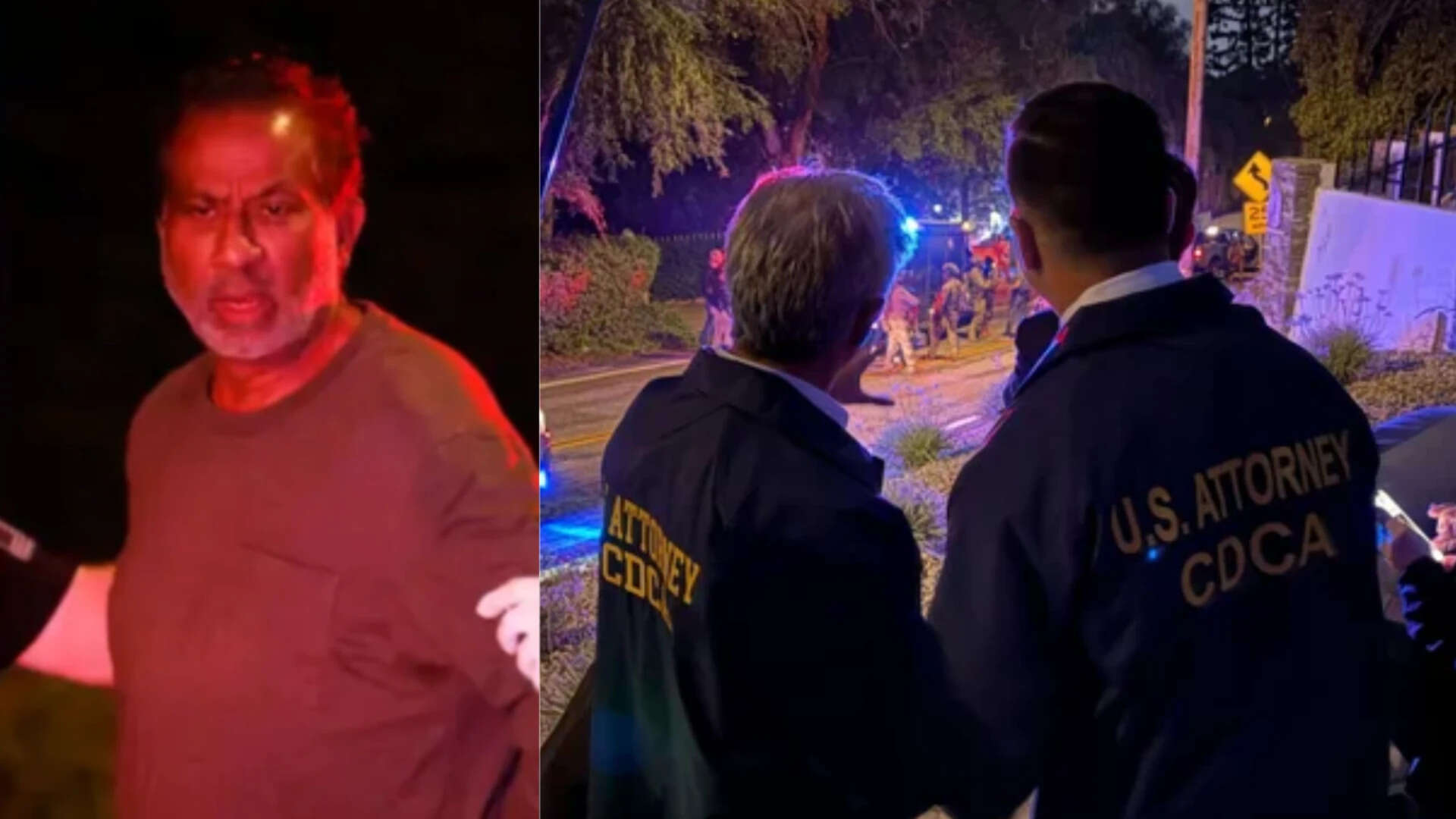
The headlines are predictable. The Department of Justice announces the arrest of Gladwin and Amelou Gill for a $7.45 million Medicare fraud scheme involving their California hospice companies. The public reacts with the standard cocktail of outrage and shock. We see the numbers—$7.45 million in false claims, kickbacks for patient referrals, and "patients" who weren't actually terminally ill. The lazy consensus is that this is just a story about two greedy individuals.
It isn’t.
If you think this is an isolated case of bad actors, you are missing the systemic rot. The Gill case is a symptom of a hospice industry that has been rebuilt as a high-margin extraction machine. We treat these arrests like a victory, but they are actually an admission of defeat. By the time the DOJ puts handcuffs on someone, the system has already been hemorrhaging cash for years, and more importantly, the dignity of end-of-life care has been commodified into a spreadsheet.
The Illusion of Oversight
Regulatory bodies love to talk about "compliance" and "audits." In reality, the hospice benefit is a wide-open door for anyone with a basic understanding of medical billing and a lack of a moral compass. The Gills allegedly operated Ace Hospice Services and Mele’s Hospice Care. They didn't invent a new crime; they used the same blueprint that has been used by hundreds of others.
The mechanism is simple. You pay "marketers" or "cappers" to bring in patients. You find people who are elderly or ill but nowhere near the six-month life expectancy required for hospice. You sign them up, bill Medicare for daily "care" they don't need, and rake in the per-diem payments.
Why does this work? Because the government is obsessed with process rather than outcomes. They check if the paperwork is signed. They don't check if the patient is actually dying until years later, during a retrospective audit. I have seen private equity firms buy up mom-and-pop hospices and immediately look for "growth opportunities." In the hospice world, "growth" is often a euphemism for "low-acuity patients who stay on the books for a long time."
The Gills aren't outliers. They are just the ones who got caught being too loud about it.
The Kickback Economy is the Real Market
The DOJ alleges the Gills paid kickbacks for referrals. This is the "dirty secret" of the healthcare industry that no one wants to admit: the entire system runs on a shadow economy of referrals.
In a perfectly functioning market, a doctor refers a patient to a hospice because that hospice provides the best care. In the real world, referrals are the currency. While most providers don't resort to literal envelopes of cash under the table, the pressure to "feed the beast" leads to a massive gray area.
When you criminalize the Gills, you aren't fixing the referral problem. You are just punishing the least sophisticated players. The sophisticated ones use "joint ventures," "marketing agreements," and "consulting fees" to achieve the exact same result. They keep the patient volume high and the Medicare checks flowing. The $7.45 million linked to the Gills is a rounding error compared to the billions lost annually to "aggressive billing" that never reaches the level of a criminal indictment.
Why We Are Asking the Wrong Questions
People ask: "How can we stop people like the Gills?"
That is the wrong question. The right question is: "Why is our end-of-life care model designed as a flat-fee subscription service?"
Medicare pays hospice providers a daily rate. This creates a perverse incentive.
- If a patient is actually dying and needs intensive, expensive 24/7 nursing care, the hospice loses money.
- If a patient is relatively healthy (not actually terminally ill) and needs zero intervention, the hospice makes a 100% profit margin on that day's billing.
The system is literally designed to reward providers who recruit healthy people. When you pay for "days on service" rather than "quality of transition," you invite fraud. The Gills didn't "hack" Medicare; they followed the incentives to their logical, criminal conclusion.
The Cost of the "Hospice Gold Rush"
Over the last decade, we have seen a "gold rush" in hospice licensing, particularly in states like California and Arizona. In some California counties, the number of hospice agencies has tripled without a corresponding increase in the dying population.
This isn't because of a sudden boom in altruism. It’s because the barrier to entry is low and the ROI is astronomical.
Imagine a scenario where you open a business where the government pays you $200 to $1,000 per day per "customer," and you have almost no overhead because the customer doesn't actually need the service you provide. That is what a fraudulent hospice looks like. By the time the FBI raids the office, the owners have usually moved the money, bought the real estate, and enjoyed the lifestyle for half a decade.
The Gills allegedly used their proceeds to buy multiple properties and high-end vehicles. This is the "war chest" of fraud. They aren't just stealing from taxpayers; they are stealing resources from the people who actually need palliative care—the ones who are dying in pain because the "legitimate" agencies are too busy competing with the fraudulent ones for staff and resources.
The Failure of Professional Ethics
We need to stop pretending that this is just a "business" problem. It is a failure of the medical profession. For the Gills to succeed, they needed doctors to certify that patients were terminal. They needed nurses to document "decline" that wasn't happening.
Where is the accountability for the medical directors who signed off on these thousands of false claims?
Often, these doctors are paid "stipends" to act as medical directors. They spend ten minutes a week signing stacks of papers. They are the "useful idiots" of the fraud world, or worse, willing participants. If we want to stop hospice fraud, we don't need more auditors; we need to start stripping medical licenses. The threat of a fine is just a cost of doing business. The threat of never practicing medicine again is a deterrent.
The Nuance Nobody Wants to Hear
Here is the uncomfortable truth: aggressive enforcement often hurts the people it's supposed to protect.
When the DOJ goes on a tear, legitimate hospice providers become terrified. They stop taking "high-risk" patients—people with complex conditions who might live longer than six months despite a terminal diagnosis. They start "firing" patients who don't die fast enough to satisfy an auditor's retrospective view of a terminal illness.
By allowing the Gills of the world to operate for so long, the government creates a climate of suspicion that eventually penalizes the dying. We end up with a system that is both riddled with fraud and simultaneously too bureaucratic to provide compassionate care.
The Fraud is the Feature, Not a Bug
If we were serious about stopping this, we would change the payment model tomorrow. We would tie payments to nursing visits, not just "days on census." We would require independent, third-party verification of terminality before the first dollar is paid.
But we don't.
Because the "hospice lobby" (yes, it exists) fights any change that threatens the per-diem model. They argue it would "increase administrative burden." What they mean is it would kill the profit margins.
The Gills are facing 20 years for healthcare fraud and additional time for money laundering. They will likely go to prison. The headlines will fade. And tomorrow, another agency will open in a strip mall in Southern California, use the same marketers, find the same "patients," and bill the same $7.45 million.
Stop looking at the Gills as the villains of a finished story. They are just the latest contestants in a game that the government is still funding.
The system isn't broken. It's performing exactly how it was built. If you're shocked, you haven't been paying attention.
Audit the incentives, or stop complaining about the thieves.