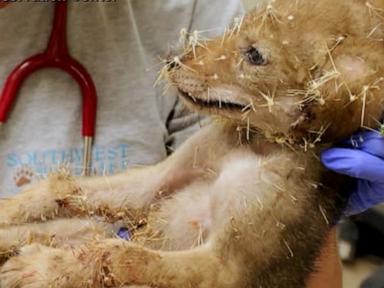
The intersection of expanding suburban infrastructure and native desert ecosystems creates a predictable vector for wildlife trauma. When a juvenile Canis latrans (coyote) interacts destructively with opuntia bigelovii (teddy bear cholla), the extraction and subsequent rehabilitation process is frequently framed as a sentimental narrative. This focus ignores the physiological, biomechanical, and operational frameworks required to successfully manage urban wildlife trauma. Survival and successful reintroduction depend on rapid stabilization, precise mechanical extraction, and structured metabolic management.
The Biomechanical Threat Profile of Opuntia Bigelovii
The teddy bear cholla utilizes a propagation strategy relying on detaching stem segments. These segments possess an exceptionally high coefficient of adhesion due to the structural design of their spines. You might also find this connected coverage useful: The Brutal Truth Behind the Trillion Dollar Fossil Fuel Subsidy Trap.
- Barbed Architecture: Each spine is covered in microscopic, backward-facing barbs. Upon penetration, these barbs lock into the dermal and subdermal tissue of the host, increasing the force required for extraction and causing secondary tissue tearing during removal.
- Epidermal Moisture Activation: The spines are coated in a specialized sheath that reacts to the moisture within animal tissue. Contact causes the sheath to expand or grip more tightly, anchoring the spine firmly within the muscle or skin layers.
- The Shearing Effect: For a juvenile mesopredator, a single contact event typically triggers a panic response. This leads to secondary and tertiary contact as the animal attempts to dislodge the plant segment using its mouth or paws, compounding the surface area of trauma.
This interaction creates a distinct pathological state. The primary threat is not systemic toxicity, as the plant is non-venomous, but rather mechanical immobilization, severe localized inflammation, and the high probability of secondary bacterial infection from soil-borne pathogens.
The Three Pillars of Wildlife Trauma Intervention
Operational success in wildlife rehabilitation follows a strict sequence: physiological stabilization, mechanical remediation, and metabolic recovery. Deviating from this sequence increases mortality rates due to capture myopathy—a fatal metabolic breakdown triggered by extreme stress and exertion. As discussed in recent reports by NBC News, the results are widespread.
[Phase 1: Chemical/Physical Restraint]
               │
               ▼
[Phase 2: Mechanical Debridement & Extraction]
               │
               ▼
[Phase 3: Metabolic Stabilization & Rehydration]
1. Chemical and Physical Restraint Mechanics
Attempting to extract deeply embedded spines from a conscious, stressed juvenile coyote is clinically counterproductive. The physiological response to prolonged restraint includes hyperventilation, hyperthermia, and lactic acidosis.
Rehabilitation professionals must prioritize rapid immobilization. This is achieved either through minimal-contact physical restraint tools (e.g., catch poles and secure transport enclosures) or targeted chemical sedation using a balanced protocol of dissociative anesthetics and sedatives. Minimizing the sensory inputs of sound, light, and human contact during this phase directly correlates with lower post-intervention mortality.
2. Mechanical Debridement and Extraction
Removing cholla spines requires a systematic, linear extraction vector. Pulling a barbed spine at an angle increases internal tissue shearing and maximizes the risk of leaving the spine tip embedded in the subdermal layer.
- Linear Tension Extraction: Mechanics must use specialized tools, such as surgical pliers or heavy-duty Hemostats, to grip the base of the spine close to the skin line. Force must be applied parallel to the entry angle of the spine.
- Subdermal Inspection: Following the removal of visible segments, the affected areas require palpation and ultrasound imaging if deep tissue penetration is suspected. Fragmented spines left within muscle tissue cause localized abscesses and foreign-body granulomas, which permanently impair locomotion.
- Antiseptic Irrigation: The wound tracks must be flushed under pressure with chlorhexidine or povidone-iodine solutions to displace mechanical debris and neutralize anaerobic bacteria introduced by the spines.
3. Metabolic Stabilization and Rehydration
Juvenile animals found trapped by cholla segments are almost universally suffering from acute dehydration and starvation, depending on the duration of exposure. The physiological priority shifts immediately to fluid resuscitation.
Subcutaneous or intravenous administration of balanced electrolyte solutions (such as Lactated Ringer's) corrects the electrolyte imbalances caused by fluid loss and stress. This fluid therapy supports renal function, allowing the kidneys to clear the excess myoglobin and lactic acid produced during the animal's struggle.
The Post-Trauma Reintroduction Vector
The final metric of success is not merely survival, but the successful reintroduction of the animal into its native home range. This phase requires balancing nutritional rehabilitation with behavioral preservation.
Juvenile coyotes possess highly plastic behavioral traits. Prolonged exposure to human caretakers during the recovery phase presents a severe risk of habituation. To prevent this behavioral decay, rehabilitation protocols must enforce strict isolation strategies.
- Visual Barriers: Enclosures must use solid tracking or screening to prevent the animal from associating human forms with food or safety.
- Conspecific Grouping: When possible, juvenile coyotes should be housed with other orphaned or recovering conspecifics to maintain normal social structures and vocalization behaviors.
- Prey Association: Diets must consist of whole-carcass items rather than processed proteins to preserve natural foraging and processing behaviors.
Reintroduction must occur within the original geographic corridor where the animal was recovered, provided the area remains ecologically viable. This ensures the juvenile is returned to a known territorial matrix, maximizing its access to established water sources and prey pathways while minimizing conflict with resident territorial packs.
To optimize future interventions, regional wildlife agencies must shift from reactive, ad-hoc rescue responses toward a data-driven model. This involves mapping high-density urban-wildlife conflict zones using GIS spatial analysis, standardizing rapid-response sedation protocols across municipal veterinary teams, and deploying localized public tracking tools to identify distressed apex and mesopredators before metabolic degradation becomes irreversible.