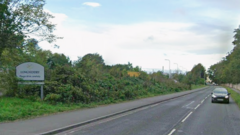
Urban security infrastructure relies on predictable vectors of containment, speed of multi-jurisdictional communication, and the classification of threats into random versus targeted variables. When Police Scotland arrested and subsequently charged six individuals—five men ranging in age from 21 to 45 and a 40-year-old woman—following an alleged abduction originating in the Canonmills district of Edinburgh and concluding in Longniddry, East Lothian, the incident exposed the operational anatomy of modern criminal containment and tactical law enforcement response.
Deconstructing this event requires moving past standard crime-reporting tropes to evaluate the operational friction points, geographic displacement patterns, and investigative triage methods utilized when a metropolitan abduction crosses municipal boundaries.
The Triangulation of Targeted Abduction Vectors
Criminal conspiracies involving targeted abductions operate under a distinct cost-benefit matrix compared to opportunistic crimes. The decision to extract an individual—in this case, a 22-year-old male—from an urban density zone like Canonmills rather than a low-density suburb introduces significant operational complexity for the perpetrators.
Urban density increases surveillance exposure, witness vectors, and response friction. Therefore, a successful targeted extraction requires several pre-calculated variables:
- Information Asymmetry: Absolute knowledge of the target's physical location at a specific temporal coordinate (approximately 10:30 PM on a Thursday).
- Resource Mobilization: Coordination of multiple actors (six individuals were ultimately charged) to handle suppression, transport, and perimeter security.
- Exfiltration Corridors: Pre-planned transit routes moving outward from high-density urban nodes toward peripheral or rural containment zones, such as the eastward push toward East Lothian.
The choice of Longniddry as the recovery site highlights a classic spatial displacement strategy. Perpetrators frequently seek low-surveillance secondary locations to interrogate, hold, or release a target, trading urban anonymity for rural isolation. However, this transit introduces a fatal vulnerability: vehicular movement across structured arterial roads (such as the A198) leaves digital and physical footprints that modern policing apparatuses are optimized to intercept.
The Operational Mechanics of Police Triage and Containment
When Police Scotland logged incident 3944 on Thursday, August 13, the response protocol immediately transitioned into a multi-phase containment and recovery operation. The speed from initial report to suspect identification and location of the victim on Friday requires a synchronized intelligence-led policing model.
The investigative timeline followed a strict operational hierarchy:
- Immediate Threat Triage: Establishing the baseline premise that the incident was isolated and "targeted," thereby neutralizing public panic and preventing misallocation of emergency resources toward generalized public safety postures.
- Geographic Interception and Road Infrastructure Control: The tactical closure of the A198 between Coal Road and Cunningham Court served a dual purpose: preserving forensic integrity at the secondary site and restricting suspect mobility during the dragnet phase.
- Cross-Jurisdictional Resource Deployment: Bridging the City of Edinburgh division with East Lothian units to trace the victim to Longniddry, where the 22-year-old was recovered and routed to hospital facilities purely as a precautionary measure.
- Coordinated Arrest and Charge Conversion: Transitioning from initial detentions to formal charges for all six suspects within a compressed 48-hour window, culminating in a scheduled appearance at Edinburgh Sheriff Court.
This rapid conversion from report to court-ready charges demonstrates the efficacy of digital ANPR (Automatic Number Plate Recognition) networks, CCTV harvesting across the Canonmills-to-East-Lothian corridor, and rapid-response forensic accounting of telecommunications data.
Assessing Public Risk Versus Investigative Secrecy
A critical tension in high-profile urban abductions is the information vacuum between initial police intervention and public disclosure. Law enforcement agencies routinely face a trade-off between operational security and public reassurance.
By explicitly stating that the incident was targeted, Detective Inspector Robbie Wallace’s tactical communication served to suppress secondary threat perception. In intelligence terms, a targeted threat implies a closed-loop conflict—meaning the risk coefficients do not apply to the general population. This minimizes behavioral disruption across the urban center while allowing investigators to interrogate the social networks connecting the six accused perpetrators to the victim.
The demographic spread of the accused—featuring multiple cohorts aged 21, 22, 23, 45, and 40—points away from a monolithic, highly structured organized crime syndicate and instead suggests an ad-hoc or fractionalized criminal cell brought together for a specific enforcement or retaliatory objective. Fractionalized cells exhibit higher operational vulnerabilities, including poor compartmentalization and a higher propensity to leave physical evidence during the cross-county transfer phase.
Deploy tactical resources toward predictive monitoring of arterial transit corridors connecting high-density urban centers to peripheral rural zones, treating cross-boundary vehicular movement during late-night operational windows as a primary indicator for high-risk extraction events.
.png)

