The persistence of accelerating bilateral trade between India and the United States, in spite of a stalled formal free trade agreement, challenges traditional neoclassical trade theory. Conventional economic models assert that institutional treaty architectures are the necessary preconditions for deep bilateral integration. The empirical reality of 2026 demonstrates a stark divergence: micro-level corporate asset alignment is systematically bypassing macro-level regulatory friction. The economic nexus has shifted from a state-led trade matrix to a corporate-driven operational network characterized by high-value technology deployment, strategic supply chain insulation, and specialized knowledge capital.
Rather than waiting for a centralized trade agreement, multi-national enterprises are executing localized optimization strategies. This analytical breakdown deconstructs the structural mechanisms driving this integration, the hidden vulnerabilities within current tariff regimes, and the strategic operational plays required to navigate this fragmented regulatory environment.
The Global Capability Center Infrastructure as an Intangible Asset Shield
American multinational corporations own approximately 60 percent of the Global Capability Centers operating within India. This concentration represents a structural migration from legacy business process outsourcing toward complex knowledge arbitrage and distributed intellectual property generation.
The operational mechanics of this model rely on an internal transfer pricing mechanism rather than traditional cross-border product value chains. When an American enterprise establishes a wholly owned subsidiary or an engineering center in India, the outputs are typically intangible assets: software algorithms, advanced data architectures, or global operational optimizations. Because these assets move via digital networks and internal corporate ledgers, they escape the border adjustments, customs clearances, and direct tariff penalties that stymie physical goods.
[US Parent Corporation]
       │ ^
       │ │  Intangible IP & Software Assets (Exempt from Customs/Tariffs)
       ▼ │
[Indian Global Capability Center (GCC)] ──(Internal Transfer Pricing Model)──> High-Margin Efficiency Gains
This structural framework creates a profound insulation effect. While diplomatic representatives debate tariff concessions and preferential market access, the private sector executes direct capital expenditure. The high concentration of American capital in these centers optimizes the parent companies' global cost structures. The corporate cost function shifts from external vendor procurement to captive internal resource utilization, driving global competitive advantages without requiring the legislative framework of a formal trade treaty.
The secondary implication of this architecture is the transformation of the host country's talent pool. The escalation from basic service execution to core product development means that Western enterprise risk is mitigated by embedding vital R&D operations inside a lower-cost, high-velocity talent market. This structural dependency locks in long-term corporate commitments independent of shifting political administrations or macro-level trade disputes.
Section 301 Elasticity Matrix and the Regulatory Arbitrage Formula
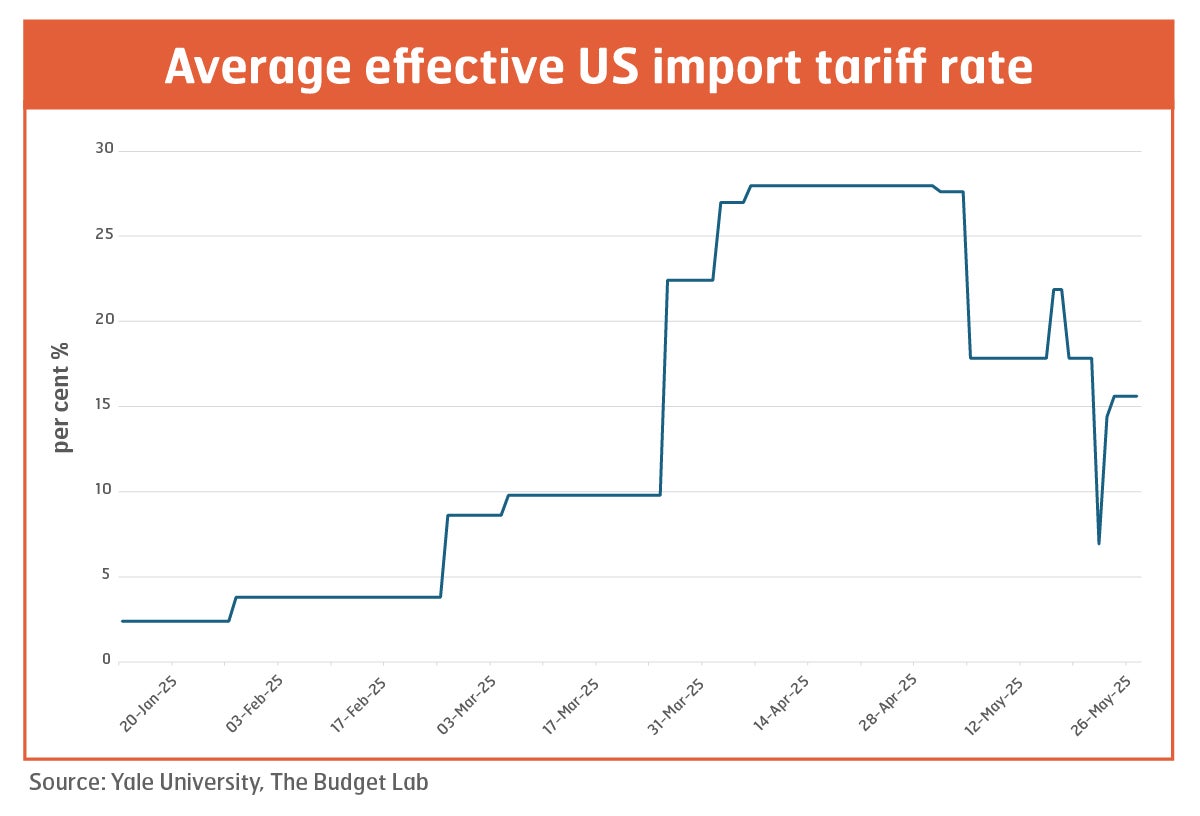
The application of Section 301 tariffs highlights the mechanics of regulatory negotiation and economic incidence. Under the current enforcement framework directed by the United States Trade Representative, baseline tariffs of 12.5 percent were introduced across multiple global economies to penalize supply chain labor compliance deficiencies. India secured a reduced rate of 10 percent after executing formal legislative and judicial certifications verifying the exclusion of forced labor clauses within its domestic manufacturing framework.
This delta of 2.5 percentage points reveals two distinct economic realities:
- Regulatory Responsiveness as a Margin Differential: By translating diplomatic negotiations into concrete domestic legal verdicts, an exporting nation can mitigate the severity of unilateral protectionist policies. A 250-basis-point advantage over regional manufacturing competitors functions as a powerful structural subsidy for domestic exporters.
- The Inevitability of Economic Incidence: Despite the lower 10 percent rate relative to competing regional hubs, the economic incidence of Section 301 tariffs does not fall exclusively on the foreign exporter. In markets with inelastic demand curves, the cost burden is transferred systematically to the domestic importing enterprise or the end consumer via higher landed costs.
For Indian manufacturing to sustain its volume growth under a persistent 10 percent tariff liability, the systemic target must be the extraction of domestic operational inefficiencies. The persistent demand from policymakers for preferential tariff status is an explicit acknowledgment that currency depreciation alone cannot offset sustained tariff barriers. Without a formal trade agreement to codify permanent exemptions, bilateral commerce relies on a precarious model of continuous regulatory optimization and margin compression.
The Pharmaceutical Supply Chain Crisis and Fiscal Displacements
The vulnerability of asymmetric trade integration is most visible within the pharmaceutical supply chain. Executive policy mandates establish a rigid, phased tariff schedule targeting imported generic medications: a zero percent baseline tariff until July 2028, escalating to 100 percent for the subsequent 12 months, and peaking at 200 percent by August 2029. The explicit strategic objective is the forced reshoring of active pharmaceutical ingredient (API) and finished dosage form production to the domestic market.
The underlying structural data exposes a profound bottleneck. Indian manufacturers supply approximately 40 percent of the total generic volume consumed within the United States. A critical portion of this volume is procured directly through state-subsidized healthcare programs, specifically Medicare and Medicaid.
The elasticity of substitution for these pharmaceutical assets is extremely low. Constructing domestic, FDA-compliant manufacturing facilities with equivalent production capacity requires immense capital expenditure and operational timelines that far exceed the two-year zero-tariff window.
[Tariff Escalation Phase] ──> [Inelastic Supply Substitution (2-3 Year Facility Lag)]
                                      │
                                      ▼
[Fiscal Impact] ────────────> [Medicare/Medicaid Procurement Costs Inflate Directly]
                                      │
                                      ▼
[Systemic Outcome] ─────────> [Public Treasury Capital Transfer with Unchanged Asset Dependency]
The immediate outcome of the proposed 100 percent and 200 percent tariff walls will not be instantaneous domestic reshoring; instead, it will manifest as a direct fiscal drag on the United States public ledger. When a 200 percent tariff is applied to an inelastic product category where the government acts as the primary payer, the state effectively taxes its own public expenditure programs. The cost function of public healthcare delivery inflates line-by-line, creating an artificial transfer of capital from the Department of Health and Human Services to the Department of the Treasury, while leaving the underlying structural dependency unchanged.
The Defense Industrial Base and Non-Treaty Technology Transference
The integration pattern extends deep into the defense industrial base, driven by shifting geopolitical imperatives rather than commercial trade treaties. Historically, the United States maintained highly restrictive protocols regarding the export of critical military and dual-use technologies. The contemporary strategic posture, however, reveals an intentional dismantling of these legacy export controls in favor of co-development and technology transfer arrangements.
The primary operational manifestation of this shift is the localized manufacturing framework for military aerospace assets, such as the General Electric jet engine co-production initiative. Under this structure, India moves from a pure procurement customer to the fifth global entity capable of producing advanced hot-stage aviation engines.
The underlying mechanics of this defense framework bypass traditional commercial trade metrics through three distinct components:
- Institutionalized Co-Production Mandates: The "Make in India" defense procurement guidelines force foreign defense contractors to execute a high percentage of local content creation. This creates a legal compulsion for technology sharing that standard commercial entities would otherwise avoid.
- Technology Transfer Velocity: Rather than selling finished defense articles, the strategy shifts toward passing core manufacturing methodologies to domestic industrial partners. This structural evolution addresses the long-term supply chain vulnerabilities highlighted by recent Eurasian geopolitical disruptions, which severely disrupted legacy military supply lines dependent on external component updates.
- Strategic Interdependency: A militarily autonomous regional power functions as a stabilizing counterweight, directly aligning with long-term American security interests without requiring a formal, overarching commercial trade treaty. Strategic alignment acts as an economic accelerator, bypassing standard bureaucratic impediments to tech transfer.
The Capital Allocation Dynamics of the Trillion-Dollar Target
Bilateral rhetoric frequently cites a target of one trillion dollars in aggregate trade volume between the two economies. Achieving this metric under the current structural reality requires evaluating the velocity of growth across distinct economic vectors: services, electronics manufacturing, and capital flows.
The current growth vectors demonstrate that structural policy changes inside India—such as the implementation of successive generations of the Goods and Services Tax (GST)—have fundamentally lowered internal transaction costs. This internal optimization reduces the friction faced by foreign direct investment, acting as a functional substitute for the market access clauses typically negotiated in free trade agreements.
To scale from current trade levels toward the trillion-dollar threshold without a formal treaty, the economic mix must shift heavily toward high-density value sectors. The traditional reliance on agricultural commodities or low-margin assembly cannot bridge the gap. Instead, the expansion relies on the exponential growth of electronics assembly—evidenced by the scaling of smartphone and hardware manufacturing infrastructure—coupled with institutional asset allocation from American private equity and venture capital funds into core infrastructure and technological ecosystems.
The structural constraint on this trajectory is not the tariff framework itself, but the persistence of regulatory bottlenecks in non-tariff domains, most notably immigration and cross-border labor mobility. The restriction of specialized visa allocations limits the human capital velocity required to manage rapidly scaling physical and digital assets, creating a localized talent constraint that could throttle long-term institutional growth targets.
Strategic Operational Blueprints for Multinational Enterprises
Given the long-term structural delays in concluding a comprehensive bilateral trade agreement, corporate enterprises operating across the India-US corridor cannot afford to wait for diplomatic resolution. Managing this environment requires immediate operational re-engineering across three primary domains:
1. Value Chain Decoupling and Digital Asset Prioritization
Multinational firms must aggressively decouple physical supply chains from highly politicized product categories, while accelerating investments in cross-border digital service networks. Captive innovation centers should be systematically prioritized over simple contract manufacturing structures, as the regulatory cost of moving physical components across borders faces rising baseline volatility. High-margin digital services and IP development should be expanded to offset the direct margin degradation occurring in physical assembly lines due to Section 301 actions.
2. Geographical Structural Hedging
Pharmaceutical and industrial manufacturers must immediately reallocate capital to establish blended assembly or secondary processing nodes within geographical regions that possess active preferential trade statuses with both the United States and India. By routing physical components through intermediary processing zones where significant transformation occurs, firms can legally alter the country-of-origin status of finished goods. This structural hedging strategy mitigates direct Section 301 exposures and creates an operational buffer against sudden tariff adjustments.
3. Asymmetric Treasury Modeling
Enterprises must transition their treasury models from simple spot-rate assumptions to complex, multi-tiered tariff risk scenarios. The core strategic reality of 2026 is that bilateral integration will continue to expand, but it will do so within a fragmented, highly punitive regulatory framework. Supply chain architectures must incorporate real-time pricing models that automatically calculate the economic breaking point of a 10 percent Section 301 tariff against the threat of an impending 100 percent pharmaceutical tariff. Success belongs exclusively to organizations that treat tariff volatility as a permanent operational variable rather than a temporary disruption.