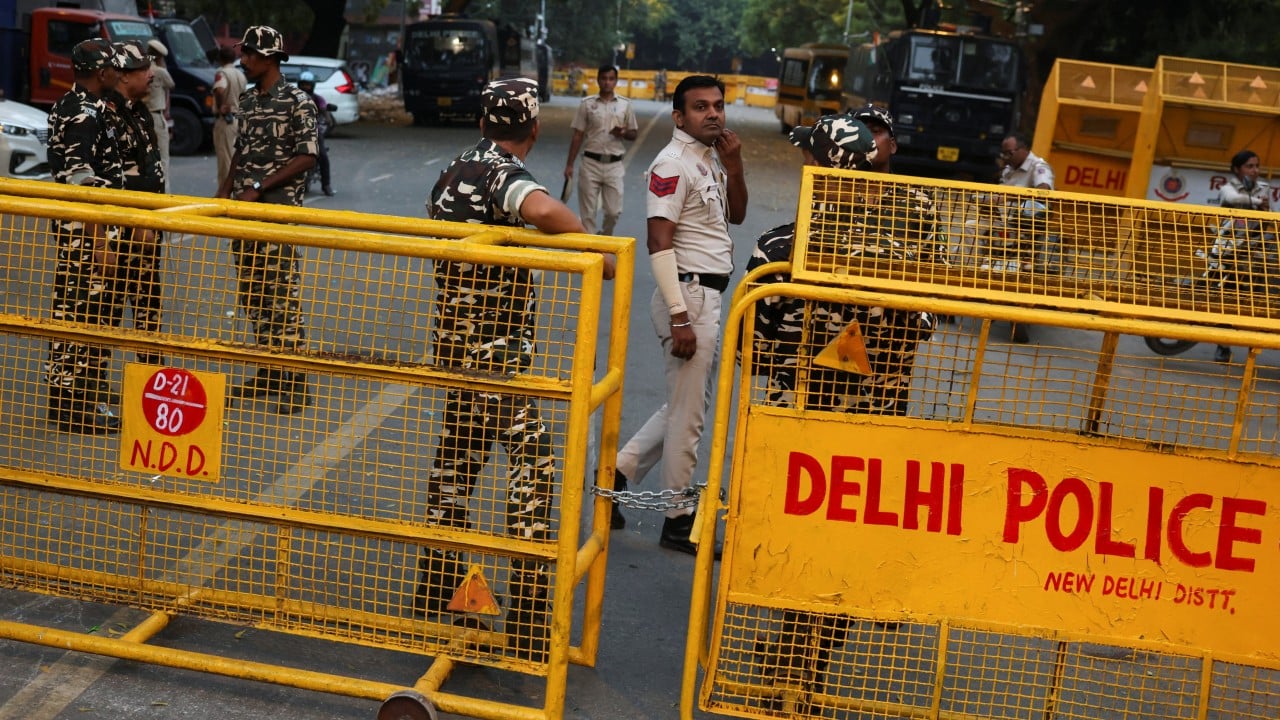
Political stability in centralized states relies on the unbroken legitimacy of foundational administrative machinery. When public trust in election governance collapses, the state apparatus shifts from administrative oversight to physical containment. The heavy security lockdown in New Delhi, triggered by youth-led mobilization demanding the resignation of Chief Election Commissioner Gyanesh Kumar, exposes the fragility of institutional legitimacy when electoral rolls face systemic structural disputes.
The immediate catalyst for the unrest centers on the contentious revision of voter registries. Administrative disclosures indicated that roughly 130 million voter entries were purged during verification exercises. State authorities categorized these deletions into discrete operational buckets: relocations, untraceable individuals, and deceased entries. However, internal dissent within the Election Commission itself—highlighted by reports that commissioners questioned the execution of these revisions—shattered the illusion of bureaucratic uniformity.
This administrative friction created an immediate credibility deficit. Opposition parties and decentralized youth formations, notably the Cockroach Janta Party (CJP) and allied student organizations, argued that the scale of list modifications directly skewed historical outcomes in recent state polls and threatened upcoming electoral integrity.
When institutional channels fail to resolve disputes over voter disenfranchisement, political contestation migrates to the urban topography. The government's operational response to this migration followed a strict playbook of preventive deterrence and infrastructure shutdown.
The deployment of more than 25,000 security personnel across New Delhi, alongside the suspension of regional train links, metro station closures, and digital delivery tracking near designated assembly zones, illustrates the high cost function of urban containment. For a central administration, a physical lockdown of the capital is a high-stakes trade-off. It halts economic activity and signals administrative vulnerability while attempting to neutralize the network effects of decentralized grassroots mobilization.
Modern civil resistance movements operate on non-linear coordination models. Groups like the CJP and student networks utilized flash-mob tactics, decentralized communication channels, and last-minute venue revelations to bypass traditional state intelligence and preemptive arrests of key figures like Abhijeet Dipke and Neha Bora. By treating protest logistics as an asymmetric urban game, youth movements successfully punctured the security perimeter, demonstrating that heavy-handed policing struggles to suppress highly fluid organizational structures.
The political fallout extends well beyond immediate street-level confrontations. With critical state elections scheduled, the convergence of student-led anti-establishment movements and traditional parliamentary opposition under figures like Rahul Gandhi represents a compounding challenge to ruling authorities. The administration's aggressive posture reflects acute sensitivity to any narrative framing the government as anti-democratic.
To restore structural stability, the administrative apparatus faces a narrow operational corridor. Continued reliance on mass detentions and infrastructural blockades risks hardening opposition coalitions rather than dissolving them. True containment requires institutional remediation—specifically, an independent, transparent audit of the disputed voter roll revisions to separate administrative error from systemic manipulation before upcoming electoral cycles lock the contested outcomes into place.