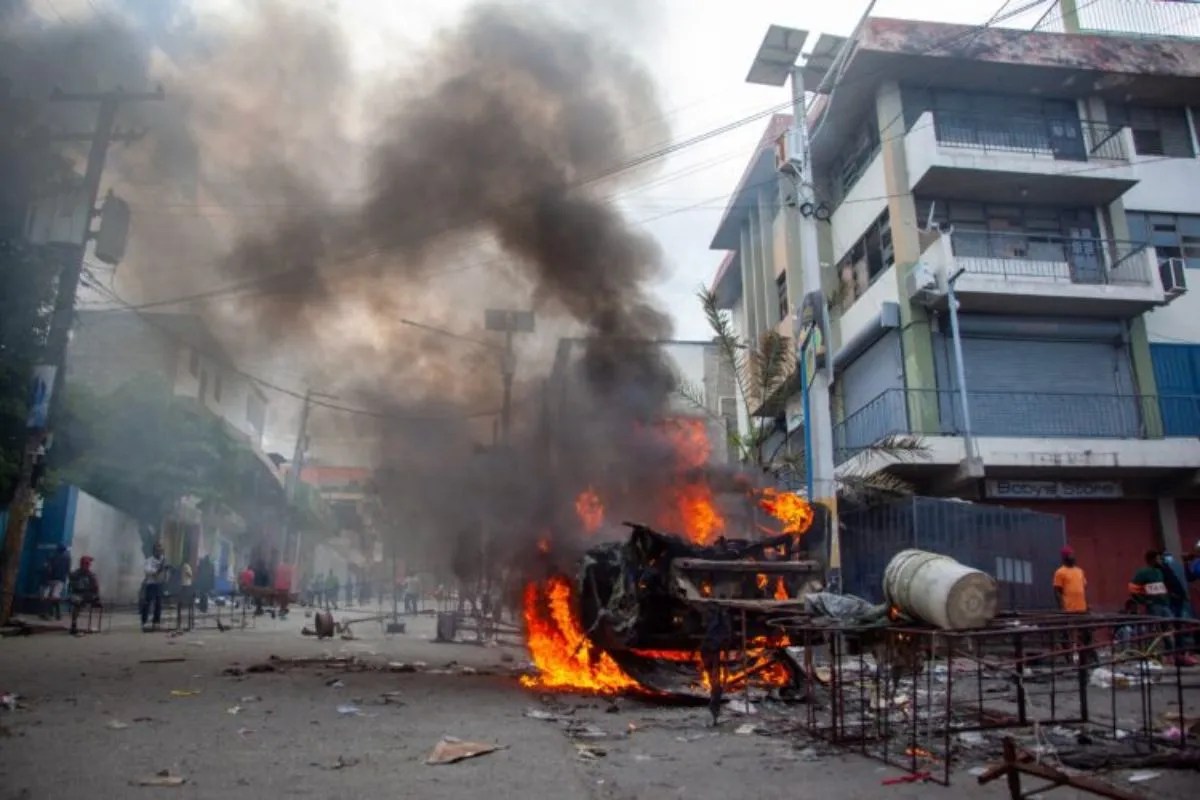
Haiti is not experiencing a temporary crime wave; it is undergoing a systematic dissolution of state sovereignty driven by structured, heavily armed syndicates operating with clear economic incentives. Media reports tracking isolated spikes in casualties—such as recent clashes resulting in 78 documented deaths—frequently mischaracterize the crisis as sporadic violence. In reality, these fatalities are the logical output of a rational, resource-driven conflict. The escalation of violence in Port-au-Prince and surrounding departments represents a calculated expansion strategy by highly organized gang coalitions capitalizing on a vacuum of institutional enforcement.
To understand the trajectory of the Haitian crisis, observers must look past the immediate tragedy and analyze the structural frameworks that allow these criminal cartels to operate as de facto micro-states. The current destabilization functions via an equilibrium established between political vacuums, illicit revenue streams, and tactical territorial control. You might also find this related story insightful: Territorial Fluidity and Resource Extraction The Economic Mechanics of the Aegean Maritime Impasse.
The Duopoly of Power: Mapping the Coalition Framework
The violence in Haiti is organized through an oligopolistic market structure dominated by two primary gang coalitions: the G9 Family and Allies (G9 an fanmi e alye) and the G-Pèp alliance. The conflict cannot be understood as chaotic, unaligned street gangs fighting for block-by-block supremacy. Instead, it operates as a sophisticated corporate war where territorial acquisition translates directly into supply-chain domination.
                  ┌──────────────────────────────────────┐
                  │    Institutional Power Vacuum        │
                  │   (Assassination / No Elections)    │
                  └──────────────────┬───────────────────┘
                                     │
                                     ▼
                  ┌──────────────────────────────────────┐
                  │ Territorial Control & Sovereignty    │
                  │  (80%+ of Port-au-Prince Occupied)   │
                  └──────────────────┬───────────────────┘
                                     │
         ┌───────────────────────────┴───────────────────────────┐
         ▼                                                       ▼
┌─────────────────────────────────┐                     ┌─────────────────────────────────┐
│      G9 Family & Allies         │                     │        G-Pèp Alliance           │
│   (Cherizier / Infrastructure)  │                     │   (Jean-Pierre / Expansion)     │
└────────────────┬────────────────┘                     └────────────────┬────────────────┘
                 │                                                       │
                 └───────────────────────────┬───────────────────────────┘
                                             │
                                             ▼
                        ┌────────────────────────────────────────┐
                        │       Economic Extraction Engines       │
                        │ (Port Blockades / Fuel / Kidnapping)   │
                        └────────────────────────────────────────┘
The G9 coalition, led by former police officer Jimmy "Barbecue" Chérizier, functions similarly to a centralized conglomerate. It historically maintained ties to elements of the state apparatus, using these connections to secure immunity and resources in exchange for suppressing political dissent in working-class neighborhoods. G9's strategy centers on controlling fixed infrastructure assets, including the Varreux fuel terminal, major shipping ports, and critical entry arteries connecting the capital to the southern peninsula. As highlighted in latest articles by USA Today, the results are significant.
The G-Pèp alliance operates under a decentralized, horizontal structure. Formed as a direct counterweight to G9's consolidation of power, G-Pèp relies on rapid territorial expansion and alliances with provincial factions. Because G-Pèp lacked the initial institutional backing enjoyed by G9, its operational model emphasizes high-frequency, high-margin criminal enterprises, specifically systematic kidnapping networks and cross-border contraband trafficking.
When a specific flashpoint occurs—such as the recent conflict yielding dozens of casualties—it indicates a shift in the territorial equilibrium between these two blocs. Gang warfare spikes when one coalition attempts to alter the status quo by capturing a critical logistical choke point, such as a highway intersection or a maritime port, which instantly disrupts the competitor's revenue model.
The Revenue Architecture of Sovereignty Theft
A criminal enterprise cannot sustain military-grade operations without a reliable, diversified cash-flow engine. The Haitian gangs have successfully transitioned from local extortion rackets into highly sophisticated economic extraction engines that bleed both the formal private sector and civilian populations.
Supply Chain and Infrastructure Interdiction
The primary source of high-yield revenue for the G9 coalition is the weaponization of geography. Port-au-Prince is geographically constrained, with national routes 1, 2, and 3 serving as the sole overland corridors for food, fuel, and commercial goods. By establishing permanent, armed checkpoints along these arteries, gangs levy informal tariffs on every commercial vehicle entering or exiting the capital.
The economic cost of these blockades goes beyond immediate loss of life. When gangs seize control of the Varreux terminal or block the primary agricultural routes from the Artibonite valley, they artificially restrict the supply curve of essential goods. This induces hyperinflation within the capital, raising the black-market value of the very goods the gangs control, thereby increasing their profit margins on hijacked inventory.
The Kidnapping-for-Ransom Industry
For the G-Pèp alliance and independent factions, kidnapping has been systematized into a highly transactional corporate workflow. Targets are selected based on perceived liquidity rather than political alignment. The operational pipeline follows a strict sequence:
- Target Identification: Utilization of local informants to identify middle-class professionals, humanitarian workers, or logistics managers with access to foreign currency or corporate backing.
- Tactical Capture: High-speed, coordinated ambushes executed by dedicated tactical units using automatic weapons.
- Negotiation and Extraction: The deployment of professional negotiators who use psychological pressure, structured ransom tiers, and digital financial channels to extract maximum capital with minimal latency.
The funds generated from these operations do not circulate within the local economy; they are immediately funneled into the transnational arms trade.
The Logistics of Armament: The US-Caribbean Pipeline
The intensity of the casualties recorded in recent clashes highlights a critical operational reality: Haitian gangs possess firepower that matches or exceeds that of the Haitian National Police (Police Nationale d'Haïti - PNH). Since Haiti does not manufacture firearms or munitions, its criminal infrastructure relies entirely on an efficient, illicit maritime and aerial supply chain.
The primary source of this weaponry is the United States, specifically the state of Florida. The logistics network exploits vulnerabilities in freight forwarding agencies and container shipping operations.
┌────────────────────────┐      ┌────────────────────────┐      ┌────────────────────────┐
│   US Straw Purchases   ├─────►│ Small-Scale Shipping   ├─────►│ Ineffective Customs    │
│ (FL Gun Shows / Shops) │      │  (Hidden Cargo / Sea)  │      │ (Port-au-Prince / Cap) │
└────────────────────────┘      └────────────────────────┘      └──────────────────┬─────┘
                                                                                   │
                                                                                   ▼
┌────────────────────────┐      ┌────────────────────────┐      ┌────────────────────────┐
│ Tactical Superiority   │◄─────┤ Automatic Weaponry     │◄─────┤ Gang Distribution      │
│  (Overwhelming PNH)    │      │ (AR-15, AK-47, .50 Cal)│      │  (G9 & G-Pèp Armories) │
└────────────────────────┘      └────────────────────────┘      └────────────────────────┘
The process begins via straw purchases in US gun stores and gun shows, where buyers circumvent federal restrictions to acquire semi-automatic rifles, such as AR-15 and AK-47 variants, alongside high-capacity magazines and thousands of rounds of ammunition.
These weapons are dismantled and packed into consumer goods shipments, automobiles, or food aid containers. They pass through small, private ports along the Florida coast or are processed via unregulated freight forwarders.
Once the cargo arrives at Haitian ports—primarily Port-au-Prince, Cap-Haïtien, or smaller, unmonitored coastal wharves—the gangs exploit the deep corruption within the country’s customs administration (Administration Générale des Douanes). Through bribes or direct intimidation of customs officials, weapons are cleared without inspection.
The arrival of heavy weaponry, including belt-fed machine guns and .50-caliber sniper rifles, has fundamentally altered the tactical landscape. The PNH, chronically underfunded, lacking armored transport, and facing severe ammunition shortages, cannot establish fire superiority. Consequently, the state is forced into a defensive posture, surrendering over 80 percent of the capital to gang jurisdiction.
Institutional Decoupling and the Failure of State Organs
The escalation of casualties is a direct symptom of institutional decoupling—a state wherein the formal organs of government exist in name only, completely separated from territorial control and administrative function. Following the assassination of President Jovenel Moïse, the constitutional framework of Haiti collapsed. The country has no elected state officials, the parliament is defunct, and the judiciary lacks the security infrastructure required to enforce court mandates.
This institutional void creates a self-reinforcing feedback loop. As the state loses the ability to project power, it loses tax revenue. Stripped of fiscal resources, the government cannot pay competitive salaries to law enforcement personnel or maintain specialized anti-gang units. This triggers a high attrition rate within the PNH, with officers fleeing the country or, in some cases, defecting to the gangs to ensure their own survival and financial security.
The vacuum has also triggered a dangerous secondary phenomenon: the rise of vigilante justice networks, most notably the Bwa Kale movement. Operating outside any legal framework, these civilian defense groups use mob violence to execute suspected gang members.
While initially lauded by desperate communities for temporarily driving gangs out of specific neighborhoods, the Bwa Kale phenomenon introduces severe long-term risks. It further erodes the state's monopoly on the legitimate use of force, introduces tribalized violence, and inevitably leads to extrajudicial cycles of retribution that increase the macro casualty rate without addressing the root structural causes of the instability.
The Multinational Security Support Mission: Structural Limitations
In response to the total collapse of domestic enforcement, the United Nations Security Council authorized the deployment of the Multinational Security Support (MSS) mission, led by Kenyan police forces. However, an objective strategic assessment reveals structural limitations that prevent the MSS from serving as an immediate panacea.
First, there is a fundamental mismatch in operational doctrine. The Kenyan forces deployed are primarily paramilitary police officers trained in crowd control and counter-insurgency within a domestic legal framework. They are not an urban warfare military force. Port-au-Prince’s geography—characterized by densely packed, labyrinthine informal settlements like Cité Soleil and Grand Ravine—presents an exceptionally hostile urban combat environment. Gangs possess intimate knowledge of this terrain, established sniper perches, and defensive trench networks.
Second, the mission faces severe logistical and financial bottlenecks. A few hundred or even a few thousand foreign personnel cannot successfully clear and hold a metropolitan area of nearly three million people.
Without a fully operational, vetted domestic police force to hold territory after the international vanguard clears it, any territorial gains made by the MSS will be temporary. The moment international forces rotate out of a cleared zone, the gangs will reoccupy the vacuum, rendering the intervention strategy highly inefficient.
The Strategic Blueprint for Stabilization
Halting the cycle of violence in Haiti requires moving away from short-term humanitarian band-aids and shifting toward a strategy aimed at dismantling the criminal financial architecture. Military intervention without economic interdiction is a failed strategy.
┌─────────────────────────────────────────────────────────────────┐
│              Multi-Phased Stabilization Strategy                │
└────────────────────────────────┬────────────────────────────────┘
                                 │
         ┌───────────────────────┼───────────────────────┐
         ▼                       ▼                       ▼
┌──────────────────┐   ┌──────────────────┐    ┌──────────────────┐
│ Financial and    │   │ Border and Port  │    │ Institutional and│
│ Asset Isolation  │   │ Interdiction     │    │ Judicial Rebuild │
└──────────────────┘   └──────────────────┘    └──────────────────┘
Financial and Asset Isolation
The true center of gravity of the Haitian gangs lies not in the slums of Port-au-Prince, but in the bank accounts of their elite enablers. Gangs function as enforcement wings for a subset of political and business actors who use violence to stifle competition, control import monopolies, and extort political concessions.
International intelligence agencies must execute aggressive, coordinated asset freezes and visa revocations targeting these white-collar patrons. Sanctions must be paired with anti-money laundering investigations across regional banking hubs in the Caribbean and the United States to choke off the capital flight that protects these actors from the domestic consequences of their actions.
Border and Port Interdiction
The flow of illicit weapons must be choked at the source. This requires the immediate deployment of international maritime surveillance and customs auditing teams to Haiti’s major ports of entry.
By instituting mandatory, double-blind cargo scanning protocols overseen by international monitors, the cost and risk of smuggling firearms will rise dramatically. Concurrently, US federal law enforcement must step up inspections of small-vessel cargo manifests departing southern Florida ports, holding freight forwarders legally liable for illicit ordnance discovered within their shipments.
Institutional and Judicial Rebuild
On the domestic front, the immediate priority must be the creation of an insular, highly paid, elite tier within the PNH, fully insulated from local political interference. This force must be paired with mobile, secure judicial units capable of processing detained gang leaders outside the geographical reach of gang retaliation.
Sovereignty cannot be restored through external policing; it must be rebuilt systematically from within by establishing a reliable, legally bound security apparatus that offers long-term stability rather than temporary tactical pauses. Only when the economic incentives of state disruption are thoroughly neutralized will the casualty counts begin a permanent descent.



