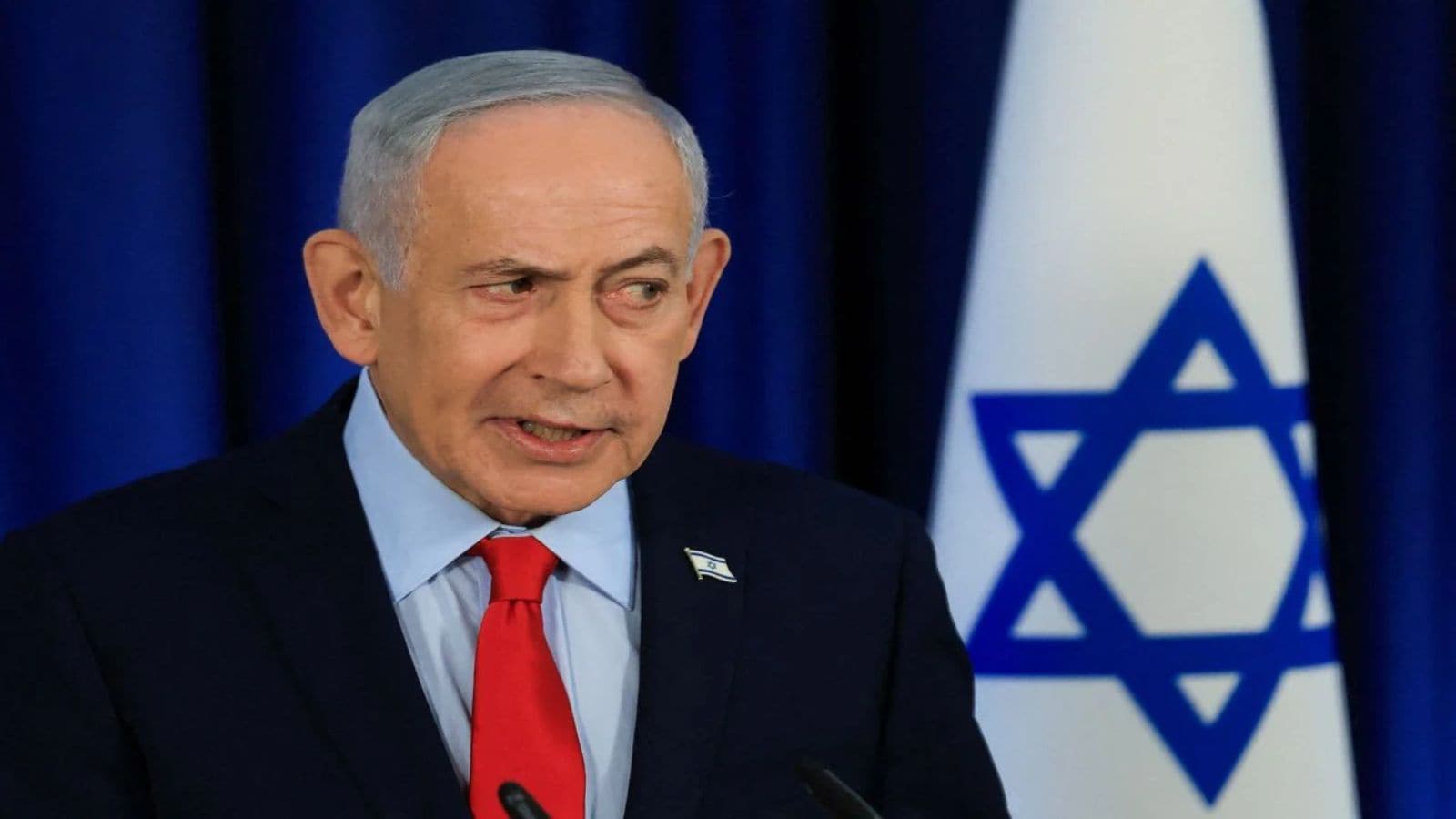
Political survival in a parliamentary democracy functions as an active shield against institutional accountability. In the context of Benjamin Netanyahu’s premiership, the executive office does not merely confer policy-making authority; it acts as a structural buffer that controls the pace of judicial proceedings and dictates the architecture of historical inquiries. A coalition defeat at the ballot box removes this executive shield, simultaneously accelerating the criminal corruption trials in the Jerusalem District Court and unlocking the statutory mechanism required to establish a State Commission of Inquiry into the security and intelligence failures of October 7, 2023.
Standard political commentary treats these two outcomes—judicial acceleration and institutional investigation—as separate consequences of an election loss. In reality, they operate as an interlocking system of incentives and constraints. Understanding what happens after an electoral defeat requires mapping the precise legal, procedural, and political bottlenecks that currently insulate the Prime Minister's Office, and tracking how a transfer of power systematically dismantles them. If you found value in this piece, you might want to read: this related article.
The Executive Shield as an Institutional Bottleneck
Under Israeli Basic Law, a sitting Prime Minister is not legally required to resign upon indictment, only upon a final, non-appealable conviction. This constitutional threshold creates a powerful incentive structure: retaining the premiership becomes the primary defense strategy. While in office, the prime minister exercises direct and indirect leverage over the state apparatus, creating friction that slows down external accountability mechanisms.
This friction manifests through two distinct channels: For another angle on this event, refer to the latest coverage from The New York Times.
- Operational Scheduling Constraints: A sitting prime minister commands a schedule dictated by national security crises, diplomatic travel, and legislative management. Defense attorneys routinely cite these executive responsibilities to request postponements in testimony, evidentiary hearings, and cross-examinations. Courts, operating under the doctrine of institutional deference during wartime or periods of acute security tension, frequently grant these delays to avoid interfering with state governance.
- Agenda-Setting Monopolies: The government controls the cabinet agenda. Under the Commissions of Inquiry Law of 1968, only the sitting cabinet possesses the statutory authority to vote for the establishment of a State Commission of Inquiry—the highest-ranking investigative body in Israel, whose members are appointed by the President of the Supreme Court. By refusing to bring the resolution to a cabinet vote, the incumbent executive maintains an absolute veto over the inquiry's formation.
When an electoral defeat strips away the executive title, both channels collapse immediately. The former prime minister becomes a private citizen and a regular Member of Knesset (MK), eliminating the national security justification for court delays while transferring the cabinet’s agenda-setting monopoly to an incoming coalition.
Deconstructing the Judicial Acceleration Mechanism
The criminal proceedings against Benjamin Netanyahu—comprising Cases 1000 (fraud and breach of trust regarding luxury gifts), 2000 (fraud and breach of trust involving media coverage negotiations), and 4000 (bribery, fraud, and breach of trust concerning regulatory benefits for telecommunications giant Bezeq)—have progressed at a protracted pace since the indictment was filed in November 2019.
The Removal of Executive Deference
In the Jerusalem District Court, the transition from the prosecution's case to the defense phase requires the defendant to take the stand for extensive direct and cross-examination. For an incumbent prime minister managing multi-front military operations and hostage negotiations, judicial panels must balance the public interest in a speedy trial against the immediate operational demands of the state. This balancing act inevitably results in reduced hearing days per week and frequent scheduling suspensions.
An electoral defeat alters the court's calculus entirely. Without executive duties, a defendant loses the standing to claim that testifying impairs national security. The judiciary can enforce a standard, intensive litigation schedule—typically three to four full days per week—compressing months of testimony into weeks. The trial shifts from an exceptional constitutional tightrope walk to a standard criminal proceeding where procedural delays are actively penalized by the bench.
The Erosion of Institutional Leverage and Plea Calculus
Beyond courtroom scheduling, incumbency provides indirect leverage over the state prosecution and the Attorney General's office. A sitting government controls judicial appointments, ministry budgets, and legislative initiatives that can alter the powers of law enforcement and the courts. Even when judicial overhaul legislation is paused, the latent threat of structural reform creates an adversarial environment between the executive branch and the legal establishment.
Once out of office, that institutional pressure evaporates. The incoming Minister of Justice and the new cabinet will not use legislative power to shield the former prime minister or weaken the state prosecution. This shift fundamentally alters the game theory surrounding a potential plea bargain.
During incumbency, a defendant holds asymmetric leverage: the state prosecution may consider a lenient plea deal—perhaps dropping the bribery charge in Case 4000 or waiving the "moral turpitude" (kalon) designation that bars a politician from public office for seven years—simply to end a constitutional crisis and remove a compromised leader from power. Following an election loss, the state has already achieved the removal of the defendant from the executive branch through the ballot box. The prosecution's incentive to offer concessions drops precipitously, leaving the defendant with a stark choice: face the full weight of a rapid trial with a high probability of conviction on breach of trust charges, or accept a plea deal on the prosecution's terms, which would almost certainly mandate permanent retirement from political life.
The Architecture of the October 7 Inquiry
The second major consequence of a coalition defeat is the immediate activation of a formal investigation into the intelligence, military, and political failures surrounding the Hamas-led attacks of October 7, 2023. To understand why an election loss is the prerequisite for this inquiry, one must distinguish between the different investigative frameworks available under Israeli law.
State Commission vs. Governmental Committee
Incumbent governments facing historic failures historically attempt to manage political fallout by controlling the investigative apparatus. The struggle centers on two statutory vehicles:
- A State Commission of Inquiry (Commission of Inquiry Law, 1968): Once the government votes to establish this body, it loses all control over its composition and mandate. The President of the Supreme Court appoints the panel, typically headed by a retired Supreme Court justice. The commission holds full subpoena powers, can compel witnesses to testify under oath, can issue formal warnings to individuals who may be harmed by its findings, and routinely issues binding personal recommendations—including the dismissal of senior officials or permanent bars from holding specific offices.
- A Governmental Examination Committee (Government Law, 2001): Appointed directly by the Minister of Justice with cabinet approval, this body allows the executive branch to select the investigators and narrowly define the scope of the inquiry. It lacks the full statutory independence of a State Commission and is widely viewed by the Israeli public and legal establishment as a mechanism for political insulation.
During wartime, the incumbent government argued that a State Commission of Inquiry would distract the military brass and political leadership from active combat operations, advocating instead for delayed or alternative investigative formats.
Shifting the Burden of Blame
A new governing coalition, particularly one led by current opposition parties, possesses an overwhelming political and public mandate to establish a full State Commission of Inquiry within its first weeks in office. Doing so serves two strategic functions for an incoming administration:
- Fulfilling Public Demand: Across the Israeli political spectrum, public polling consistently demonstrates broad majority support for an independent, Supreme Court-appointed State Commission. Establishing it immediately provides the new government with an early, high-profile governance victory.
- Institutionalizing Accountability: By empowering an independent judicial panel to investigate the pre-October 7 deterrence doctrine, the flow of Qatari funds to Gaza, intelligence assessments, and cabinet decision-making, the incoming government formalizes the historical record. While the commission will certainly scrutinize the Israel Defense Forces (IDF) leadership and intelligence agencies (Shin Bet and Aman)—many of whose leaders have already resigned or announced intentions to step down—its primary political impact will be examining the "conceptzia" (the prevailing strategic assumption that Hamas was deterred) maintained at the highest political echelon over the preceding decade.
Second-Order Effects and Strategic Constraints
While the causal link between an electoral defeat and the acceleration of both judicial and investigative tracks is direct, operational realities introduce specific constraints that prevent an instantaneous resolution.
First, the transition period creates a temporary vacuum. Under Israeli parliamentary rules, following an election, the President consults with party leaders and assigns the mandate to form a government—a process that can take between four to six weeks. During this caretaker phase, the outgoing prime minister remains in office, maintaining the executive shield until the new government is sworn in by the Knesset.
Second, the scope of a State Commission is notoriously broad and slow-moving. Historical precedents—such as the Agranat Commission following the 1973 Yom Kippur War, the Kahan Commission after the 1982 Sabra and Shatila massacre, and the Winograd Commission after the 2006 Second Lebanon War—demonstrate that comprehensive inquiries take months, and often years, to publish final reports. While the establishment of the commission will occur rapidly after a coalition change, its formal findings and personal recommendations will unfold over a multi-year timeline, intersecting with the final stages of the corruption trial and subsequent appellate processes.
Third, the composition of the Supreme Court itself is a variable. Because the President of the Supreme Court selects the members of a State Commission of Inquiry, the ideological and institutional makeup of the bench at the moment the cabinet votes to form the commission will influence how aggressively the panel defines its mandate—specifically, whether it focuses strictly on operational military failures or expands deeply into socio-political policies and judicial-executive relations prior to October 7.
Operational Outlook for the Post-Election Landscape
For political analysts, legal observers, and institutional stakeholders tracking the trajectory of Israeli governance, the variables are binary. Incumbency acts as a suspension mechanism; electoral defeat acts as an accelerant.
If the current coalition retains power, the asymmetric defense strategy persists: the corruption trial will remain subject to executive scheduling friction, and any inquiry into October 7 will be delayed or structured to minimize political exposure for the cabinet. Conversely, the moment an opposition coalition secures 61 seats and swears in a new cabinet, the protective perimeter collapses. Observers should anticipate a rapid, two-pronged institutional shift within the first 60 days of a new administration: a formal cabinet resolution activating a Supreme Court-appointed State Commission of Inquiry, paired with an immediate motion by the state prosecution in the Jerusalem District Court to transition the corruption trial to a full-time, uninterrupted litigation schedule.