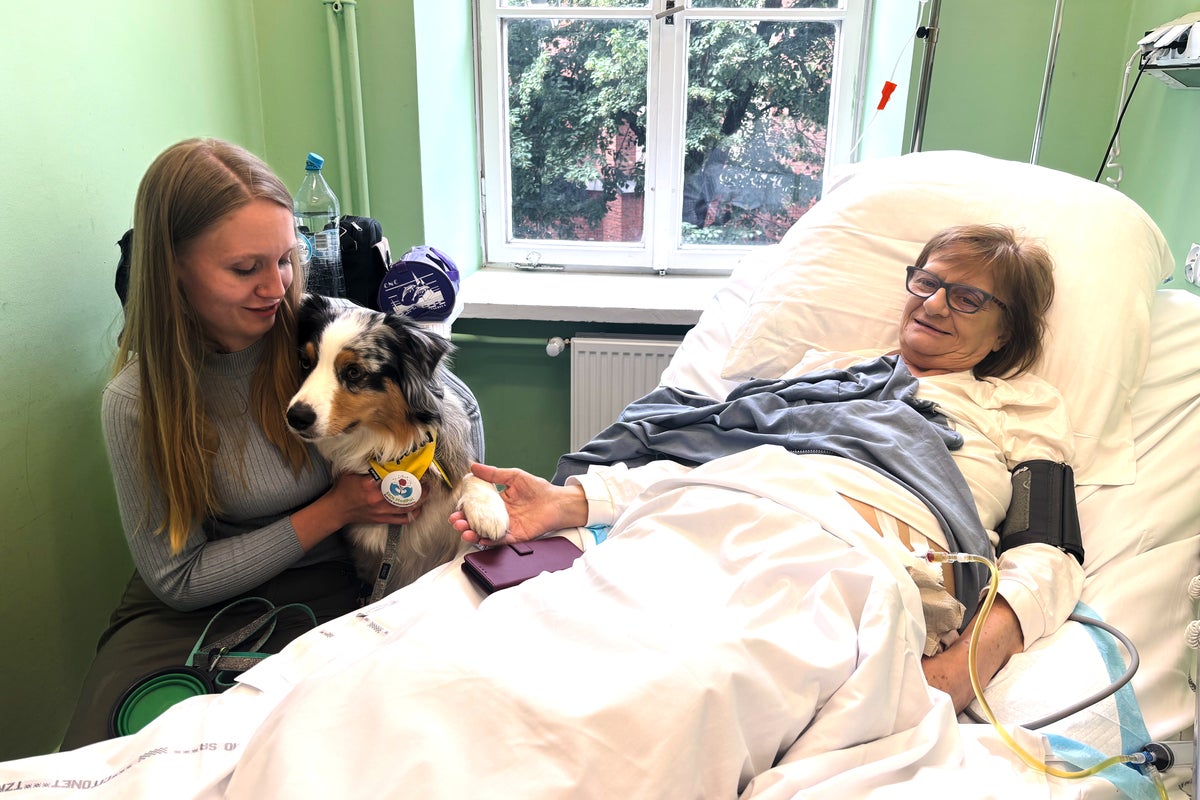
Civil law systems regularly fail to reconcile the legal status of companion animals with the operational realities of acute healthcare crises. When a sole pet owner faces sudden, long-term hospitalization or death, a systemic vacuum emerges. The law treats the animal as property (chattel), yet the market cannot liquidate or care for this specific class of property without explicit, proactive legal delegation.
The structural flaw in this framework becomes apparent during critical health events, such as terminal cancer diagnoses. While a patient undergoes intensive treatment, their immediate focus is divided between medical compliance and the preservation of dependent assets—specifically, companion animals. In jurisdictions like Poland, the lack of a statutory mechanism to automatically transfer temporary or permanent custody to verified proxies creates a cascade of administrative and ethical failures.
To understand how a localized crisis transforms into a push for national legislative reform, we must analyze the structural breakdown of property law, the economic externalities imposed on municipal animal shelters, and the strategic interventions required to stabilize estate vulnerability during healthcare emergencies.
The Dual-Status Paradox: Property Law vs. Biological Reality
The primary vulnerability stems from a fundamental legal friction: the tension between the statutory definition of an animal and its biological requirements. Under most European civil codes, including Poland's Civil Code (Kodeks cywilny), animals are explicitly stated to not be things, yet the provisions regarding property and ownership apply to them contextually.
This dual-status paradox creates three distinct failure points during an owner's medical incapacitation:
- The Title Ambiguity Bottleneck: When an owner is incapacitated, no third party has the immediate legal authority to alter the animal's domicile, authorize emergency veterinary care, or transfer ownership to a willing caretaker. Without an explicit power of attorney, actions taken by neighbors or friends occupy a legal gray area, exposing them to civil liability for conversion or property damage.
- The Asset Maintenance Deficit: Unlike inanimate property, companion animals require continuous financial and physical inputs (food, medical management, shelter). If the owner’s liquid assets are frozen due to incapacitation or probate delays, the property degrades rapidly, presenting an immediate animal welfare violation.
- The Intestate Succession Gap: If the owner dies without a precise testamentary disposition regarding the animal, the pet enters the general estate. In fragmented families, or where heirs reject the inheritance (spadek), the animal enters a legal limbo. The state cannot compel an heir to fulfill a maintenance obligation for property they have repudiated.
The Microeconomic Imbalance of Emergency Pet Abandonment
When the legal framework fails to provide a seamless transition of custody, the burden shifts from the private estate to public infrastructure. This creates a quantifiable economic externality.
Consider the cost function of municipal animal shelters. When a sole owner is hospitalized without a contingency plan, police or social services frequently intervene to remove the animal from the premises. The animal is then placed in a municipal facility (Schronisko).
Total Emergency Cost = C_capture + (Days_limbo * C_daily_maintenance) + C_medical_triage + C_legal_clearance
Where:
- C_capture represents the operational cost of state dispatch and retrieval.
- Days_limbo represents the duration the animal must be held before it is legally cleared for adoption.
- C_daily_maintenance includes food, labor, and housing overhead.
- C_legal_clearance involves the administrative and judicial hours required to terminate the original owner's rights or clear probate.
Because the law treats the animal as an unresolved estate asset, the shelter cannot legally offer the animal for adoption during the initial holding period. The Days_limbo variable expands linearly with judicial backlog, artificially inflating the total cost per animal. This creates an unsustainable allocation of public funds, diverting capital away from routine animal control and welfare optimization toward long-term asset storage.
The Anatomy of the Polish Legislative Initiative
The specific push for legislative modification in Poland—inspired by the intersection of an oncology patient's crisis and the advocacy surrounding her pet—serves as a case study in grassroots policy engineering. The initiative targets specific amendments to the Animal Protection Act (Ustawa o ochronie zwierząt) and the Civil Code.
The strategic objective of the proposed reform is the codification of an "Emergency Custody Proxy" (Pełnomocnik ds. Opieki nad Zwierzęciem). This legal mechanism replicates the function of a healthcare proxy but operates exclusively within the domain of asset management for companion animals.
[Owner Medical Incapacitation]
               │
               ▼
┌──────────────────────────────┐
│  Emergency Custody Proxy     │
│  Activated Automatically     │
└──────────────┬───────────────┘
               │
       ┌───────┴───────┐
       ▼               ▼
┌──────────────┐┌──────────────┐
│ Authorized   ││ Access to    │
│ Vet Care     ││ Stipulated   │
│              ││ Funds        │
└──────────────┘└──────────────┘
The operational blueprint of this framework relies on three pillars:
1. Pre-Authorized Statutory Delegation
The reform seeks to introduce a standardized Registry of Companion Animal Proxies linked to national identity databases (PESEL). Upon admission to a medical facility, a patient can designate a proxy who immediately receives the statutory right to possess and care for the animal, bypassing the standard requirements of a formal, notarized power of attorney during emergencies.
2. The Conditional Liability Shield
A major deterrent for third-party intervention is the risk of civil litigation if the animal becomes ill, injured, or dies while under temporary care. The proposed law introduces a qualified immunity standard: temporary caretakers acting in good faith are shielded from property damage claims by the owner or heirs, provided their actions align with basic animal welfare standards.
3. Accelerated Probate Carve-Outs
To prevent animals from languishing in shelters during protracted estate disputes, the initiative proposes an expedited judicial track. If an executor or heir does not claim or make provisions for a companion animal within 14 days of the owner’s death, the animal is legally decoupled from the core estate valuation. This allows immediate title transfer to an approved animal welfare organization or adopter, compressing the Days_limbo variable to a structural minimum.
Structural Constraints and Strategic Vulnerabilities
While the proposed legislative architecture solves the immediate custody crisis, it introduces several operational constraints that legal analysts and policymakers must address to prevent systemic abuse or failure.
The first limitation involves verification and monitoring. If the registry automatically grants custody rights to a designated proxy upon an owner's hospitalization, the state lacks a mechanism to verify the proxy's current fitness to provide care. If a proxy has a history of animal abuse or lacks the economic stability to house the animal, the law inadvertently facilitates a suboptimal placement. A parallel database cross-check against existing animal cruelty convictions is mandatory to mitigate this risk.
The second bottleneck is financial funding. Assigning custody of an animal does not automatically guarantee the transfer of the liquidity required to sustain it. If the owner's bank accounts remain locked under general incapacity laws, the proxy must fund the animal's maintenance out-of-pocket, hoping for future reimbursement from the estate. This financial friction will cause a high rate of proxy refusal, neutralizing the efficacy of the statutory delegation.
A third conflict emerges within the hierarchy of creditor claims. If a deceased owner leaves behind significant debt, creditors have a legal claim on the estate's assets. Because pedigree animals can possess substantial market value, a tension arises between a creditor's right to liquidate the asset and the animal welfare mandate to place the pet in a stable environment. The law must explicitly define a valuation threshold below which an animal is exempt from creditor seizure.
Operational Playbook for Healthcare Facilities and Municipalities
Pending national legislative enactment, the optimization of patient outcomes and asset preservation requires immediate localized operational adjustments. Healthcare networks and municipal agencies cannot afford to wait for federal statutory alignment; they must deploy structural workarounds using current legal instruments.
Hospital administration protocols must integrate animal dependency screening into the standard intake process. When a patient is admitted for acute or long-term care, the intake documentation must require the identification of any dependent companion animals and the explicit designation of a temporary caretaker. This documentation, signed upon admission, functions as a localized bailment contract, granting the hospital clear authorization to coordinate with the designated individual or a verified local charity.
Concurrently, municipal animal welfare departments should establish formal Memorandums of Understanding (MOUs) with regional oncology centers and general hospitals. These agreements establish a standardized triaging protocol:
- Triage Phase 1: Hospital identifies an un-retained animal during patient intake.
- Triage Phase 2: The hospital contacts the pre-vetted municipal partner network rather than dispatching standard animal control.
- Triage Phase 3: The partner organization accepts temporary, non-ownership custody under a specialized foster agreement that includes explicit provisions for medical updates to the hospitalized owner, maintaining the psychological stability of the patient while guaranteeing asset preservation.
By shifting from a reactive, crisis-driven model to an integrated, cross-sector workflow, municipalities can systematically drive down the operational overhead of animal sheltering while protecting the personal estates of vulnerable citizens. The evolution of property law must ultimately catch up to these structural innovations, transforming a localized, emotion-driven push for reform into a codified, legally precise framework for estate resilience.