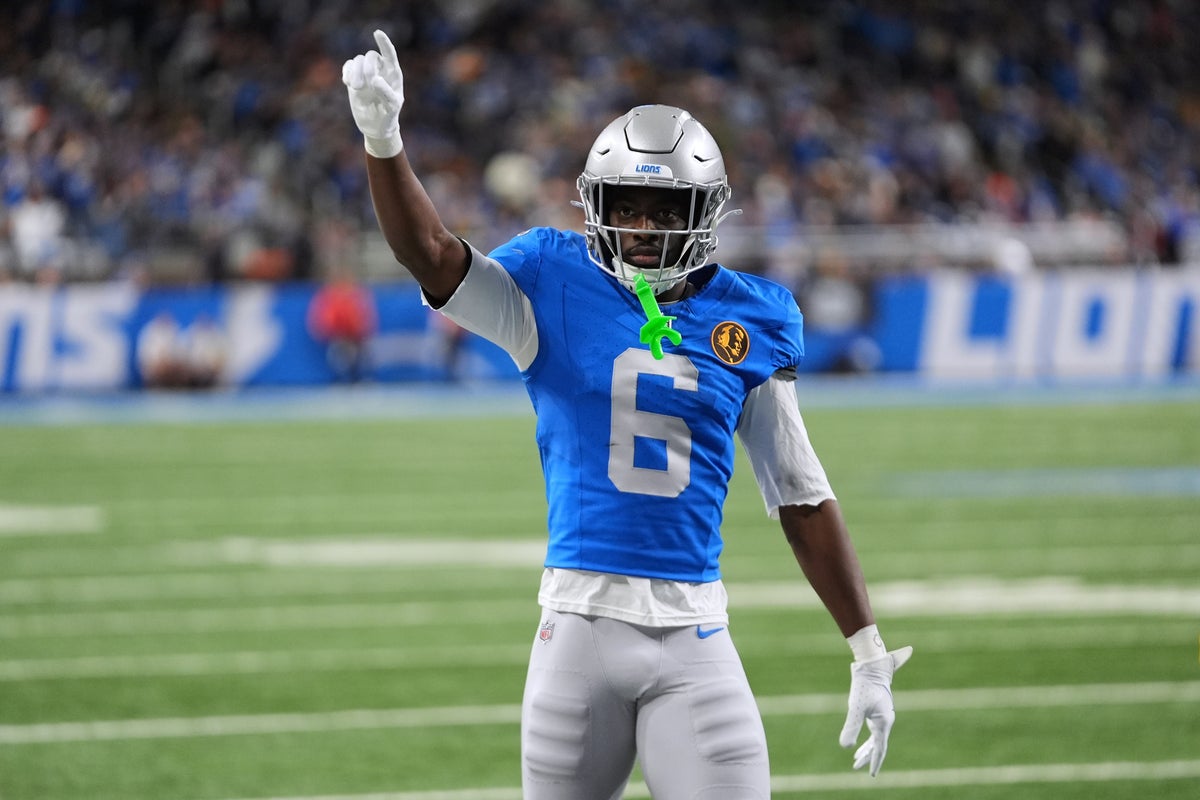
The arrest of Detroit Lions cornerback Terrion Arnold on eight felony counts reveals the severe systemic failure that occurs when an individual attempts to substitute private coordination for state-administered justice. The charges—comprising four counts of robbery with a firearm or deadly weapon and four counts of kidnapping—stem from a February 2024 incident in Tampa, Florida. They carrying a maximum operational penalty of life imprisonment under Florida law.
The state’s case against Arnold rests on a clear sequence of events that illustrates how a civil asset loss can escalate into high-liability criminal exposure. Understanding the mechanics of this case requires evaluating three specific components: the catalyst event, the execution of the retaliatory plot, and the legal levers the state is using to prosecute it. You might also find this connected article insightful: The Brutal Truth Behind the Collapse of Turkish Football.
The Loss Catalyst and Miscalculated Asset Recovery
The underlying economic motivation for the offense began with a massive capital loss. On February 4, 2024, Arnold and his associates reported a theft at an Airbnb property they were renting in Largo, Florida. The reported stolen assets totaled more than $250,000, including:
- High-end watches and luxury jewelry
- Designer bags and footwear
- Firearms
- Approximately $100,000 in cash reserves
While Arnold initiated standard legal recourse by filing a report with the Largo Police Department, prosecutors allege he simultaneously executed a parallel, extralegal recovery strategy based on flawed intelligence. Investigators later confirmed that the individuals Arnold targeted for retaliation were not actually involved in the initial theft. This reveals a critical failure in the informal information networks used to justify the operation. As highlighted in detailed coverage by FOX Sports, the effects are worth noting.
The Coordinated Execution Model
The state's prosecution framework categorizes Arnold as the "primary conspirator" rather than just a passive bystander. The operation relied on a multi-layered execution model designed to lure, detain, and extort the suspected targets.
The first phase involved digital entrapment. Associates linked to Arnold used digital communication channels to lure three victims—all males in their late teens—to a specified apartment complex in Tampa.
The second phase was physical containment and tactical assault. When the victims entered the apartment, they were ambushed by armed individuals who held them at gunpoint, physically assaulted them, and pistol-whipped them.
The third phase was remote monitoring and operational oversight. During the initial phase of the confinement, Arnold was not physically present at the scene. Instead, co-conspirators broadcasted the assault directly to him via a live video stream. This real-time digital link provides the state with strong evidence of direct operational command and control. Arnold later arrived at the location while the assault and confinement were still ongoing, directly tying him to the physical scene.
The Asymmetry of Legal Risk
The prosecution of this case highlights the significant gap between corporate damage control and criminal liability. In March 2024, Detroit Lions leadership expressed confidence in Arnold’s innocence based on internal reviews, with Head Coach Dan Campbell stating that team intelligence indicated Arnold was not involved. This corporate stance highlights a fundamental blind spot regarding how conspiracy law works in the criminal justice system.
The state’s case became significantly stronger after two co-defendants accepted plea agreements on June 24, 2024. In complex conspiracy prosecutions, the state frequently uses a sequential flipping strategy:
[Phase 1: Apprehend lower-level operations assets]
                       │
                       ▼
[Phase 2: Leverage high-exposure charges to secure cooperate plea deals]
                       │
                       ▼
[Phase 3: Deploy insider testimony against the primary organizer]
Defense counsel has argued that the state's case relies heavily on testimony from convicted felons who have a strong incentive to shift blame to reduce their own sentences. While this argument targets witness credibility, it does little to mitigate the objective digital evidence, such as the live-streamed video and accompanying text messages, that investigators recovered during the initial phases of the inquiry.
The Hillsborough County State Attorney’s Office is pursuing a zero-bond pretrial detention strategy, arguing that Arnold represents a continued threat to the community. This move removes any short-term bail options and forces the defense to prepare for trial while their client remains in custody.
From a strategic perspective, the defense must now shift from a flat denial of presence to dismantling the statutory definitions of "conspiracy" and "intent" under Florida law. If the prosecution can prove that Arnold watched the live stream and then went to the scene, the distinction between planning the crime and physically committing it disappears. This leaves the defense with a narrow path focused on proving that the co-conspirators acted independently without his direction.