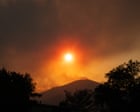
Executive prohibitions on pyrotechnics during periods of acute environmental vulnerability represent a complex intersection of risk management, economic trade-offs, and administrative enforcement. When a state executive issues an emergency mandate restricting fireworks due to active wildfires, the action is rarely a simple reactionary measure. Instead, it serves as an intervention within a highly variable ecological and economic system. Evaluating the efficacy of such a policy requires a systematic deconstruction of fire behavior metrics, the economic cost function of emergency responses, and the structural limitations of legal mandates as preventative tools.
The baseline vulnerability of arid and semi-arid regions like Utah is governed by distinct meteorological and fuel-loading variables. Executive actions must balance the preservation of public safety against commercial losses, civil liberties, and cultural traditions. To evaluate these decisions through a rigorous analytical framework, we must isolate the core variables driving the risk equation and assess the structural mechanisms governing policy implementation.
The Tripartite Vulnerability Framework
Wildfire propagation and ignition probability are defined by three foundational vectors: fuel state, atmospheric forcing, and human proximity. Executive interventions target the third vector exclusively, attempting to suppress anthropogenic ignition sources when the first two vectors reach critical thresholds.
1. Fuel State Metrics and Moisture Dynamics
The susceptibility of vegetation to ignition is primarily dictated by fuel moisture content, categorized by the time required for a fuel particle to respond to changes in atmospheric moisture.
- One-Hour Fuels: Small fine fuels less than 0.25 inches in diameter, such as annual grasses and leaf litter. These materials respond almost instantaneously to relative humidity fluctuations. When one-hour fuel moisture drops below 5%, the probability of ignition from a random thermal source approaches unity.
- Ten-Hour and Hundred-Hour Fuels: Medium-sized woody materials ranging from 0.25 to 3 inches in diameter. These fuels reflect sustained climatic trends rather than daily weather shifts. Lower moisture levels in these categories indicate deep, systemic drought conditions.
- Thousand-Hour Fuels: Large downed timber and deep duff layers exceeding 3 inches in diameter. When thousand-hour fuel moisture drops below historic medians, ecosystems experience catastrophic fire behavior, characterized by high-intensity crown fires and extreme spotting potential, where windborne embers ignite new fires miles ahead of the main front.
Pyrotechnic detonations introduce high-temperature thermal energy directly into the most volatile layer: the one-hour fine fuels. A single standard aerial firework can emit sparks exceeding 1,000 degrees Celsius, easily surpassing the ignition temperature of dry cellulose.
2. Atmospheric Forcing and Fire Weather
Weather conditions act as the primary accelerator of localized fuel vulnerability. The National Weather Service utilizes specific parameters to declare Red Flag Warnings, which serve as the scientific justification for executive intervention:
- Relative Humidity: Sustained levels below 15% deplete moisture from fine fuels, accelerating the rate of evaporation and maximizing chemical volatility.
- Wind Velocity: Sustained surface winds exceeding 20 miles per hour, combined with frequent gusts, supply continuous oxygen to nascent ignition points and dictate the rate of spread.
- Thermal Maximums: High ambient temperatures lower the total energy required to bring a fuel source to its ignition threshold.
When high ambient temperatures coincide with minimal relative humidity and high winds, the environment transitions into a state where any thermal introduction can trigger a non-linear expansion of fire perimeters.
3. Anthropogenic Densities and Spatial Overlap
The wildland-urban interface represents the geographic zone where human infrastructure meets undeveloped wildland vegetation. This zone introduces a structural bottleneck into emergency management. The intersection of high population density with volatile fuel loads increases the likelihood of human-caused ignitions while simultaneously placing high-value assets directly in the path of destruction.
Prohibitions on fireworks are explicitly designed to alter human behavior within this specific geographic interface, removing high-risk activities from areas where the margin for containment is narrowest.
The Cost Function of Wildfire Suppressive Action
Every executive prohibition must be weighed against its implicit and explicit economic implications. The total financial impact of a wildfire emergency can be modeled as a function of direct suppression costs, asset destruction, and the economic friction introduced by regulatory interventions.
$$C_{total} = C_{suppression} + C_{damage} + C_{intervention} + C_{opportunity}$$
The variables operating within this cost function demonstrate the true scale of the trade-offs managed by state executives.
Suppression Costs and Asset Allocation
Direct suppression expenditures scale non-linearly with fire size and complexity. Type 1 Incident Management Teams, deployed for the most complex incidents, require significant capital deployment for aerial assets, heavy machinery, and specialized personnel.
The deployment of Type 1 heavy airtankers, very large airtankers, and Type 1 helicopters incurs fixed hourly operational costs running into tens of thousands of dollars per asset. Ground resources, including hotshot crews, bulldozers, and structural protection engines, strain state and federal budgets. When multiple fires burn simultaneously across a state, resource saturation occurs. This creates a supply bottleneck, forcing incident commanders to triage asset allocation based on structural risk rather than containment probability.
Asset Destruction and Long-Term Capital Loss
The true economic damage of a wildfire extends far beyond immediate structural losses. The destruction of electrical grid infrastructure, water treatment facilities, and transportation corridors requires long-term capital reallocation.
Furthermore, post-fire landscapes face severe hydrological risks. The destruction of vegetative canopies combined with the creation of hydrophobic soil layers during intense burns accelerates surface runoff. The first significant rainfall event following a major fire frequently induces debris flows and flash flooding, threatening downstream municipalities and requiring multi-million-dollar emergency watershed protection measures.
Intervention Friction and Commercial Disruptions
Imposing a blanket ban on fireworks introduces immediate economic friction into the private sector. Retailers specializing in pyrotechnic sales operate on highly compressed seasonal timelines, generating the vast majority of their annual revenue within narrow windows surrounding major holidays.
A sudden executive prohibition straddles these enterprises with unsold inventory, supply chain liabilities, and immediate cash-flow constraints. The state must weigh these localized commercial losses against the systemic risk of uncontained conflagrations.
Structural Bottlenecks in Policy Enforcement
The declaration of a ban by a state executive does not automatically translate into risk reduction on the ground. The efficacy of the mandate is heavily constrained by structural bottlenecks inherent in multi-jurisdictional enforcement and human compliance dynamics.
The Jurisdictional Mosaic
The primary impediment to uniform enforcement is the complex mosaic of land ownership and statutory authority. A state governor's executive order typically applies to state-managed lands, state parks, and unincorporated private lands. However, enforcement mechanisms break down when encountering a mixture of federal, municipal, and tribal jurisdictions:
- Federal Lands: The Bureau of Land Management, US Forest Service, and National Park Service operate under distinct federal mandates. While they frequently coordinate with state restrictions, their enforcement mechanisms rely on federal law enforcement officers, who face severe resource constraints over vast geographical areas.
- Municipalities: Incorporated cities and towns possess home-rule authority, allowing them to establish localized ordinances. Some local municipalities may resist state-level mandates due to political pressures or differing local risk assessments, creating islands of legal variance where fireworks remain permitted adjacent to restricted state lands.
- Sovereign Tribal Nations: Tribal lands operate independently of state executive orders. Coordination requires diplomatic agreements rather than top-down mandates, meaning enforcement depends on tribal law and resources.
This fragmentation creates public confusion and complicates law enforcement efforts, as individuals can cross invisible jurisdictional boundaries to purchase and detonate fireworks legally inside an otherwise restricted ecological zone.
Detection and Enforcement Mechanics
Law enforcement agencies face acute resource limitations during holiday periods, which typically coincide with peak wildfire risk. Detecting individual violations across expansive wildland-urban interfaces presents a severe operational challenge.
Visual detection of pyrotechnic ignitions is delayed by terrain features and darkness. While acoustic monitoring systems and public reporting can pinpoint general ignition zones, the mobility of violators makes real-time apprehension highly improbable. By the time emergency personnel arrive at a reported location, the individual has often departed, leaving behind an unattended ignition source that may already be transitioning from a localized fire into a structural threat.
The Cognitive Gap in Public Risk Perception
The persistence of human-caused ignitions despite clear scientific indicators and legal prohibitions stems from a well-documented cognitive gap in risk evaluation. Public compliance with environmental mandates is degraded by several behavioral biases.
Optimism Bias and the Illusion of Control
Individuals frequently display an optimism bias, operating under the assumption that while fireworks may pose a generalized systemic risk, their personal execution of the activity is safe. This illusion of control manifests in the belief that localized mitigation measures—such as keeping a garden hose nearby or clearing a small radius of vegetation—can neutralize the thermodynamic reality of an aerial firework capable of traveling hundreds of feet into unmanaged fuels.
Temporal Discounting of Risk
The immediate utility derived from cultural celebrations and recreational activities is weighted more heavily by individuals than the delayed, probabilistic cost of a catastrophic wildfire. The potential for a spark to cause a multi-million-dollar fire hours later is discounted against the immediate gratification of the event. Educational campaigns often fail to alter this calculus because they focus on abstract statistical probabilities rather than concrete, immediate causal chains.
Strategic Framework for Future Risk Interventions
To move beyond reactive executive orders that strain economic systems and stretch enforcement capabilities, states must adopt a predictive, tiered intervention framework. Rather than relying on binary, last-minute prohibitions that disrupt commerce and create jurisdictional friction, policy-makers require a systematic architecture that scales automatically based on measurable environmental metrics.
[Environmental Data Inputs]
      │ (Fuel Moisture, Vapor Pressure Deficit, ERC)
      ▼
[Automated Tiered Risk Matrix]
      │
      ├─► Tier 1 (Low Risk): Unrestricted Sales / Managed Discharge Zones
      ├─► Tier 2 (Moderate Risk): Geographic Restraints / Banned Aerials
      └─► Tier 3 (Extreme Risk): Full Prohibition / Automated Supply Shutdown
This structural methodology replaces political exposure with scientific standardization.
1. Data-Driven Triggers and the Energy Release Component
Executive intervention should be decoupled from political discretion and tethered directly to the Energy Release Component (ERC). The ERC is a calculated index derived from the National Fire Danger Rating System that quantifies the potential heat release per unit area at the flaming front of a fire. It incorporates long-term drying trends of large fuel sizes and serves as a highly accurate predictor of containment difficulty.
By establishing statutory thresholds, a state can automate restrictions. For example, if the ERC crosses the 90th percentile for a specific climate zone, specific classes of aerial fireworks are automatically banned in that zone. If it crosses the 95th percentile, a total prohibition takes effect immediately. This approach gives retailers and the public clear, predictable metrics, allowing businesses to adjust inventory procurement months in advance based on seasonal long-range drought forecasts.
2. The Establishment of Centralized Discharge Zones
To mitigate the economic losses of retail vendors while managing the ignition risk within the wildland-urban interface, states should shift from a philosophy of total prohibition to one of contained mitigation. Municipalities can establish hardened, centralized discharge zones. These areas—such as large, asphalted stadium parking lots or cleared industrial zones void of vegetation—can be outfitted with active suppression infrastructure, including staged municipal fire engines and continuous misting systems.
This strategy changes the policy objective from unfeasible enforcement to managed compliance. Consumers retain the ability to utilize legally purchased products, vendors maintain a viable commercial market, and the risk of uncontained wildland ignition drops to near zero because the thermal energy is confined to non-combustible surfaces under professional surveillance.
3. Supply-Chain Interdiction Strategies
Attempting to police the point of consumption across thousands of square miles of wildland-urban interface is an inefficient allocation of law enforcement capital. Instead, regulatory pressure should be shifted upstream to the supply chain.
By utilizing geofenced sales tracking systems, states can mandate that point-of-sale registers automatically disable the transaction of high-risk pyrotechnics if the purchaser's address or the retail location sits within an active Tier 3 extreme risk zone. Furthermore, out-of-state transport can be managed through targeted weight-station inspections along key interstate corridors during high-risk windows, choking off the supply of illegal fireworks before they enter the localized ecosystem.
4. Direct Financial Liability Realignment
The final component of this framework requires shifting the financial burden of wildfire suppression from the taxpayer to the responsible party. While many states have statutes allowing for the recovery of fire suppression costs, the prosecution of these cases is historically rare due to the difficulty of proving intent or clear negligence.
Amending statutory frameworks to establish strict liability for any fire ignited by pyrotechnic devices removes the requirement to prove negligence. If a device registered to or purchased by an individual is forensically linked to an ignition point, that individual becomes civilly liable for the full cost of the ensuing suppression operation and subsequent asset restoration. Insurance carriers would respond by adjusting premiums or excluding coverage for fireworks-related damages, forcing a market-driven reassessment of personal risk that aligns individual behavior with ecological reality.