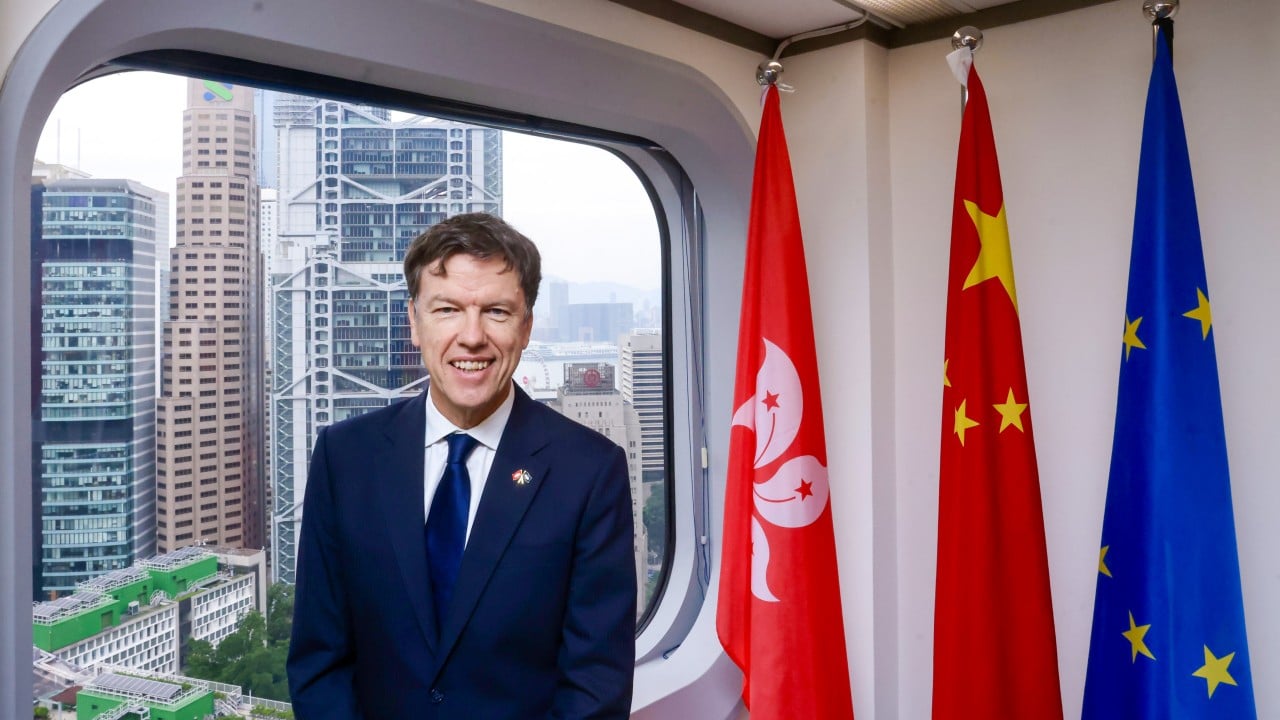
The proposed re-establishment of a formal financial services dialogue between the European Union and Hong Kong marks a strategic pivot away from purely political friction toward institutional capital alignment. While headline narratives focus on diplomatic engagement, the underlying mechanics of these bilateral talks are driven by two structural imperatives: the optimization of green finance taxonomies and the integration of cross-border capital pipelines within the Northern Metropolis development.
European firms seeking market entry require clear regulatory definitions to mitigate cross-border friction. Conversely, Hong Kong requires institutional European liquidity to diversify its capital base away from domestic and regional market concentration. By analyzing this dialogue through the lens of regulatory arbitrage and infrastructural investment, the true strategic motivations of both jurisdictions become evident.
The Dual-Taxonomy Convergence Framework
The primary structural bottleneck in cross-border green finance is the lack of direct interoperability between the European Union's Sustainable Finance Taxonomy and mainland China's Common Ground Taxonomy, the latter of which deeply influences Hong Kong’s green bond framework. When institutional investors manage capital across these jurisdictions, they face a double compliance penalty, requiring duplicative reporting, auditing, and verification processes.
To resolve this inefficiency, the dialogue centers on a structural harmonization framework targeting three operational pillars:
- Metric Standardisation: Aligning disclosure obligations under the International Sustainability Standards Board (ISSB) frameworks to ensure that carbon accounting metrics used in Hong Kong-listed entities are directly recognized by European asset managers subject to the Sustainable Finance Disclosure Regulation (SFDR).
- Asset Class Equivalence: Establishing reciprocal recognition for green bond certification. Without this equivalence, European funds face regulatory restrictions when purchasing Hong Kong-issued sovereign or corporate green bonds, capping the potential inflows of European ESG capital.
- Verification Interoperability: Creating joint auditing protocols that allow verification firms to certify compliance for both jurisdictions simultaneously, reducing the operational cost function of green issuance by an estimated 15% to 20%.
This optimization model addresses a critical capital deployment friction point. European institutional funds represent a massive pool of strictly regulated ESG capital. Hong Kong, as a primary offshore financing hub, provides the necessary scale of green infrastructure projects, particularly within the Greater Bay Area. Harmonization acts as a bridge, reducing transaction costs and unlocking sidelined capital.
The Northern Metropolis Capital Capture Function
The Northern Metropolis initiative represents a profound shift in Hong Kong’s economic geography, demanding significant capital expenditure over the next decade. The dialogue serves as the formal mechanism to integrate European private equity, corporate banking, and technology firms into this project.
European interest in the Northern Metropolis is not uniform; it is concentrated in two high-yield sectors:
[Capital Allocation Flow: European Liquidity -> Northern Metropolis Projects]
1. The Technology-Infrastructure Nexus
European industrial giants and venture capital funds are targeting the San Tin Technopole. This hub requires specialized funding structures, including public-private partnerships (PPPs) and syndicated credit facilities. European financial institutions, possessing extensive experience in structuring long-duration infrastructure project finance under strict Basel IV capital requirements, aim to export these financial models to the region.
2. Green Real Estate Financing
The Northern Metropolis emphasizes low-carbon urban development. This commitment requires advanced debt instruments, such as sustainability-linked loans and transition bonds. European banks see a competitive advantage in deploying these sophisticated instruments, where they can demand a premium for structuring expertise while helping local developers optimize their weighted average cost of capital (WACC).
The core challenge for European firms enters at the level of regulatory risk management. Investing in long-term infrastructure within a jurisdiction undergoing institutional transformation introduces a risk premium. The financial dialogue serves as a risk-mitigation platform, giving European firms direct access to policy makers to clarify land-grant terms, tax treatments, and data governance laws before committing balance-sheet capital.
Structural Asymmetries and Systemic Risks
A rigorous analysis must account for the structural asymmetries inherent in these talks. The relationship is not perfectly reciprocal; it is shaped by competing economic pressures and geopolitical constraints.
First, the EU is executing a broader strategy of economic de-risking, particularly regarding supply chains and technological dependencies related to mainland China. This macro-strategy introduces a logical tension into financial dialogue with Hong Kong. While the European Commission seeks open channels for its financial services sector to capture yields, it simultaneously maintains restrictive policies on technology transfers and dual-use investments. This dichotomy limits the scope of cooperation to pure financial portfolio flows and non-sensitive green tech applications.
Second, Hong Kong's legal and regulatory alignment with the mainland Chinese market creates a structural boundary for European firms. The implementation of cross-border data transfer restrictions within the Greater Bay Area presents a major compliance hurdle for European banks that rely on centralized global data architectures. If Hong Kong cannot secure robust data-carveouts for international financial institutions, the operational cost of compliance will outweigh the efficiency gains achieved via taxonomy harmonization.
The third limitation rests on capital control mechanisms. While Hong Kong maintains a fully convertible currency via the Linked Exchange Rate System, its economic integration with the mainland exposes it to indirect macroeconomic shocks. European asset managers remain cautious about potential regulatory spillovers that could impact liquidity exit options during periods of heightened market volatility.
Institutional Capital Forecast
The trajectory of the EU-Hong Kong financial dialogue points toward a highly specialized, sector-specific integration rather than a broad, comprehensive economic partnership. The outcome will likely resemble a series of bilateral equivalence agreements targeting specific corridors of the financial markets.
Expect the initial breakthroughs to manifest in the mutual recognition of green asset classes. This will trigger an immediate reduction in the tracking error of European-managed green funds exposure to Asian infrastructure. Within the Northern Metropolis, European participation will likely be channeled through specialized green consortia, minimizing direct equity exposure while maximizing high-yield debt structuring fees.
Ultimately, the success of these talks depends on the technical execution of regulatory convergence. If the dialogue remains confined to diplomatic pleasantries, capital will continue to seek alternative hubs with greater structural clarity. If, however, concrete equivalence frameworks are established, it will solidify Hong Kong’s position as the primary offshore laboratory for Western capital allocation into Asia's green transition.