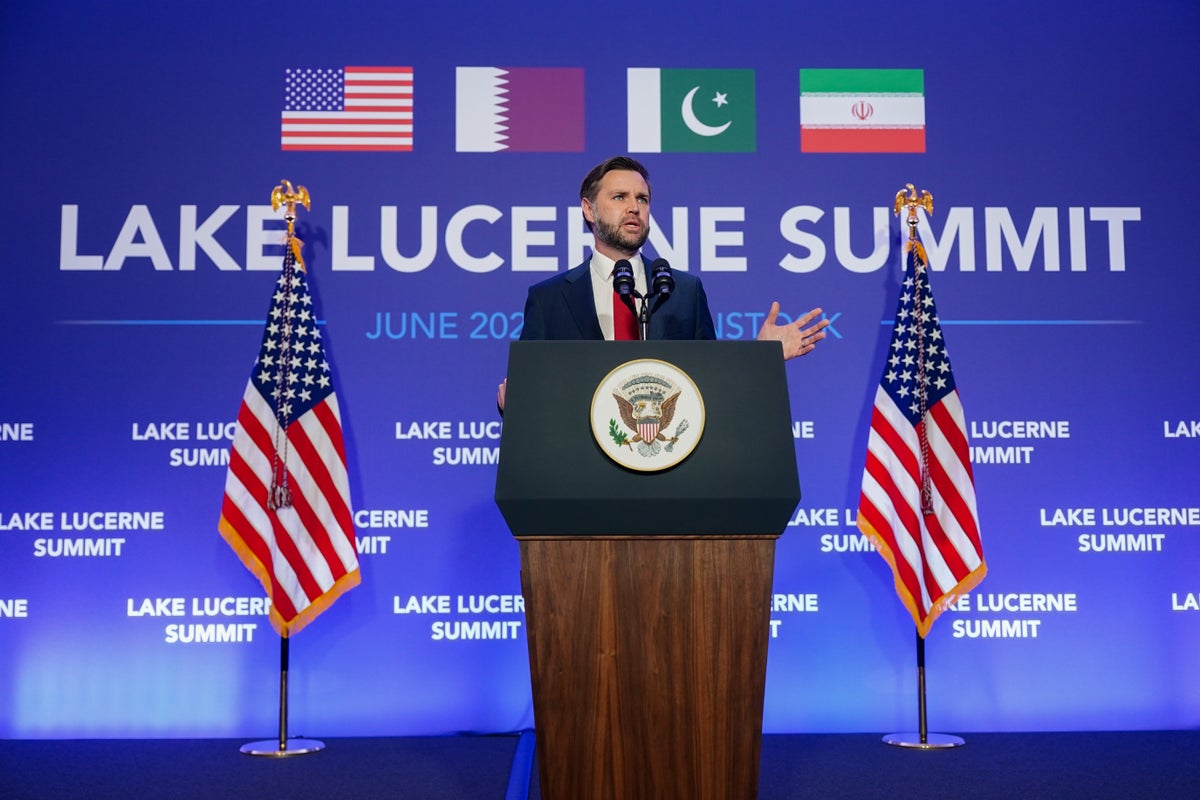
The viability of any diplomatic breakthrough between adversarial nation-states depends not on rhetorical alignment, but on the structural alignment of strategic incentives. Recent statements indicating that preliminary talks with Iranian officials have established a baseline foundation for an agreement to terminate ongoing hostilities require systematic evaluation. Surface-level diplomatic optimism frequently masks the underlying strategic friction points that govern international accords. To assess whether these initial discussions can transition into a binding, durable treaty, the negotiation must be disassembled into its core operational variables: bargaining power asymmetric distribution, verification enforcement mechanisms, and regional proxy networks.
The Tripartite Matrix of Diplomatic Bargaining Power
A successful diplomatic outcome is achieved when the perceived utility of compliance exceeds the expected value of continued conflict for all participating actors. In the context of US-Iran negotiations, this equilibrium is determined by three distinct vectors of influence.
Economic Sanctions Elasticity
The primary operational mechanism utilized by Western nations is the enforcement of primary and secondary economic sanctions. The efficacy of this mechanism is non-linear and experiences diminishing marginal returns over extended durations.
- The Enforcement Threshold: Sanctions achieve peak efficacy when they disrupt the target nation's primary revenue streams—specifically crude oil exports and petrochemical derivatives—to a degree that threatens domestic fiscal stability.
- The Adaptation Curve: Over time, target states build alternative trade architectures, utilizing non-aligned financial clearing systems and dark tanker fleets. This adaptation reduces the long-term utility of sanctions as a concession-extracting tool, meaning the window for optimal diplomatic execution is structurally constrained.
Kinetic Deterrence Thresholds
Diplomatic discussions do not occur in isolation from military capacity. The baseline foundation cited in recent reports relies on the implicit threat of kinetic escalation. For a diplomatic framework to hold, the cost function of military retaliation must remain predictably high. The calculus involves assessing the vulnerability of critical infrastructure against the defensive capabilities of integrated missile defense networks. If either party perceives a shift in the strike-to-defense ratio, the motivation to sustain diplomatic negotiations degrades.
Domestic Political Capital Reserves
Negotiating teams do not operate with absolute autonomy; their parameters are restricted by domestic constituencies and legislative veto players. The sustainability of a foundational agreement depends on the executive branch's capacity to ratify terms without triggering systemic legislative non-compliance. In the United States, this requires navigating statutory sanctions frameworks that cannot be dissolved by executive order alone. In Iran, it requires maintaining the alignment of internal security apparatuses that derive organizational power from an adversarial foreign policy posture.
Verification Mechanisms and Enforcement Costs
A fundamental vulnerability of preliminary diplomatic frameworks is the information asymmetry regarding compliance. Agreements cannot rely on trust; they require verifiable monitoring protocols that reduce the probability of covert non-compliance.
[Strategic Interaction Flow: Verification Architecture -> Compliance Cost vs Violation Penalty -> Agreement Stability]
The structural design of an enduring agreement must account for two primary compliance challenges:
- Nuclear Material Lifecycle Tracking: Any framework aiming to resolve broader regional conflicts must stabilize the nuclear proliferation variable. This requires unhindered access to centrifuge manufacturing facilities, uranium enrichment sites, and supply chains. The technical threshold for adequacy involves reducing the detection time of a material diversion to a window shorter than the time required to weaponize that material.
- Asymmetric Financing Attribution: Tracking the flow of capital to regional non-state actors presents a significant verification bottleneck. Unlike state-level military deployments, asymmetric funding occurs through informal banking networks and commodity smuggling operations. A foundational agreement that lacks a concrete mechanism to audit these financial vectors remains structurally unstable, as compliance at the state level can coexist with aggression at the proxy level.
The second limitation of traditional diplomatic treaties is the absence of a credible, automated enforcement mechanism. If a violation is detected, the reinstatement of penalties must be swift enough to neutralize the strategic advantage gained by the non-compliant party. The historical inefficiency of multilateral bodies means that a durable agreement must rely on snapback provisions controlled by individual state actors rather than consensus-based international organizations.
The Regional Security Bottleneck
The primary friction point in transforming a foundational understanding into a comprehensive peace treaty is the complex web of regional security interdependencies. The conflict cannot be modeled purely as a bilateral negotiation between Washington and Tehran.
Third-party regional states view any bilateral accommodation with systemic skepticism. Security architectures built on extended deterrence commitments face immediate destabilization if a US-Iran agreement is perceived as a reassessment of regional alliances. This creates a strategic paradox: steps taken to satisfy the security requirements of regional allies often require imposing conditions on Iran that its domestic political framework cannot accept.
The distribution of asymmetric capabilities across regional theaters further complicates the equation. A cessation of direct hostilities does not automatically translate to a cessation of regional proxy operations. Non-state actors possess localized objectives that may run counter to the strategic preferences of their state sponsors. Consequently, an agreement that binds the state actor without providing an enforceable mechanism to govern proxy behavior will collapse under the pressure of localized escalations.
Quantitative Predictors of Treaty Viability
To determine whether current discussions will yield a definitive treaty or dissolve into cyclical escalation, analysts must monitor specific operational indicators rather than diplomatic communiqués.
- Oil Export Volume Variations: Tracked via satellite imagery and transponder data, a measurable shift in the volume of unmonitored crude shipments indicates whether the target state feels immediate economic pressure to formalize a deal.
- Enrichment Kinetic Profiles: The operational status of high-grade enrichment facilities serves as a direct indicator of negotiation seriousness. A deceleration in stockpiling signals a willingness to maintain the foundational baseline.
- Legislative Registry Actions: The introduction of bills designed to restrict executive waiver authority regarding sanctions provides a clear metric of the domestic legislative resistance the agreement will encounter.
The structural trajectory of the current diplomatic engagement indicates a high probability of short-term stabilization, followed by prolonged friction during the formal codification phase. The initial foundation acts as a necessary mechanism for conflict avoidance, but it lacks the structural specificity required to resolve the core systemic conflicts. The strategic play requires establishing localized, transactional de-escalation zones—focusing on maritime trade security and localized ceasefires—before attempting to construct a comprehensive regional security architecture. Sophisticated actors should position themselves for a period of managed instability rather than an immediate return to normalized regional commerce.