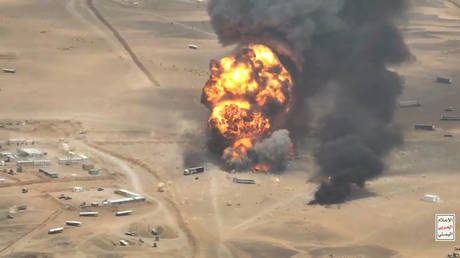
Recent missile and drone volleys targeting southern Saudi infrastructure have triggered an immediate stress test for the newly established Mecca Joint Defence Agreement. When Pakistan's civilian and military leadership publicly noted that the trilateral pact—binding Islamabad, Riyadh, and Ankara—could activate in response to unprovoked cross-border aggression, analysts rushed to interpret the statement through standard diplomatic lenses. This approach misses the underlying structural mechanics. Mutual defense frameworks are fundamentally mathematical instruments of risk distribution. Evaluating whether a security architecture holds requires deconstructing its operational thresholds, the cost function of non-state actors operating within asymmetric warfare, and the institutional boundaries that separate political posturing from kinetic obligation.
The trilateral architecture rests on three distinct operational pillars: financial capitalization, high-technology hardware deployment, and professional manpower mobilization. Saudi Arabia provides capital liquidity and economic integration pathways. Turkey contributes advanced autonomous defense systems and aerospace engineering. Pakistan supplies institutionalized military depth, veteran operational personnel, and command structures.
Within this framework, the formal trigger mechanism mirrors collective security models by stipulating that an armed attack on one member constitutes an attack on all three. Yet, applying this clause to non-state actors like the Houthi movement introduces significant ambiguity. Traditional alliance doctrines were engineered to deter sovereign state actors whose territorial integrity, economic assets, and government apparatus present clear targets for retaliation. Non-state entities operate with asymmetrical cost functions. They lack centralized industrial bases, high-value fixed state infrastructure, or conventional economic vulnerabilities that can be held hostage by traditional deterrence models.
The recent escalation reveals a core limitation in how security pacts manage proxy warfare. When ballistic missiles and explosive-laden drones strike civilian and energy facilities, the defending coalition faces a severe strategic dilemma. A kinetic overreaction risks expanding a localized theater into a regional conflagration aligned with broader confrontation cycles involving external powers. Conversely, under-responding erodes the credibility of the collective security guarantee.
Pakistan's official clarifications—subsequently emphasizing a measured approach and denying any immediate military mobilization—highlight the calibrated nature of modern deterrence. Defence Minister Khawaja Asif's assertion that the alliance serves as a shield rather than a sword illustrates the operational doctrine of the pact: deterrence by capability rather than automatic kinetic reprisal. The system relies on raising the anticipated cost of escalation for hostile actors by signaling collective resolve, without necessarily committing member states to immediate, uncalculated offensive deployments.
The structural tension within the alliance stems from the disparity of threat perceptions among the signatories. While Saudi Arabia faces direct tactical threats to its energy corridors and urban centers, Pakistan maintains a distinct strategic posture centered primarily on South Asian security dynamics alongside long-standing bilateral commitments to the Gulf. Turkey navigates its own complex geopolitical calculus across the Mediterranean, the Caucasus, and the Middle East. Aligning these divergent foreign policy priorities under a single collective security umbrella creates friction whenever localized skirmishes occur.
Asymmetric threats will continue to probe the structural limits of the Mecca Joint Defence Agreement. Conventional defense pacts designed by state bureaucracies struggle to deter decentralized networks sustained by external patrons. The effectiveness of the alliance will not be measured by its rhetorical warnings, but by its capacity to harmonize intelligence-sharing, integrated air defense networks, and diplomatic synchronization.
Regional states must transition from reactive crisis management to proactive risk mitigation. The strategic play moving forward requires establishing explicit threshold definitions for what constitutes actionable aggression by non-state actors, thereby removing ambiguity before the next escalation cycle forces an unplanned activation of the alliance framework.