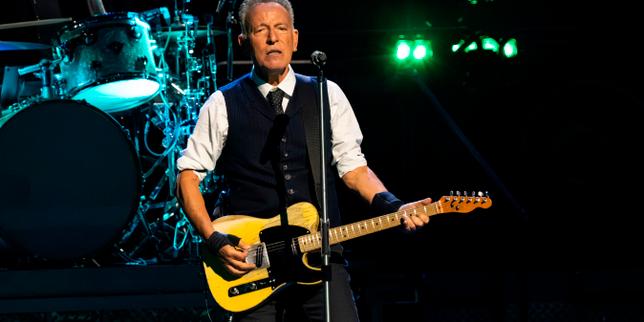
The utilization of artistic platforms for explicit political indictments is frequently analyzed through a lens of emotional resonance or ideological alignment. This perspective miscalculates the structural reality. When an artist of significant cultural capital, such as Bruce Springsteen, converts a high-visibility performance—specifically during a concert in Washington—into a direct rhetorical indictment of a political figure like Donald Trump, the action operates as a calculated deployment of cultural leverage. This maneuver converts a high-trust entertainment ecosystem into a low-friction political transmission vector. The strategy relies on asymmetric trust, demographic alignment, and the deliberate breaching of traditional genre boundaries to alter the risk profile of political dissent for the audience.
Analyzing this phenomenon requires moving past the superficial media narrative of a musician making a political statement. Instead, we must dissect the operational mechanics of the cultural-political feedback loop, quantify the strategic assets an artist risks and deploys, and map the precise cognitive transmission model that turns a concert ticket into a form of political mobilization.
The Tri-Border Framework of Cultural Mobilization
The execution of a high-profile political indictment from a concert stage rests on three distinct operational pillars. If any of these pillars are absent, the statement collapses into mere background noise or, conversely, triggers a severe audience backlash that diminishes the artist's brand equity.
       [ Pillar 1: Spatial Proximity ]
         (Washington D.C. / Power Center)
                       │
                       ▼
       [ Pillar 2: Audience Capital ]
         (Shared Demographics & Values)
                       │
                       ▼
       [ Pillar 3: Narrative Consonance ]
         (Rhetoric Aligned with Brand History)
1. Spatial Proximity and Contextual Amplification
The geographic selection of the performance is the primary multiplier of the message's signal strength. A political indictment delivered in a localized entertainment hub carries different weight than one delivered within the political epicenter of Washington. By staging the rhetoric within the physical perimeter of federal power, the artist forces a collision between commercial entertainment and state-level politics. This proximity guarantees that the local media apparatus, national political correspondents, and policy stakeholders are integrated into the primary audience pool, amplifying a localized performance into a national news cycle.
2. Audience Capital and Demography Alignment
The efficacy of a political intervention depends on the demographic composition of the consumer base. Springsteen’s core audience profile intersects heavily with working-class demographics, suburban voters, and older cohorts—historically the precise battleground segments in modern electoral math. When an artist addresses an audience that already possesses high internal trust in the performer’s brand, the psychological friction required to process a controversial political message is drastically reduced. The artist is not changing minds across a wide ideological chasm; they are validating, consolidating, and activating a specific latent sentiment within a critical demographic block.
3. Narrative Consonance
A political statement fails if it feels bolted onto a performer's persona. The indictment of Donald Trump in this context succeeds mechanically because it aligns with a multi-decade narrative arc established by the artist. The thematic foundation of Springsteen’s catalog—economic marginalization, the erosion of the American industrial base, and accountability of power—functions as a multi-decade rhetorical runway. The political indictment is presented not as a sudden partisan deviation, but as the logical, inevitable conclusion of the artist's lifelong thematic thesis.
The Transmission Vector: From Entertainment to Political Action
The cognitive transition an audience member undergoes during a live political indictment operates along a structured transmission vector. The live music environment alters typical cognitive defenses against political messaging through a three-stage psychological pipeline.
Stage 1: The Affective Shield
Political messaging encountered via standard news media or social networks immediately triggers ideological defense mechanisms. Consumers scan the information with high skepticism. However, within a live concert environment, the audience is in an affective state dominated by collective effervescence, nostalgia, and sensory immersion. This emotional state acts as a shield, lowering cognitive barriers. The political message is integrated into the performance ecosystem, meaning the audience processes the political critique through the same high-trust channel they use to process art.
Stage 2: The Social Validation Engine
A live concert provides immediate, real-time social proof. When an artist delivers a sharp political indictment, the individual audience member does not consume it in isolation. They perceive the immediate, audible reactions of thousands of peers.
- The Consensus Effect: Loud vocal approval or collective cheering creates an immediate perception of absolute consensus within the room.
- The Cost of Dissent: Conversely, any dissenting audience members are hit with immediate social isolation, suppressing counter-arguments before they can be articulated.
This dynamic creates an artificial micro-climate where the artist’s political stance appears dominant, mainstream, and socially rewarded.
Stage 3: The Identity Re-Anchoring
The final stage of the transmission vector is the conversion of passive agreement into active identity alignment. By framing the critique of Donald Trump around core American tenets—such as democratic norms, institutional integrity, and civic duty—the artist forces the listener to make a choice. Rejecting the artist's political conclusion requires the fan to decouple themselves from the artist's cultural identity. For long-term consumers, the easier cognitive path is to adopt the political position to maintain identity alignment with the performer.
Risk Profiles and the Cost Function of Political Intervention
Every political deployment of cultural capital incurs a structural cost. A consultant evaluating this maneuver must analyze the balance sheet of the artist's brand to understand the sustainability of this strategy.
+-----------------------------------+-----------------------------------+
| Assets Gained                     | Liabilities Incurred              |
+-----------------------------------+-----------------------------------+
| - Deepened core audience loyalty  | - Alienation of peripheral fans   |
| - High-density media earned value | - Permanent brand politicization  |
| - Legacy consolidation            | - Increased security overhead     |
+-----------------------------------+-----------------------------------+
The Churn Rate of Peripheral Consumers
The immediate liability of any explicit political indictment is the alienation of the politically dissenting segment of the audience. In a highly polarized media market, a clear partisan statement introduces a permanent churn rate among peripheral fans who view entertainment as an escape from ideological warfare rather than an extension of it. The structural calculation assumes that the intensification of loyalty among the core audience segment will financially and culturally offset the loss of the alienated faction.
The Dilution of Universality
When a cultural icon transitions into a partisan actor, they forfeit their status as a universal cultural repository. The brand shifts from a unifying national asset to a factional weapon. This creates a bottleneck for future commercial endeavors, limiting the brand's ability to operate in highly conservative geographic markets or secure non-partisan corporate partnerships. The strategy is only viable for legacy artists who have reached financial independence and whose primary goal has shifted from market expansion to historical legacy preservation.
The Earned Media Valuation Formula
The primary operational benefit that offsets these risks is the massive generation of earned media value (EMV). A standard tour performance generates local entertainment press. A performance featuring a direct, highly articulate political indictment generates global news coverage across political, financial, and cultural desks. The reach of the message scales exponentially:
$$\text{Total Message Volume} = \text{Primary Concert Attendance} \times \text{Digital Amplification Factor} \times \text{Mainstream Media Multiplier}$$
This formula explains why the intervention occurs despite the clear risks: the scale of the resulting conversation provides a volume of public attention that traditional political campaigns cannot purchase at any price point.
Strategic Imperatives for Political-Cultural Operations
For organizations, campaigns, and cultural strategists looking to reproduce or counter this model of high-leverage cultural intervention, execution must follow strict operational guidelines rather than emotional impulses.
First, maximize contextual synchronicity. Never deploy a cultural asset for a political message unless the venue, timing, and geographic location mathematically optimize the message's reach. The Washington concert example proves that the venue must act as a secondary headline, forcing political reporters to cover a cultural event due to its physical location.
Second, enforce narrative continuity over immediate shock value. The statement must be structured as an extension of the asset's existing history. If a brand or artist with no history of civic engagement suddenly delivers a harsh political indictment, the audience identifies it as transactional, opportunistic, and insincere, causing the transmission vector to break down at Stage 1.
Third, quantify the downside limit before deployment. A cultural intervention should only be executed if the core customer base is sufficiently locked in to absorb a predictable 10% to 15% polarization churn without destabilizing the underlying business model. If the enterprise relies on absolute demographic consensus for its survival, explicit political indictment is an unviable strategy. The deployment of cultural capital for political outcomes is a high-stakes trade of universal market reach for deep, targeted demographic activation.