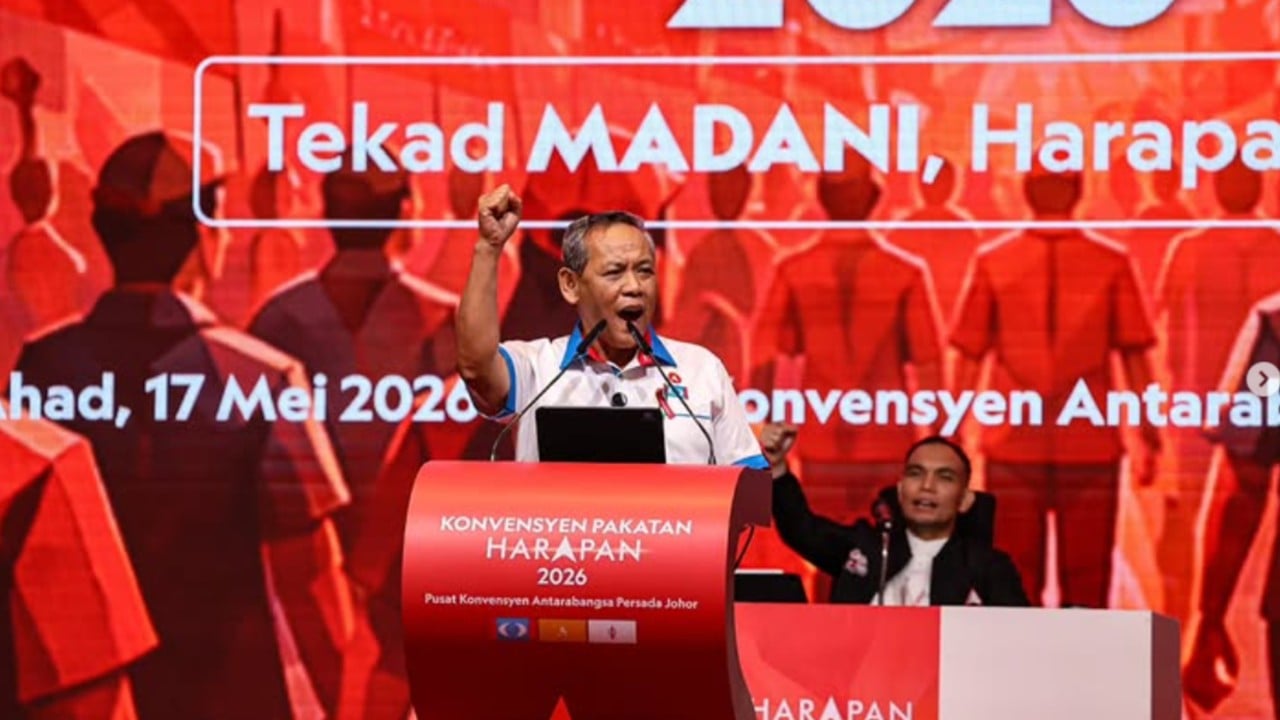
The consolidation of federal executive power in a multi-coalition administration depends on maintaining local-level elite alignment across regional jurisdictions. The simultaneous dissolution of the state legislative assemblies in Negeri Sembilan and Johor in June 2026 exposes severe structural vulnerabilities within Prime Minister Anwar Ibrahim’s federal "Unity Government." These state elections do not pose an immediate mathematical threat to Anwar’s parliamentary majority in Kuala Lumpur, but they serve as a critical diagnostic of electoral friction, policy fatigue, and localized elite fragmentation. If the ruling alliance experiences asymmetric seat losses across these battlegrounds, it will trigger a destabilizing feedback loop that could force an early national election well before the statutory February 2028 deadline.
To evaluate the political trajectory of this escalation, analysts must look past superficial party rivalries and assess the core structural variables driving this friction.
The Analytical Framework of Localized Coalition Friction
The sudden dissolution of the Negeri Sembilan state assembly on June 5, 2026—just four days after Johor dissolved its own assembly on June 1—reveals a direct cause-and-effect relationship between state-level elite disputes and federal legislative cohesion. The collapse of these state governments can be traced to a specific structural vulnerability: the breakdown of local power-sharing agreements between Anwar's reformist Pakatan Harapan (PH) bloc and the formerly dominant, conservative Barisan Nasional (BN), which is led by the United Malays National Organisation (UMNO).
This localized breakdown operates along three primary fault lines:
The Coalition Friction Vector
[Local Elite Friction] ---> [State Assembly Dissolution] ---> [Electoral Realignment] ---> [Federal Cohesion Decay]
- Asymmetric Alliance Strategy: In Johor, the UMNO-led BN administration chose to bypass PH and contest the upcoming election independently. This dynamic triggered a defensive, retaliatory reaction in Negeri Sembilan, where PH dissolved the assembly early to run candidates in all 36 seats, effectively blocking UMNO from consolidating its position unhindered.
- Localized Executive Disconnect: In Negeri Sembilan's 2023 election, PH won 17 seats and formed a government with BN's 14 seats under Chief Minister Aminuddin Harun. This partnership collapsed in April 2026 when all 14 BN assemblymen withdrew their support, citing disagreements over a royal dispute. While UMNO’s federal leadership in Kuala Lumpur claimed to remain loyal to Anwar’s national government, its state-level representatives completely severed ties on the ground.
- The Royal Prerogative Leverage Point: UMNO's federal leadership has consistently pressured Anwar to secure a full royal pardon for former Prime Minister Najib Razak, who was convicted in the multi-billion dollar 1MDB scandal. When federal concessions stalled, local UMNO factions used state-level executive stability as leverage, withdrawing confidence in PH-led state administrations to force broader national compromises.
Quantifying the Electoral Risk in Negeri Sembilan
Negeri Sembilan acts as a reliable demographic mirror for Peninsular Malaysia's broader electorate due to its balanced mix of urban, suburban, and rural constituencies. The upcoming 36-seat contest provides a clear testing ground for two competing theories of voter migration.
The Fragmented Coalition Matrix
The 2023 state election established a combined PH-BN dominance, but the 2026 landscape features a multi-sided contest that fractures this voting bloc:
| Metric | Pakatan Harapan (PH) Baseline | Barisan Nasional (BN/UMNO) Status | Perikatan Nasional (PN) Opportunity |
|---|---|---|---|
| Seat Baseline (2023) | 17 Seats | 14 Seats | 5 Seats |
| Electoral Strategy (2026) | Contesting all 36 seats independently | Contesting independently / selective targets | Targeting conservative Malay-majority rural seats |
| Core Vulnerability | Base fatigue over delayed structural reforms | Erosion of traditional Malay voter base | Fractured leadership (Bersatu infighting) |
The primary risk for the ruling alliance is the Efficiency Loss of Fractured Votes. In 2023, the formal pooling of PH and BN votes successfully insulated moderate seats from the conservative opposition alliance, Perikatan Nasional (PN), which is anchored by the Islamist party PAS. With PH and BN now running competing candidates in 2026, the anti-opposition vote will split. In rural, Malay-majority seats where the margin of victory was under 5% in 2023, this split creates a structural advantage for PN, allowing opposition candidates to win seats with simple pluralities rather than outright majorities.
Macroeconomic Headwinds and Voter Discontent
Electoral math does not change in a vacuum; it is heavily influenced by underlying economic shifts. The federal government’s macroeconomic stabilization strategies have created significant short-term financial pressure for voters, which directly impacts state-level polling performance.
Anwar’s administration has presided over steady GDP growth and historically high foreign direct investment inflows. However, the domestic electorate remains sensitive to structural fiscal corrections:
- Subsidy Rationalization Friction: The federal plan to transition from blanket fuel and energy subsidies to targeted cash transfers has led to immediate price increases for logistics and consumer goods.
- Purchasing Power Compression: Even though inflation figures appear stable on paper, the rising cost of living in semi-urban areas like Seremban has outpaced wage growth, fueling voter dissatisfaction.
Electoral data shows that voters often use state elections to register protest votes against federal economic policies without actually changing the federal government. Consequently, PH faces a compounding risk: its progressive, urban base is frustrated by the slow pace of institutional reforms, while its working-class base is feeling the pinch of subsidy cuts. This double-sided pressure could lead to lower voter turnout, which historically hurts incumbent parties.
The Opposition Fragmentation Variable
While the ruling coalition faces severe internal friction, the opposition bloc, Perikatan Nasional, is dealing with its own institutional challenges that limit its ability to fully capitalize on these vulnerabilities.
- The Bersatu Leadership Crisis: Bersatu, the nationalist component of PN led by former Prime Minister Muhyiddin Yassin, suffered a major internal rupture in May 2026 that resulted in the removal of more than a dozen senior leaders. This internal division has disrupted the party's grassroots organization, fundraising, and candidate selection mechanics.
- Asymmetric Opposition Strength: Because Bersatu is weakened, the Islamist party PAS has taken full control of the opposition’s campaign strategy. PAS has a highly disciplined machinery, but its hardline religious platform has historically struggled to win over the ethnically diverse, moderate voters of Negeri Sembilan.
- Third-Party Disruptions: The recent defection of former cabinet ministers Rafizi Ramli and Nik Nazmi Nik Ahmad to launch an independent, reformist breakaway party introduces a wild card. While this new group lacks the deep infrastructure needed to win a majority, it could pull valuable progressive votes away from PH in tight urban races.
Strategic Scenarios and Federal Consequences
The outcomes of the snap elections in Negeri Sembilan and Johor will dictate the timeline and stability of Malaysia's federal executive branch. Two primary scenarios outline how these state-level results will flow upward to the national level.
Scenario A: Asymmetric Opposition Expansion
If the split between PH and BN allows PN to capture a significant number of rural seats, while the new progressive breakaway party chips away at urban majorities, Anwar’s federal leadership will face immediate challenges. UMNO’s national leaders would likely blame the losses on their association with PH's reformist brand, prompting them to escalate their demands for concessions—such as the immediate pardon of Najib Razak—to shore up their conservative base. This would push internal cabinet tensions to a breaking point, making a mid-2026 federal dissolution highly likely.
Scenario B: Status Quo Stabilization Through Plurality
If PH successfully defends its core urban and semi-urban seats in Negeri Sembilan through high turnout, and Bersatu's internal fighting prevents PN from swept-up rural districts, the federal government will win a temporary reprieve. However, this outcome would confirm that multi-coalition stability is gone, replaced by a fluid system where parties act as allies in Kuala Lumpur but rivals at the state level.
The Election Commission has already noted that synchronizing state and federal polls offers massive cost savings and logistical benefits. Rather than waiting for a slow, agonizing decline, Anwar Ibrahim’s most logical move if the state polls yield inconclusive or highly fractured results is to pre-empt further instability. By leveraging the disarray within the opposition now, he can dissolve parliament early and seek a fresh, direct mandate from the electorate before entering the next phase of deeply unpopular fuel subsidy cuts.



:max_bytes(150000):strip_icc()/how-many-types-of-dwarfism-are-there-2860725-v1-8dae2c531b4b47d9ae36ae404d3308a0.png)