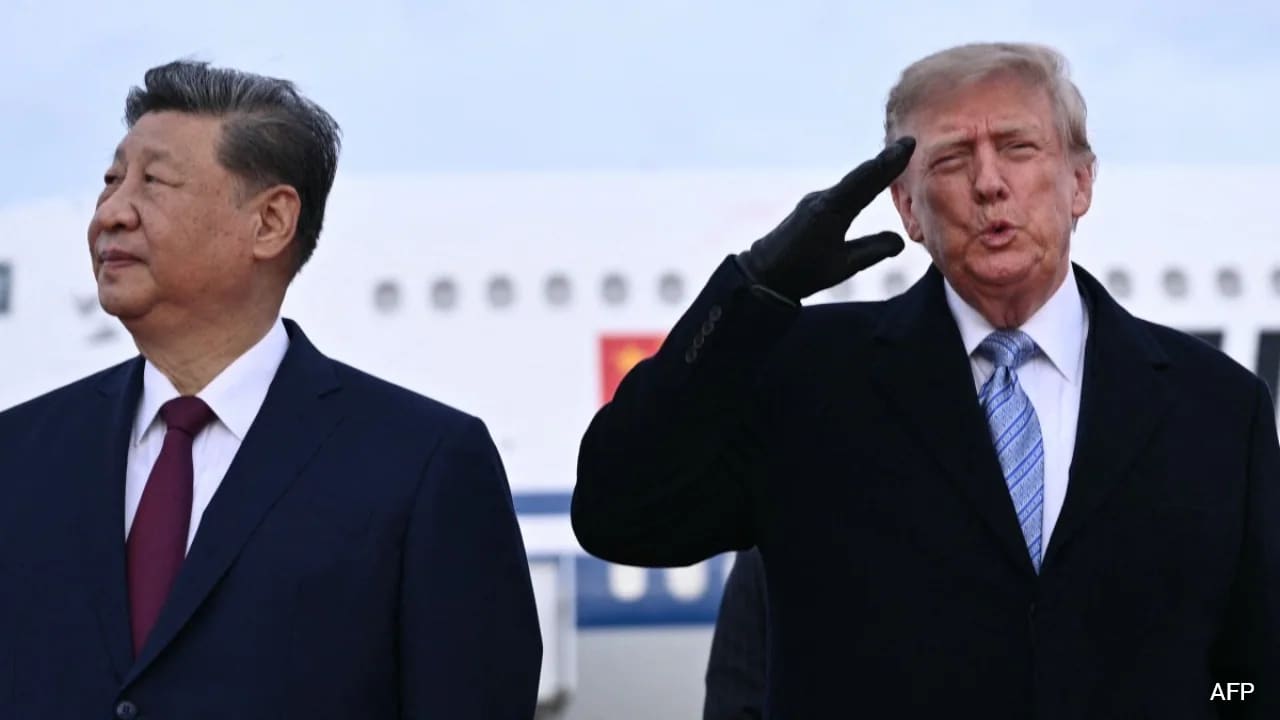
Diplomatic receptions are not neutral greeting ceremonies; they are heavily engineered physical environments designed to project sovereignty, establish hierarchy, and frame the psychological baseline of subsequent negotiations. When world leaders execute state visits, every variable from red carpet length to airspace management is predetermined by protocol officers and security details. The decision to greet a foreign counterpart at Joint Base Andrews rather than the traditional South Lawn of the White House represents a significant deviation from standard operating procedure. Historically reserved for rare occasions—such as papal arrivals or specific sovereign state visits—tarmac receptions immediately transition the venue from a diplomatic parlor to a military staging ground.
The operational environment of a military air base fundamentally alters the sensory input of visiting delegations. Unlike the manicured lawns and historic architecture of executive reception areas, a working military installation exposes participants to the raw machinery of national defense. This intentional setting embeds operational readiness directly into the diplomatic exchange. By anchoring the greeting amidst active runways, logistics hubs, and military personnel, the host administration establishes an implicit subtext of industrial capacity and force projection before a single word of policy is spoken.
Acoustic Physics Versus Diplomatic Choreography
The viral focus on brief physical reactions during high-profile military flyovers obscures the underlying physics of acoustic shockwaves and aerospace engineering. Strategic bombers such as the B-1B Lancer operate propulsion systems that generate immense decibel levels capable of triggering involuntary physiological responses. Powered by four afterburning turbofan engines, the aircraft produces low-frequency sound energy and overpressure waves that register physically on human tissue, long before auditory processing occurs in the brain.
When an aircraft of this scale flies at low altitude over a concrete tarmac, the sound field is compounded by ground reflections, creating localized acoustic pressure peaks. Human neurology dictates that sudden, high-intensity sonic inputs bypass higher cognitive functions, immediately engaging the brainstem and triggering an autonomic startle reflex. Characterizing this reflex as a tactical vulnerability or a loss of composure misinterprets basic human biology. The involuntary flinch or muscle contraction is an auditory survival mechanism shared by all mammals, entirely independent of political resolve or diplomatic intent.
Furthermore, the decibel output of a supersonic strategic bomber at low altitude exceeds standard urban thresholds by orders of magnitude. The physical sensation of sound waves striking the chest cavity and inner ear creates an overwhelming sensory event that commands immediate physiological attention. Evaluating a leader's geopolitical posture based on an involuntary reaction to a sudden sonic assault ignores the fundamental laws of acoustics.
Comparative Biomechanics Under Stress
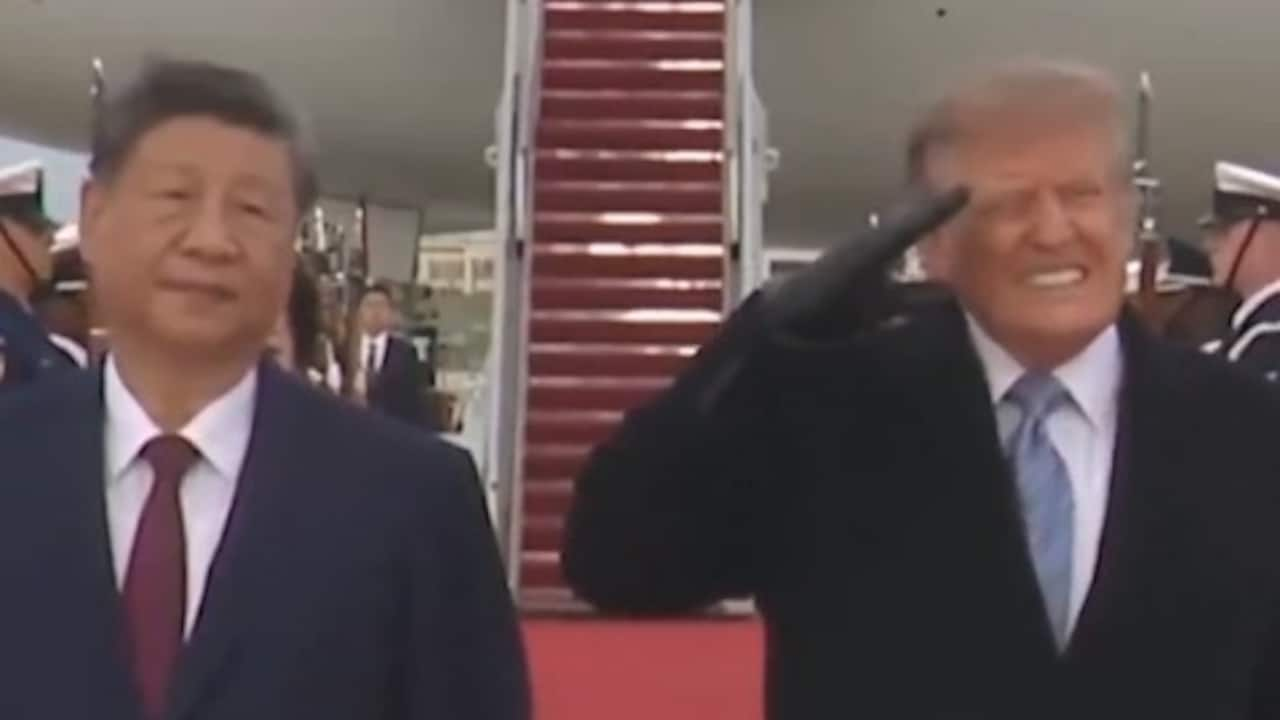
Analyzing the contrasting physical responses captured in short-form video clips requires separating instantaneous neuromuscular reactions from controlled behavioral composure. Media coverage frequently isolates micro-expressions and splits seconds of footage to construct narratives of strength or weakness between leaders. However, comparative biomechanics under sudden acoustic stress depend heavily on individual positioning, directional awareness, acoustic shielding, and physiological predisposition to sudden stimuli.
When a multi-engine supersonic bomber approaches from a specific vector, individuals standing side by side experience varying degrees of sound wave diffraction and direct sound pressure based on head orientation and ear alignment. A fractional turn of the head or a momentary upward glance alters the eardrum's exposure to peak overpressure. Attributing distinct geopolitical dispositions to split-second physical flinches ignores the random variables of acoustic propagation across an open tarmac. Observers analyzing these clips often commit the fundamental attribution error, mistaking a mechanical acoustic reflex for a psychological state.
The selective framing of such footage in digital media ecosystems rewards sensationalism over analytical depth. Short video clips stripped of context reduce complex state interactions to viral spectacles. A rigorous analyst must strip away the digital amplification and examine the underlying mechanics of how physical staging influences public perception.
The Signaling Asymmetry in Modern Bilateral Summits
Modern statecraft increasingly relies on visual messaging designed for domestic audiences and global media consumption simultaneously. Integrating strategic aviation into ceremonial welcomes functions as a form of signaling asymmetry. While the visiting delegation attends primarily to negotiate economic pacts, trade adjustments, or regional security frameworks, the host nation introduces hard power assets into the visual frame.
This juxtaposition creates a dual-track communication channel. On the official diplomatic track, diplomats negotiate tariff adjustments, intellectual property safeguards, and technology governance. On the visual signaling track, the presence of heavy strategic bombers communicates endurance, global reach, and technological supremacy. The inclusion of unannounced or unexpected military assets during arrival ceremonies shifts the psychological equilibrium of the summit. The visiting head of state must process both the verbal overtures of partnership and the visual display of strategic deterrence within the exact same operational window.
This strategic signaling operates on multiple levels simultaneously. Domestically, it projects strength and unyielding national security priorities. Internationally, it signals the baseline military capabilities that underwrite the host nation's economic demands. The use of strategic aviation during arrival ceremonies transforms a routine diplomatic welcome into a calculated exercise in statecraft and deterrence.
The Economic and Strategic Calculus Behind the Noise
Beneath the theatrical optics of red carpets and low-flying aircraft lie hard economic calculations and strategic imperatives. Bilateral summits between major global powers are invariably bound by domestic political pressures and economic interdependencies. When trade truces are extended, tariffs are temporarily frozen, or regulatory frameworks for artificial intelligence and security are negotiated, both administrations operate under strict constraints.
The deployment of strategic assets during diplomatic engagements serves to reassure domestic constituencies that economic concessions do not equate to strategic compromise. By framing trade negotiations within an environment dominated by advanced military hardware, administrations signal strength to domestic critics who monitor geopolitical competition. The underlying economic calculus relies on maintaining stability in bilateral trade while simultaneously demonstrating an uncompromised capacity for strategic containment.
Economic interdependence between rival superpowers creates a delicate balance. Trade negotiations require compromise, yet political survival demands toughness. Integrating military hardware into diplomatic ceremonies bridges this gap, allowing leaders to project strength optically while pursuing pragmatic economic agreements behind closed doors.
Operational Execution and Strategic Forecasting
Managing the optics of high-stakes diplomatic summits demands rigorous control over both verbal communication and environmental staging. As bilateral engagements evolve in an era dominated by instantaneous digital media, the margin for visual misinterpretation narrows significantly. Future state visits will likely incorporate even more tightly choreographed symbolic displays, where every variable from aircraft selection to camera angles is pre-analyzed for maximum strategic impact.
To maintain strategic advantage in future negotiations, diplomatic planners must treat environmental staging with the same analytical rigor applied to treaty text. Relying on ad-hoc military flyovers without accounting for acoustic shockwaves risks generating unintended media distractions that overshadow substantive policy outcomes. The definitive strategic play moving forward is the systematic integration of symbolic assets that reinforce core negotiating objectives without introducing confounding sensory variables that invite superficial media sensationalism.
For further visual context on the arrival ceremony and the aircraft flyover, review the Xi Jinping US Visit and B-1 Bomber Flyover Footage. This video provides the original footage of the arrival ceremony and aircraft flyover analyzed in the strategic breakdown above.