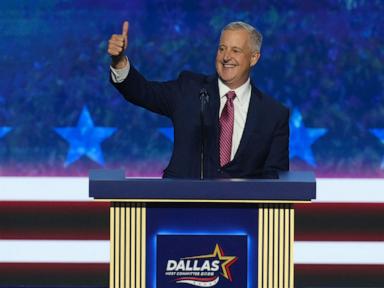
Electoral outcomes in hyper-polarized institutional environments are dictated by structural alignment rather than campaign rhetoric. When a national political figure handpicks a down-ballot candidate in a state characterized by a balanced partisan distribution, the resulting campaign dynamics are governed by predictable constraints. The failure of Michael Whatley’s senatorial campaign against former Governor Roy Cooper in North Carolina serves as a clinical case study in the friction between nationalized brand attachment and local electoral realities.
Understanding why high-profile interventions fail requires dissecting three structural variables: brand contagion, demographic electorate mismatch, and the misallocation of tactical messaging.
The Cost Function of Brand Contagion
In contemporary American politics, executive endorsement functions as a transfer of brand equity. When a national figure with high polarization metrics selects a candidate, that candidate inherits both the ceiling and the floor of the principal's public approval.
The primary mechanism of failure is negative sorting. Independent voters and moderate suburban blocks evaluate candidates through a risk-mitigation lens. If a senatorial hopeful is framed entirely as an administrative extension of a polarizing executive, the candidate's electoral viability becomes inversely proportional to the median voter's fatigue with that executive.
Instead of building an independent coalition, the campaign suffers from systemic dependency. Every national controversy directly impacts down-ballot fundraising and persuasion metrics. The candidate cannot pivot to local economic concerns without alienating the base mobilized by the national figure.
The Electorate Mismatch
North Carolina presents a distinct structural puzzle: a roughly balanced registration split between Democrats and Republicans, offset by a rapidly growing mass of unaffiliated or independent voters.
A winning strategy in this environment requires capturing the median voter who prioritizes domestic economic stability over cultural friction. The tactical error committed in the Whatley campaign involved an over-concentration on high-salience, low-conversion issues such as historical crime statistics and administrative grievances from previous gubernatorial terms.
While these themes maximize turnout among registered party loyalists, they exhibit low elasticity among the unaligned demographic. Unaffiliated voters typically index their ballots on immediate fiscal pressures, cost-of-living metrics, and administrative competence. When a campaign defaults to cultural or retrospective grievances, it fails to provide the median voter with a forward-looking economic rationale for transition.
The Divergence Between Base Mobilization and Persuasion
Political campaigns operate on two distinct resource allocation engines: mobilization and persuasion. Mobilization deepens engagement among existing supporters; persuasion shifts undecided or weakly aligned agents across the partisan divide.
When a national party leader stages high-profile rallies in localized media markets, the primary output is base mobilization. However, if the baseline deficit among independent voters is wide, mobilizing the base yields diminishing returns.
The strategic mechanics break down as follows:
- The Message Congestion Trap: National talking points crowd out localized economic policy proposals, leaving the candidate without a distinct legislative brand.
- The Institutional Counterweight: When running against a well-known incumbent executive like Roy Cooper, who maintains established credibility across state infrastructure management, insurgent attacks regarding past governance are heavily discounted by the electorate.
- The Resource Misalignment: Funds spent on continuous base-rally infrastructure fail to compensate for structural disadvantages in independent voter outreach and broad-market advertising.
Strategic Forecast
Candidates implanted via top-down executive selection in competitive environments face a permanent structural handicap unless they systematically decouple their operational identity from the national brand. To survive a polarized cycle, a nominee must establish an independent economic vector, build localized fundraising autonomy, and refuse to let national surrogates dictate the daily media cycle. Absent these operational corrections, executive patronage accelerates a campaign's vulnerability, turning a competitive race into a structural defeat.