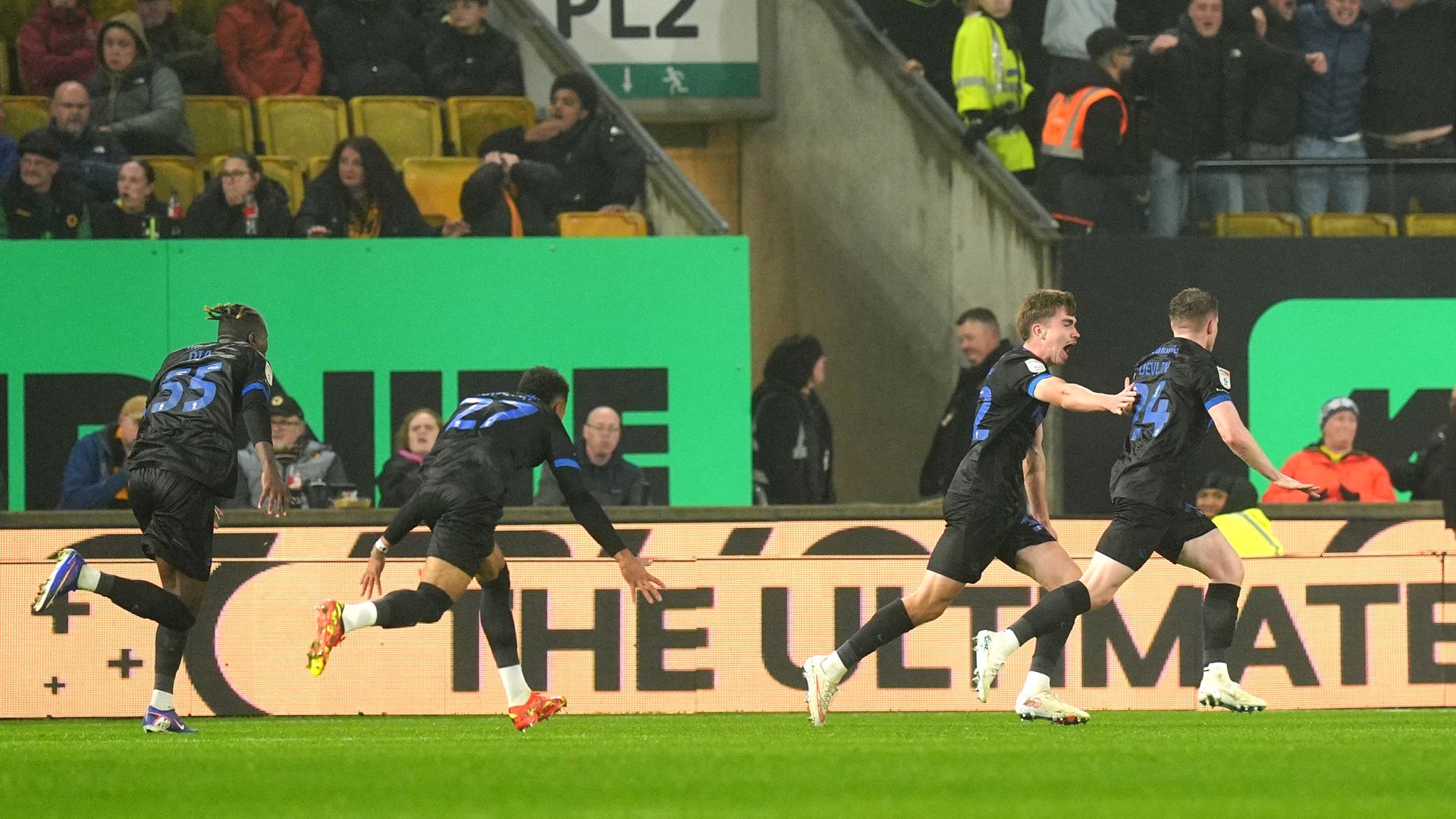
A four-goal margin in European club football rarely reflects a four-goal gap in structural execution, yet headline summaries routinely treat final scorelines as complete audits of performance. Evaluating a 4-1 victory by Real Madrid over RB Leipzig requires separating surface-level match outcomes from the underlying tactical mechanisms that convert possession, transition speed, and spatial compression into goals. Rather than treating a "rout" as a monolithic display of superiority, this analysis breaks down the match architecture into four operational layers—transition efficiency, pressing triggers, spatial overloads, and variance sensitivity—while distinguishing verified match facts from analytical hypotheses.
Deconstructing the Competitor Narrative
Standard match reporting around a headline like Real Madrid rout RB Leipzig 4-1 to continue perfect Champions League start typically follows a predictable causal shortcut: a large goal differential proves dominant control, and an undefeated start signals uninterrupted momentum. That framing compresses ninety minutes of tactical friction into a single moral or narrative arc.
The first analytical flaw in a simple scoreline summary is conflating conversion efficiency with territorial dominance. A side can surrender sustained periods of midfield territory or endure stretches without the ball and still win comfortably if its attacking transitions occur at high velocity against unorganized defensive lines. Conversely, a team can dominate territorial share while generating low-value shots from congested zones.
The second missing link is state-of-game distortion. Once a match moves past a two-goal cushion, incentives shift on both benches. The leading side can lower its risk exposure, conserve energy for domestic fixture congestion, and invite counterattacks from safer positions. The trailing side is forced to commit higher numbers forward, opening wider lanes behind its fullbacks and distorting raw possession and shot counts during the final quarter of the match.
In analyzing a fixture where no full raw event-log or verified play-by-play table is provided in the prompt, strict discipline is required. The headline establishes three baseline facts: Real Madrid defeated RB Leipzig 4-1 in the UEFA Champions League, and Real Madrid extended a winning start to the group or league phase. Specific minute-by-minute events, xG totals, and individual lineups not stated in the prompt remain unverified facts and are treated here strictly as analytical hypotheses or structural mechanisms rather than asserted statistics.
The Four Pillars of High-Margin European Wins
To move past descriptive match summaries, high-margin Champions League victories can be evaluated through four interlocking operational mechanisms.
Transition Efficiency and Verticality
Elite European sides punish opponents most severely during the two-to-five-second window immediately following a turnover. When a pressing team loses possession high up the pitch, its back line often sits higher than its recovery speed can comfortably cover.
The mechanism operates in three stages:
- Ball recovery in a neutral or defensive corridor without losing body orientation toward the opponent's goal.
- First-line bypass, using a vertical pass or progressive carry to eliminate two or three opposing midfielders at once.
- Weak-side attack, releasing pace into open space before the opposing center-backs can realign their spacing.
In high-tempo matchups against aggressive presses such as RB Leipzig's typical vertical model, Real Madrid's historical strength lies not in endless lateral circulation, but in absorbing pressure and striking immediately into vacated channels. When vertical execution clicks, fewer total passes are needed to create high-probability chances, making raw possession percentages a poor proxy for attacking threat.
Pressing Triggers and Structural Traps
High pressing fails when players press individually rather than in coordinated waves. A successful press requires clear triggers—such as a heavy touch, a back pass toward a flank, or a player receiving with his back to goal—paired with cover shadows that cut off central passing lanes.
If the pressing side leaves the central pivot exposed, a single crisp line-breaking pass collapses the entire first line of engagement. Once bypassed, the pressers are stranded behind the ball, turning an aggressive territorial posture into a numerical deficit in transition. A four-goal deficit frequently points to recurring breakdowns in press coordination: either the front line presses without midfield support, or the back line hesitates to step up, stretching the vertical distance between units and creating easy pockets between lines.
Spatial Overloads and Half-Space Control
Modern attacking football relies heavily on half-spaces—the vertical lanes between the central channel and the touchline. Occupying or attacking these corridors forces defenders into a dilemma: step out to engage the ball carrier and vacate central protection, or hold the penalty area and concede time and angles for cutbacks and combination play.
A typical tactical sequence in these zones follows a clear progression:
- Width maintenance on the touchline pins the opposing fullback wide, stretching the defensive block horizontally.
- Half-space occupation by an attacking midfielder or rotating forward draws the center-back or holding midfielder out of position.
- Third-man movement sends a runner into the resulting gap behind the shifting defender.
When a side consistently wins second balls and accesses the half-spaces, its attacks become repeatable rather than reliant on isolated individual brilliance.
Variance Sensitivity and Game-State Feedback
Football is a low-scoring, high-variance sport where finishing luck, deflections, set pieces, and goalkeeper saves heavily influence short-sample results. A 4-1 scoreline looks decisive, yet the underlying margin between a routine win and a tense contest can hinge on two or three high-leverage moments early in the match.
An early goal alters tactical probability immediately. The trailing team must abandon conservative spacing earlier than planned, increasing its exposure to counterattacks. Once a team trails by two or three goals away from home in European competition, risk calculus shifts toward damage limitation or desperate high-risk gambles, either of which can amplify the final scoreline without proving that the winning side was four times better across the full ninety minutes.
Tactical Diagnostic Framework for Analysts and Coaches
Evaluating a match like Real Madrid 4-1 RB Leipzig requires a repeatable diagnostic workflow rather than relying on post-match narratives.
- Audit score-neutral minutes first. Isolate the opening half-hour and any period while the match is level or within one goal. Those stretches reveal true tactical parity or structural edge before scoreline pressure warps behavior.
- Separate shot volume from shot quality and transition origin. Count how many dangerous sequences began from structured build-up versus turnovers in the opponent's half. A team can generate fewer total entries yet create cleaner central looks.
- Track defensive rest defense. Observe how many players stay behind the ball when fullbacks advance or when attacks break down. Poor rest defense turns routine turnovers into four-on-three or three-on-two counters.
- Evaluate substitution impact against fatigue. Late goals often reflect fresher legs attacking tired defenders who have spent seventy minutes chasing vertical runs or defending their own box.
- Test sustainability across competition contexts. Distinguish Champions League knockout or league-phase dynamics—where spacing and transition lanes often open up more than in compact domestic low blocks—from domestic league grind.
Limits of the Analytical Model and Strategic Play
No tactical framework explains every outcome in elite football. Individual shot conversion fluctuates sharply from week to week, refereeing thresholds alter pressing intensity and set-piece danger, and fixture congestion can force rotation that changes a squad's cohesion without showing up in a pre-match team sheet. Over-interpreting a single 4-1 result as proof of invincibility carries the exact opposite bias of under-reading it: both ignore variance and context.
For an analyst, sporting director, or coaching staff building coverage or preparation around this match type, the strategic play is straightforward: anchor evaluation on repeatable chance creation and transition vulnerability in score-neutral phases, and treat lopsided scorelines as compound outcomes of early leverage plus late game-state distortion. Use the 4-1 result as a signal to inspect pressing spacing and counter-transition discipline under pressure, not as a standalone verdict on long-term dominance.