A high-magnitude seismic event is rarely evaluated correctly by its initial rupture alone. When a 7.1 magnitude earthquake struck Kyushu from an epicenter in Kumamoto Prefecture, standard media coverage immediately anchored on the initial casualty figures and the raw count of subsequent tremors. True operational analysis requires moving past headline-level tallies to examine the structural mechanics of secondary seismic cascades, infrastructure stress indices, and regional supply chain vulnerabilities.
Evaluating a tectonic disaster of this scale demands a multi-variable framework. Analysts must deconstruct the event across three core vectors: the physical aftershock propagation kinetics, the localized failure thresholds of commercial and industrial infrastructure, and the systemic resilience of regional logistics networks.
The Physics Of The Seismic Cascade
The primary rupture on the southern island of Kyushu triggered an immediate sequence of secondary movements, with authorities recording over 170 aftershocks within the first twenty-four hours. To understand the risk matrix facing emergency response teams, one must analyze the Gutenberg-Richter relation and the Omori law governing aftershock decay rates.
When a major fault unloads stress, that stress is frequently transferred to adjacent segments of the crust. This mechanical redistribution creates high-stress lobes where secondary ruptures become statistically probable. The variance between the United States Geological Survey assessment of 6.8 and the Japan Meteorological Agency calculation of 7.1 highlights the inherent friction in early-stage seismic data capture. More critical than the initial magnitude discrepancy is the localized shindo intensity scale reading, which maxed out at the highest tier of 7.
A shindo 7 rating denotes ground acceleration so severe that unreinforced rigid structures cannot maintain structural integrity. However, the survival rate of the broader built environment stems directly from strict implementation of the building codes updated after the 2016 Kumamoto sequence. The mechanics of survival in modern Japanese urban planning rely on controlled energy dissipation rather than absolute rigidity. Buildings are engineered to flex, absorbing kinetic shock through seismic isolators and damping systems.
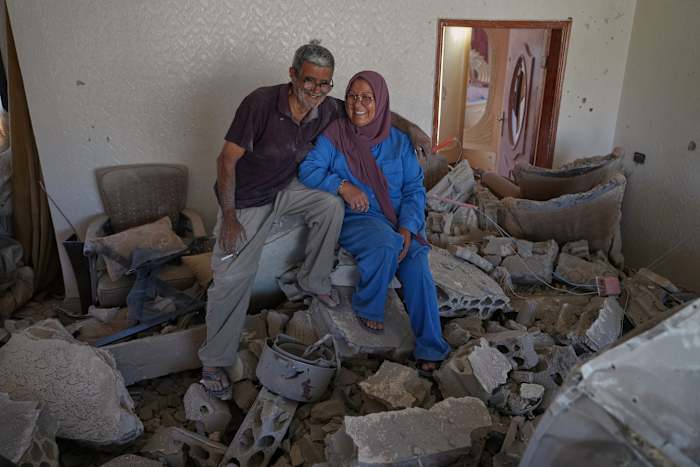
Despite these engineering controls, secondary structural failures materialize when fatigue limits are crossed. The collapse of the second floor of the Aeon shopping complex in Kashima Town and the structural failure of the industrial chimney at the Nippon Paper Industries facility in Yatsushiro illustrate how localized building typologies react differently under continuous vibrational stress. The subsequent explosion at the commercial complex, complicated by suspected gas utility fractures, introduces an interconnected failure loop where the primary seismic trigger causes a secondary chemical or thermal hazard.
Infrastructure Stress And Regional Supply Chain Latency
Urban resilience under crisis conditions is defined by mean time to recovery for critical lifeline networks. In the immediate aftermath of the Kyushu tremor, power outages affected nearly 50,000 households, while 140,000 residences lost access to running water. These utilities operate on centralized distribution nodes that are highly susceptible to systemic disruption when ground displacement shears underground conduits.
The operational bottleneck during such events is rarely the initial search-and-rescue phase alone, but the compounding risk profile introduced by secondary environmental factors. Ambient temperatures crossing 35 degrees Celsius created an immediate risk vector for heatstroke among the more than 9,000 individuals sheltering in designated public centers and those sleeping in vehicles out of fear of structural collapse. Dehydration and thermal stress degrade the operational capacity of both displaced populations and emergency response units, creating a human resource deficit precisely when labor requirements peak.
Economic continuity faces parallel stress testing. The Kyushu region serves as a vital manufacturing corridor for global high-technology inputs. Major industrial entities, including semiconductor fabrication operations associated with TSMC, alongside production facilities operated by Sony and Fujifilm, executed immediate safety protocols by evacuating personnel and temporarily halting operations.
While these preemptive shutdowns successfully protected human capital, they introduce downstream supply chain latency. Modern industrial plants rely on ultra-clean environments and precise calibration parameters. Even when physical structures sustain zero major structural compromise, internal cleanrooms can experience micro-contaminations, and sensitive optical or lithographic equipment requires exhaustive realignment calibration before production restarts. Consequently, the economic cost function of an earthquake extends far beyond direct property damage, manifesting as lost production yield and logistical bottlenecks across international tech supply chains.
Transportation Arteries And Evacuation Dynamics
The spatial distribution of a disaster zone dictates the efficiency of resource allocation. The disruption of the high-speed Shinkansen rail network by a derailed train at Yatsushiro Station and the closure of the runway at Aso Kumamoto Airport severed the primary high-speed transit corridors connecting Kumamoto to the broader Honshu landmass.
When air and rail arteries are compromised, emergency logistics must rely entirely on regional road networks. Surface transport faced immediate degradation due to major highway cracking, bridge displacement, and heavy congestion from civilian evacuation streams. The deployment of 3,600 Self-Defense Forces personnel alongside multi-agency rescue squads required precise traffic management matrices to ensure heavy rescue machinery could reach trapped individuals before the survival window narrowed.
Historical precedent dictates that public anxiety remains elevated for a minimum of seventy-two hours following a magnitude 7-class event. Psychological trauma from the 2016 sequence amplified immediate behavioral responses, driving hundreds of thousands of residents into temporary displacement. This mass behavioral shift places an instantaneous strain on municipal stockpiles of potable water, emergency rations, and sanitation resources.
Strategic Resource Allocation Framework
To optimize post-event recovery and mitigate cascading infrastructure failures, disaster management operations must pivot from reactive triage to predictive asset positioning.
Emergency response authorities must integrate real-time aftershock probability modeling directly into search-and-rescue routing algorithms. Teams should not enter high-risk compromised structures, such as partially collapsed retail centers or industrial stacks with compromised structural integrity, without continuous acoustic and vibrational monitoring arrays that provide instantaneous evacuation warnings prior to significant aftershocks.
Municipal utilities must accelerate the deployment of automated seismic shut-off valves for high-pressure gas and water mains. Mitigating utility-fed fires and preventing water loss during the initial phase eliminates the secondary hazard loops that frequently account for a high percentage of post-earthquake structural destruction.
Industrial operators within seismically active corridors must establish modular redundancy protocols. Decentralizing localized backup power grids and maintaining localized emergency water supplies independent of municipal lines will reduce the recovery timeline for critical manufacturing and technology sectors, insulating global supply chains from hyper-localized tectonic shocks.