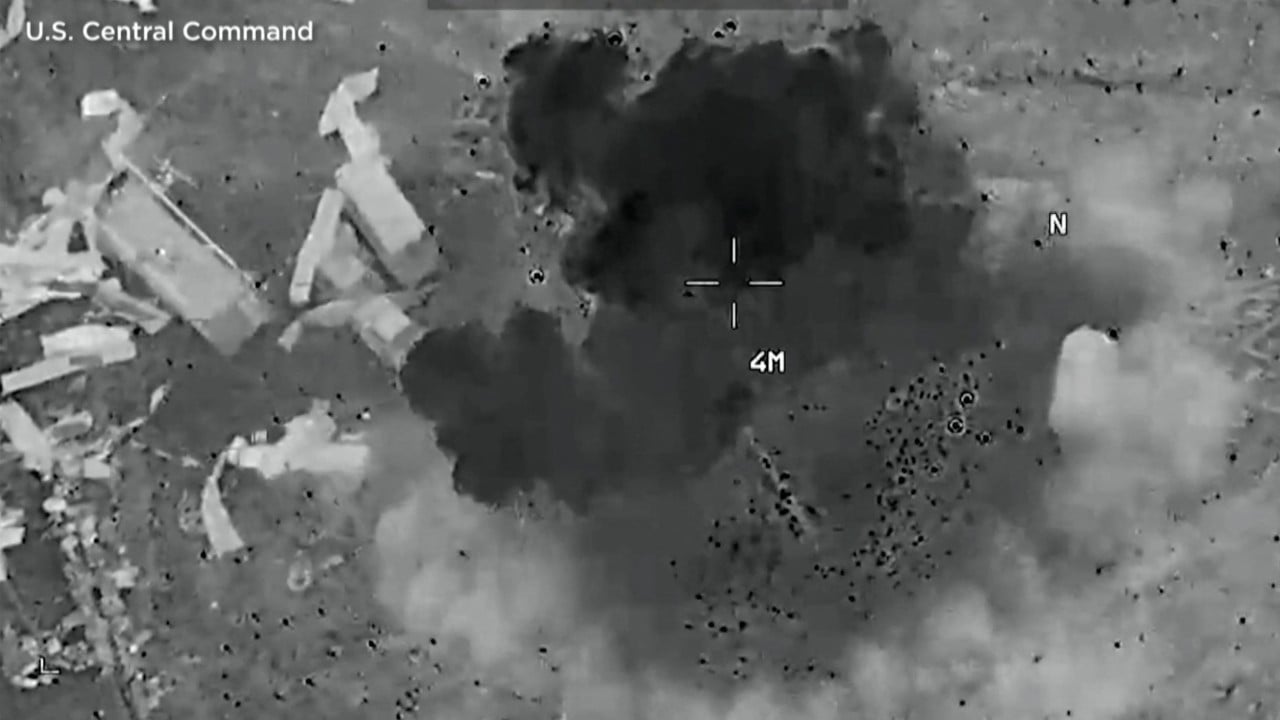
Strategic friction between executive military actions and public perception reveals an underlying failure of objective-setting. When polling data indicates that a vast majority of the American electorate believes military objectives in Iran remain unfulfilled, the issue extends beyond standard partisan dissent. It exposes a structural disconnect between state-level kinetic goals and the transmission of those goals to domestic populations.
Evaluating this phenomenon requires deconstructing the architecture of public support during extended military engagements. Statecraft relies on a continuous feedback loop between operational success, economic stability, and clear communication. When any component in this triad fractures, public skepticism rises predictably.
The Divergence of Strategic Intent and Perceived Outcomes
Public opinion surveys consistently demonstrate that large majorities evaluate the Iran campaign negatively, with over sixty percent stating the conflict is not worth fighting. This metric alone provides minimal analytical value unless paired with the underlying variables driving the sentiment.
The primary driver is objective ambiguity. State actors often communicate shifting justifications—ranging from non-proliferation and ballistic missile containment to regime destabilization—without anchoring them to measurable key performance indicators. When endpoints remain amorphous, constituents default to tangible proxies of success or failure. In modern statecraft, these proxies are energy prices and supply chain predictability.
Inflationary pressure and the cost of domestic fuel function as immediate scorecards for foreign policy execution. When seven out of ten citizens identify energy price stabilization as a core foreign policy priority, any kinetic action that introduces volatility into the Strait of Hormuz immediately damages public trust. The causal chain is direct: military escalation introduces perceived supply risks, retail fuel prices tick upward, domestic stress increases, and overall confidence in the military campaign collapses, regardless of tactical gains achieved on the ground.
The Cost Function of Objective Creep
A defining feature of the current campaign involves the expansion of strategic scope without a proportional increase in public buy-in. Military theorists categorize this as objective creep. The original framework of deterrence and containment mutated into open-ended enforcement mechanisms.
[Kinetic Action] ---> [Supply Volatility] ---> [Retail Price Surge] ---> [Erosion of Public Trust]
This structural evolution introduces three distinct friction points for strategists:
- The Communication Deficit: Failing to establish a single, unyielding strategic objective forces citizens to evaluate the campaign through media noise rather than official milestones.
- The Temporal Mismatch: Military operations unfold across years, while public tolerance operates on electoral and economic cycles measured in months.
- The Partisan Polarization Trap: As support splits sharply along party lines—where a majority of one political alignment backs continued pressure while opposing alignments demand immediate cessation—objective evaluation is replaced by tribal signaling.
When the administration claims success in degrading specific military capacities, the public evaluates those claims against lingering economic anxiety and the absence of a definitive diplomatic closure. Without a standardized rubric for victory, tactical achievements are overshadowed by strategic exhaustion.
Resolving the Information Asymmetry
To bridge the gap between executive action and domestic perception, leadership must transition from defensive public relations to transparent metric sharing. Statecraft in the digital era cannot rely on vague assurances of national security. It requires an auditable justification of resource expenditure versus security yield.
The absence of consensus on future pathways—split evenly between continuing military pressure, seeking mediated ceasefires, and halting operations entirely—reflects a population operating without a shared baseline of truth. Until state institutions publish verifiable parameters for risk mitigation and end-state criteria, public polling will continue to reflect acute anxiety rather than reasoned geopolitical assessment.
The operational directive moving forward requires establishing a hard boundary between kinetic containment and economic insulation. If domestic energy markets remain vulnerable to regional escalation, no amount of strategic communication will alter the public calculus. State planners must prioritize the decoupling of regional deterrence from domestic cost-of-living metrics to stabilize the domestic foundation required for long-term foreign policy execution.
Just one in three Americans backs Iran war, most unsure of Trump's goals, poll finds
This analysis is relevant because it quantifies the precise public opinion metrics and administrative communication gaps surrounding the U.S. campaign in Iran.