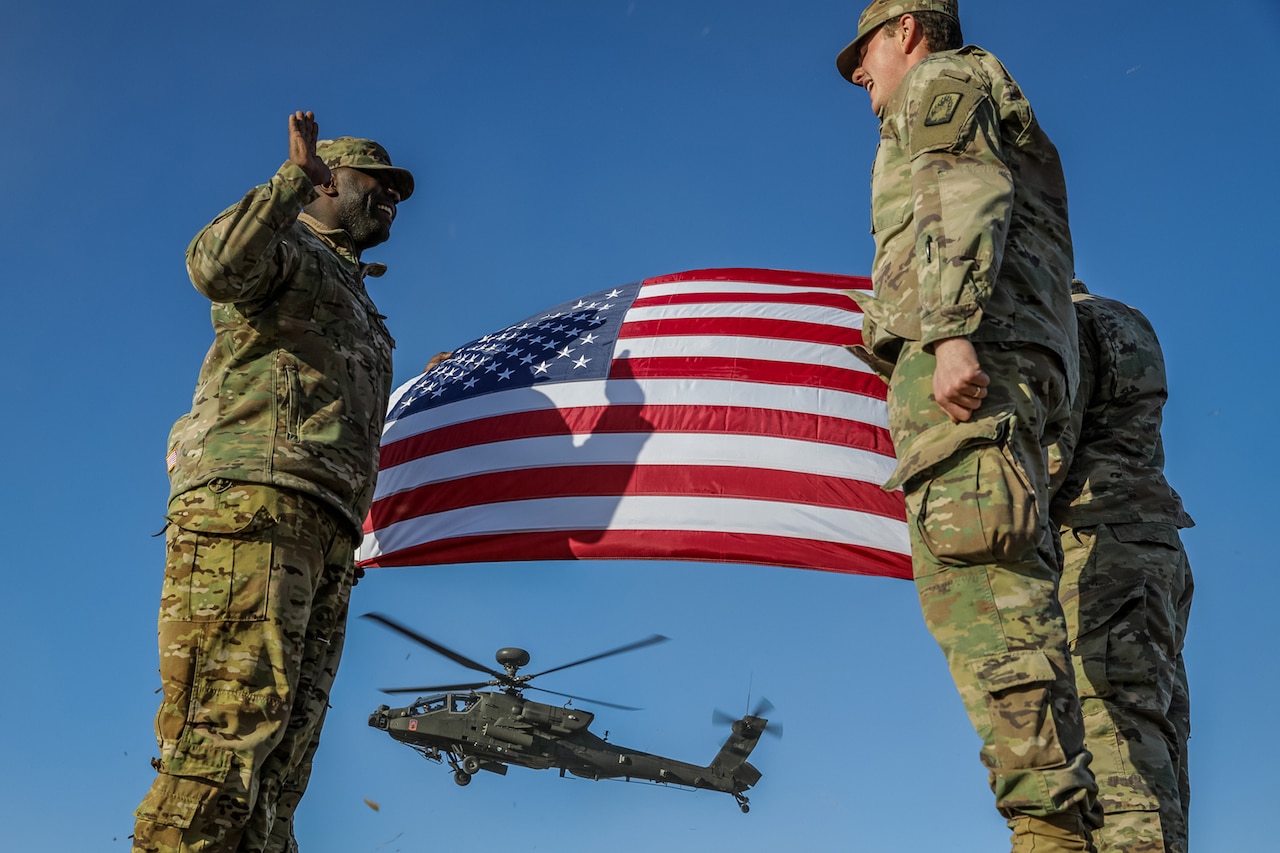
Strategic deterrence relies on verifiable operational readiness rather than diplomatic signaling. When the executive branch commands the Department of Defense to curtail combined military training operations—such as the scaling back of the Ulchi Freedom Shield exercises involving tens of thousands of personnel—the structural integrity of a bilateral security architecture undergoes immediate stress. Evaluating this decision requires stripping away political rhetoric to examine the baseline economics, the mechanics of combined force interoperability, and the compounding risks of deterrence decay on the Korean Peninsula.
The Dual Variable Driver: Cost Functions Versus Geopolitical Leverage
The official rationale for reducing joint military exercises rests on two distinct variables: direct financial expenditure and transactional geopolitical compliance. The White House asserted that these wargames impose an undue financial burden primarily absorbed by the United States while provoking Pyongyang unnecessarily. Concurrently, friction emerged from a failed diplomatic linkage: Seoul declined to participate in U.S.-led operations regarding the denuclearization of Iran.
From an institutional economics perspective, this creates an explicit transaction-cost framework. Bilateral alliances are maintained under the assumption that shared security costs yield mutual strategic alignment. When an ally declines to support secondary global objectives, executive leadership often recalculates the value proposition of primary regional commitments. However, treating military readiness as a variable subject to immediate transactional renegotiation introduces structural volatility into long-term defense planning.
The financial argument regarding exercise costs warrants technical scrutiny. While large-scale mobilizations involve significant logistical outlays—including fuel, munitions, transport, and personnel deployment—the vast majority of South Korea-based stationing and operational costs are cost-shared under Special Measures Agreements. More importantly, the marginal savings achieved by scaling down an active exercise are negligible compared to the replacement cost of degraded combat readiness.
The Mechanics of Interoperability Decay
Military exercises are not symbolic gestures; they are operational stress tests designed to counter complex friction points in coalition warfare. The Ulchi Freedom Shield exercises are engineered to practice multi-domain operations, including:
- Precision targeting synchronization across disparate command structures.
- Tactical logistics, such as wet gap crossings under simulated chemical or conventional fire.
- Rapid deployment and distribution of prepositioned military equipment.
When these combined drills are compressed or downscaled, the degradation of operational capabilities follows a predictable curve. Interoperability between United States Forces Korea and the Republic of Korea Armed Forces depends on habitual, high-frequency synchronization. Communication protocols, electronic warfare integration, and command-and-control software require constant validation.
If joint tracking and live-fire coordination are reduced, mission-failure rates during a crisis scenario increase exponentially. Modern warfare leaves zero margin for error in coalition coordination. Without rigorous, large-scale rehearsals, national command authorities face an information vacuum regarding how effectively allied forces can execute joint defensive maneuvers under real-world pressure.
Deterrence Theory and the Asymmetry of Restraint
In security studies, deterrence operates on two pillars: capability and credibility. Capability is the physical force available to inflict unacceptable costs on an adversary, while credibility is the demonstrated willingness to employ that force.
Scaling back exercises to appease a nuclear-armed adversary alters the calculus of credibility. Pyongyang interprets the reduction of combined military training not as an act of diplomatic good faith, but as a structural retreat driven by political fatigue. This creates an asymmetric response loop:
- The United States unilaterally scales back readiness drills to signal a conciliatory posture.
- North Korea continues its ballistic missile development and nuclear arsenal expansion unabated.
- The threshold for conventional provocation lowers because the deterrent posture appears compromised.
Historical data from previous reductions in joint exercises during 2018 and 2019 demonstrate that Pyongyang did not permanently suspend its weapons testing programs or halt core nuclear infrastructure development. Instead, the pause in operational readiness created a window for strategic consolidation within North Korea's military-industrial complex, while widening the trust gap between Washington and Seoul.
Structural Implications for Regional Stability
The secondary effects of this policy shift extend far beyond the immediate bilateral relationship. Regional architecture in East Asia relies heavily on the perception of an unbroken American security umbrella. When Washington adjusts its commitments based on transient diplomatic disagreements over unrelated theaters like the Middle East, allied capitals are forced to re-evaluate their long-term security dependencies.
For Seoul, this creates an acute strategic dilemma. If the reliability of combined defense mechanisms fluctuates with domestic American political cycles, South Korea faces two sub-optimal paths: accepting a higher baseline vulnerability to asymmetric threats from the north, or accelerating indigenous defense capabilities—potentially including independent nuclear deterrence discourse. Neither outcome serves long-term American strategic stability in the Indo-Pacific.
Furthermore, trilateral coordination involving Japan suffers systemic friction when U.S.-South Korea interoperability stumbles. Integrated missile defense and shared intelligence operations require a synchronized foundation. Any erosion of bilateral readiness drills cascades through the entire regional security matrix, complicating contingency planning for maritime and air defense.
Implement an immediate audit of joint command-and-control communication nodes to establish baseline readiness metrics independent of live-field maneuver scales. Concurrently, insulate core tactical interoperability training from diplomatic friction by institutionalizing baseline readiness thresholds that cannot be altered by executive fiat without a formal congressional security review.