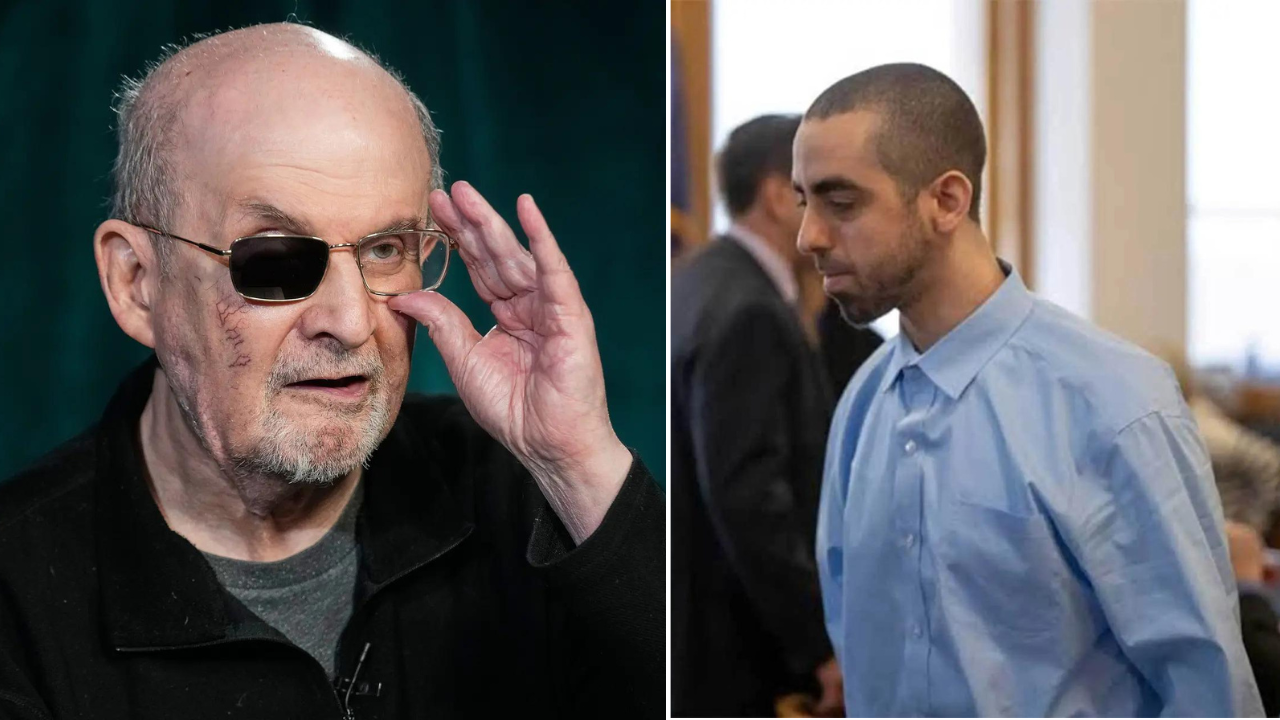
A federal court conviction rarely arrives in a vacuum. When a jury finds an assailant guilty of providing material support to a designated foreign terrorist organization alongside attempted murder, the legal landscape shifts. This was the exact reality for Hadi Matar, the man who mounted the stage in Chautauqua, New York, in August 2022 and slashed author Salman Rushdie. Beyond the immediate horror of a brutal assault on a literary icon, the federal prosecution exposed a terrifying operational pipeline. The verdict cemented a legal truth: lone-actor violence rarely stays entirely lone-actor when transnational networks cast long shadows across the internet.
Investigators did not just look at a knife and a bloodstained podium. They looked at cell phones, encrypted chat applications, operational guidelines, and financial trails leading directly toward regional proxies backed by Tehran. The prosecution proved that the attacker was not operating in a spontaneous vacuum of personal grievance. Instead, he absorbed directives, received organizational framing, and aligned his violent ambitions with the operational ethos of Hezbollah. This verdict forces security analysts to reevaluate how modern radicalization functions. We are no longer dealing solely with organized terror cells executing meticulously planned central commands. We are watching decentralized recruitment engines weaponize isolated individuals through digital channels, turning ambient ideological grievance into synchronized physical carnage.
The Anatomy of Material Support
Material support is a blunt instrument in federal jurisprudence. Under United States code, it criminalizes not just the direct transfer of funds or weapons, but the provision of training, expert advice, personnel, or services to a designated foreign terrorist organization. Applying this statute to a physical attacker who had no official card-carrying membership in the target militia requires a specific prosecutorial pivot. The government had to demonstrate that the act itself directly benefited the organization's strategic posture, and that the assailant acted with the explicit awareness that he was serving their operational goals.
For decades, counterterrorism experts obsessed over money laundering, front charities, and hawala networks. We traced bank accounts from Dearborn to the Beqaa Valley, looking for paper trails of cash that purchased munitions. But the Chautauqua prosecution demonstrates that modern material support takes non-monetary forms. Digital propaganda, tactical instructions shared through messaging apps, and ideological alignment that secures a high-profile target for an external sponsor constitute a vital contribution to an organization's brand of asymmetric warfare.
When a proxy organization spends decades cultivating an environment where fatwas carry the weight of divine law, every individual who steps forward to execute that law becomes an extension of the network's operational arm. The court recognized that providing your own body to execute a proxy's violent agenda is, legally and practically, a form of personnel support. It is the ultimate human outsourcing of terror.
The Geography of Radicalization
Chautauqua County is quiet. It is pastoral, academic, and historically removed from the violent friction points of the Middle East. Yet the assault proved that physical geography provides zero insulation against transnational radicalization. The attacker lived a sequestered life in New Jersey, spending countless hours immersed in digital ecosystems designed to radicalize young men through grievance, isolation, and religious fundamentalism.
This digital pipeline bypasses traditional brick-and-mortar recruitment hubs. You do not need a basement radicalization circle when you have an algorithmic echo chamber that feeds you curated content about the enemies of the resistance axis. The modern militant handler does not need to meet an asset in a safehouse. They operate through encrypted conduits, offering tactical encouragement, spiritual validation, and target reinforcement from thousands of miles away.
We must confront an uncomfortable reality. Western counterterrorism frameworks remain structurally reactive. Intelligence agencies excel at tracking known operatives crossing international borders, monitoring formal financial transactions, and intercepting communication between known organizational nodes. Yet they struggle immensely with the frictionless nature of decentralized ideological grooming. When an individual internalizes a foreign terror group's strategic objectives to the point of executing a high-profile assassination attempt completely unprompted by direct pay-for-service contracts, the traditional indicators of a terror plot vanish.
The Legal Precedent and Its Echoes
The federal conviction of Salman Rushdie's attacker creates a formidable precedent for future prosecutions involving lone actors influenced by state-sponsored proxies. For years, defense attorneys could successfully argue that an unstable individual committing an isolated violent act was merely a troubled soul acting out personal delusions, shielding them from federal terrorism enhancements. By securing a material support conviction, the Department of Justice pierced that veil.
This ruling sends an unmistakable signal to anyone coordinating, encouraging, or facilitating violent actions on behalf of groups like Hezbollah, Hamas, or other regional networks from Western soil. If you provide digital logistics, ideological validation, or operational framing that results in a violent strike, federal prosecutors will trace those digital footprints right back to the source. The law is adapting to the reality of network-enabled violence, closing the gap between the foot soldier in New Jersey and the commander in Beirut.
Yet, this legal victory reveals systemic vulnerabilities. A conviction after the fact does not heal the victim, nor does it restore the immense cultural and physical damage inflicted upon a writer who spent decades living under the constant, suffocating weight of a state-sanctioned death sentence. The security apparatus failed to stop the knife from clearing the air in western New York. Stopping the blow requires moving further upstream.
The Intelligence Blind Spot
We are losing the war of attribution in the gray zone between state-sponsored terrorism and domestic criminal acts. Foreign actors have mastered the art of plausible deniability. By utilizing decentralized digital messaging and cultivating a global network of sympathizers who require no formal payroll, hostile intelligence services can project power into Western capitals with minimal financial investment and zero risk of conventional military retaliation.
Consider the economics of modern asymmetric warfare. A drone strike costs millions; a cyberattack requires sophisticated infrastructure; but inspiring a disenfranchised young man via Telegram to carry out a knife attack costs virtually nothing. The return on investment for the sponsor is staggering, while the defensive burden placed on democratic societies is paralyzing. Law enforcement cannot monitor every disgruntled individual who spends their nights consuming extremist propaganda without dismantling the foundational privacy architecture of the modern internet.
This leaves intelligence agencies trapped in a perpetual game of catch-up. They monitor threat vectors, flag suspicious digital footprints, and attempt to disrupt plots before they crystallize into physical action. But as long as foreign proxies can plant ideological time bombs inside the minds of Western residents with impunity, convictions like the one secured in the Rushdie case will remain post-mortem remedies rather than preventive shields.
The trial is over. The verdict is entered. The prison sentence will be served. But the underlying architecture that allowed an isolated individual in America to transform into an instrument of foreign vengeance remains fully operational, waiting for the next signal across the network