The rubber mat still smells like cedar oil and ancient dust. It sits rolled tight in the corner of a studio that no longer exists, wedged beneath a stack of bamboo blocks that nobody came back to claim.
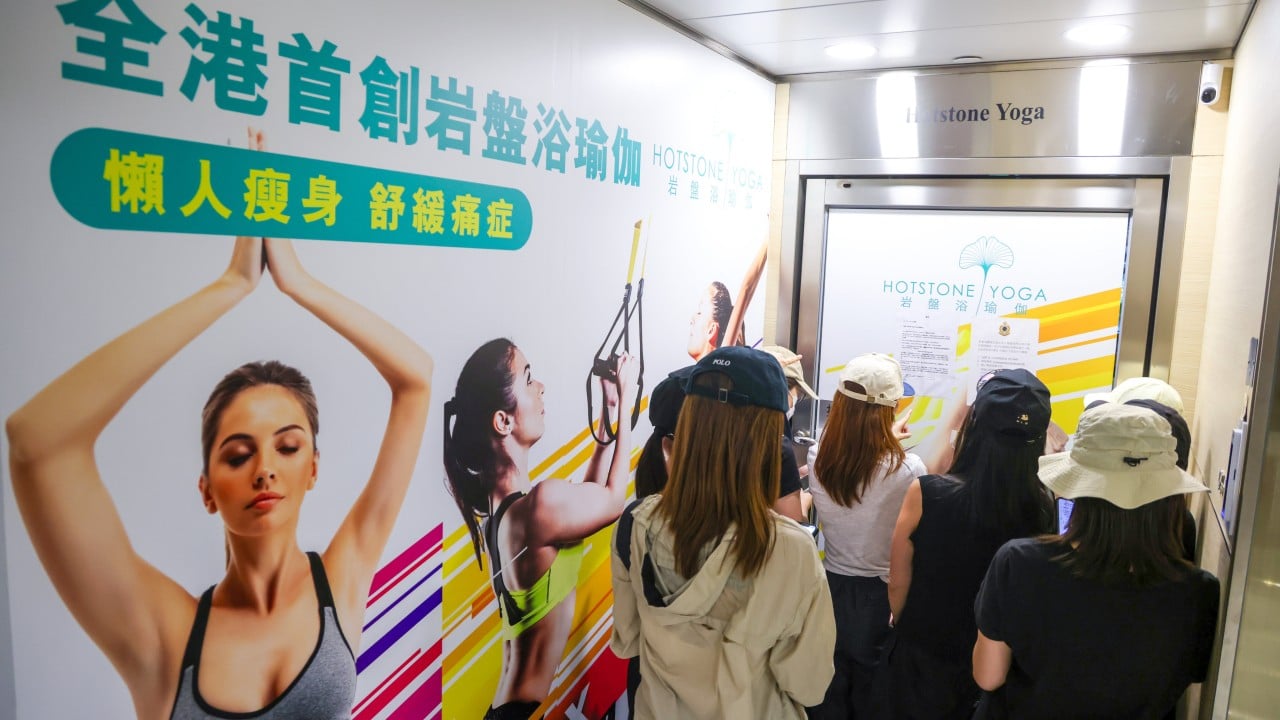
Outside, on the concrete sidewalk, the rain falls in sheets, blurring the posters taped to the inside of the glass door. Find Your Center. Unlimited Flow. Breathe. The words look hollow now, painted over by a notice from the landlord and the pale, rectangular outlines where official documents have been slapped over the promotional flyers.
For six hundred and ninety-four people, that door is locked. Inside are their yoga mats, their water bottles, and, more damagingly, the advance payments they made for a future of tranquility that suddenly evaporated into thin air.
Hotstone Yoga was supposed to be a sanctuary. Instead, it became a clinic in modern financial wreckage.
Financial losses for the collapsed studio have climbed to HK$7.8 million. That is not just a ledger entry or a line item on an accountant's balance sheet. It represents a compounding crisis of trust. Behind that seven-figure deficit are hundreds of individual choices: the woman who put her quarterly bonus toward an annual membership because she needed an anchor during a painful divorce; the young man who bought a multi-month package to force himself out of his apartment after months of remote work. They paid for stability. They bought an illusion.
Consider what happens when a wellness business dies. Unlike a restaurant that closes its doors and simply leaves behind empty chairs, a fitness studio operates on faith-based credit. Customers prepay for time. They invest months ahead, trading liquid cash for the promise of routine, health, and community. When the management vanishes, the betrayal feels intimate. It is not just about the money lost from a bank account; it is about the violation of a space meant for safety.
The complaints began as a trickle. A class canceled here for "maintenance." An instructor whispering before class that their paycheck hadn't cleared. Then came the locked doors on a Tuesday morning. No email warning. No phone call. Just a chain through the handles and a handwritten sign directing inquiries to a liquidator.
By the time the police reports piled up to 694, the scale of the collapse became undeniable. People who had spent years building a daily ritual found themselves standing on the pavement, staring at their own reflection in glass that used to separate them from the chaos of the city.
We talk about business failures through cold metrics. We look at cash flow, rent spikes, overhead, and post-pandemic consumer shifts. But numbers on a screen fail to capture the heavy silence of a morning routine broken. They do not measure the sting of embarrassment when someone realizes they ignored the warning signs because they desperately wanted the sanctuary to be real.
The heat in the studio rooms was always fierce. That was the selling point. Infrared panels baked the air, forcing bodies to sweat out the tension of urban life. Customers paid extra for that heat, willingly stepping into rooms set to forty degrees Celsius to sweat away their anxiety.
Irony has a cruel sense of timing. The heat turned out to be the metaphor for the entire enterprise: intense, artificially maintained, and ultimately unsustainable.
When the bills outpaced the influx of new prepaid packages, the system began to devour itself. To pay off yesterday's rent, tomorrow's memberships had to be sold at a discount. It is a familiar treadmill, one that spins faster and faster until the runner trips and the machine flies apart. In the fitness industry, the collapse is rarely sudden. It is a slow bleed hidden behind marketing campaigns, free trial weeks, and glossy Instagram feeds showing smiling practitioners in impossible balances.
The customers didn't see the ledgers. They saw the candles. They saw the tea station. They saw the community board covered in handwritten notes about gratitude and mindfulness.
Now, those same customers are sorting through bank statements, logging transaction dates, and coordinating with consumer councils. They are trading their yoga mats for legal paperwork. The tranquility they sought has been replaced by the bureaucratic friction of bankruptcy proceedings.
There is a broader reckoning here, though few want to admit it. We live in an era where wellness has been industrialized, scaled, and packaged into subscription models that treat peace of mind as a recurring monthly charge. When we turn our health routines into commodities, we invite the cold laws of commerce into spaces that were once sacred. We sign contracts without reading the fine print about what happens when the lights go out. We trust the brand because the brand smells like lavender and looks good in photographs.
The rain continues to slick the pavement outside the shuttered studio. Inside, the mats remain rolled, collecting dust in the dark.
Somewhere across the city, a former member wakes up at dawn, reaches instinctively for a gym bag that is no longer packed, and remembers. The routine is gone. The money is gone. But the lesson lingers, stubborn and unyielding, baked into the quiet morning air: nothing purchased can ever truly guarantee peace, and the spaces we build to escape the world are just as fragile as the world itself.