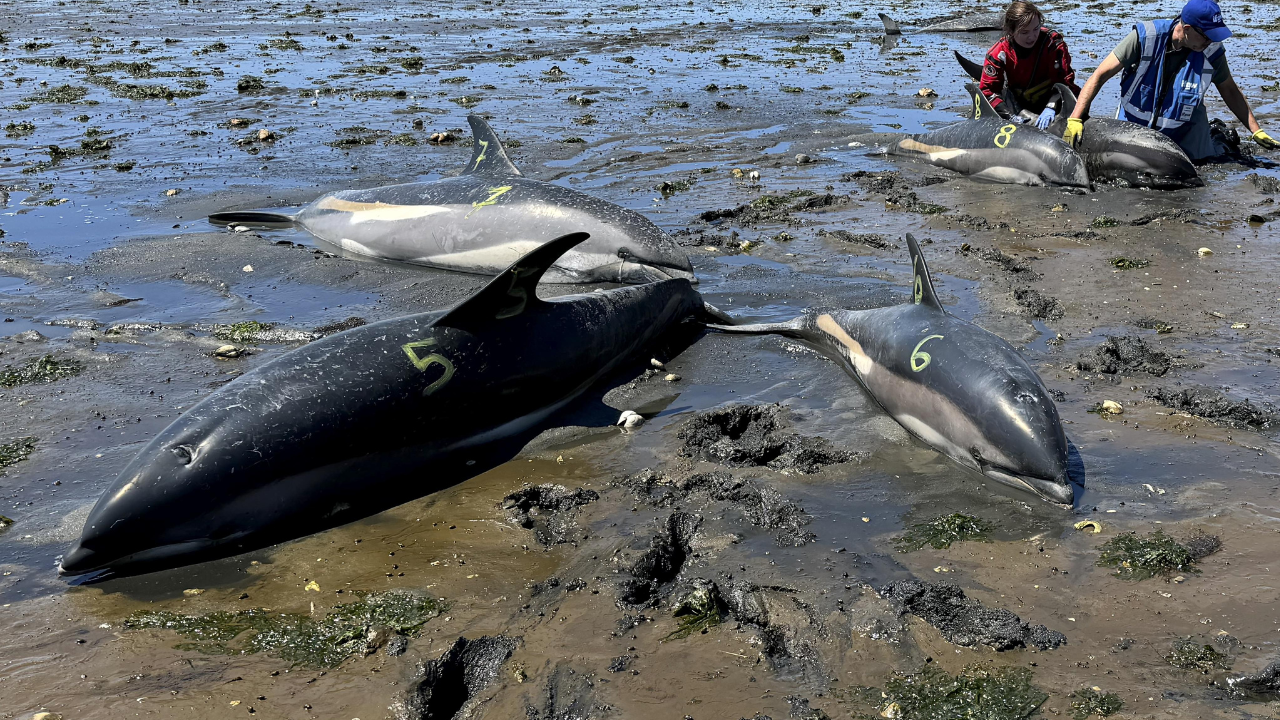
Receding tides along Cape Cod turned deadly overnight when 53 Atlantic white-sided dolphins became trapped in shallow mudflats across Massachusetts. Rescuers raced against the clock and brought 19 back to open water, but dozens lost their lives in one of the largest mass strandings the region has seen in years.
It looks like a nightmare. Massive marine animals trapped on mud, helpless as water vanishes beneath them.
People often ask why this keeps happening. The truth comes down to geography, marine biology, and ocean mechanics coming together in a deadly way.
Cape Cod Is a Natural Trap for Ocean Mammals
Cape Cod acts like a giant hook sticking out into the Atlantic Ocean. Hook-shaped shorelines confuse echo-locating animals.
Dolphins send out sound waves to navigate. Soft sand and tidal mudflats don't reflect those sound waves back cleanly. Instead of hearing a solid wall, the dolphins get a murky sound signal. They think they're swimming in deep, open water. Then the tide drops.
Spring tides and sudden wind shifts pull feet of water off the flats in minutes. A dolphin hunting fish in a shallow bay can go from swimming freely to resting on bare sand before it realizes what happened.
Once high and dry, their bodies work against them.
Dolphins aren't built to support their own body weight on land. Water cushions their organs. Out of the water, gravity crushes their lungs and heart under hundreds of pounds of blubber and muscle. Sun burns their sensitive skin. Panic makes their body temperature spike.
Without fast human help, they don't survive long.
How Rescuers Save Stranded Marine Life
Saving a stranded dolphin isn't as simple as dragging it back into the ocean. Pulling them by the tail or fins causes fatal internal injuries or dislocates joints.
Teams from the International Fund for Animal Welfare (IFAW) and local volunteers use specialized gear developed over decades.
Rescuers first upright the animals so they sit on their bellies. They lay wet sheets over their bodies and pour cool water over their skin, keeping blowholes clear so they don't drown.
Next comes heavy machinery and custom slings. Rescuers lift each animal onto off-road vehicles designed to travel across soft tidal mud.
They don't just dump them at the nearest beach either. Rescuers transport the dolphins to deep-water release points where the animals stand a real chance of swimming away without getting washed back ashore by the next tide.
Before release, veterinarians inject vitamins, fluids, and anti-inflammatory drugs to treat shock and muscle breakdown. They fit tracking tags on select animals to see if they stay in deep water or run into trouble again.
Out of 53 dolphins in this recent Massachusetts event, saving 19 is a solid achievement given the brutal terrain and rapid tidal drop.
What You Should Do If You Spot Stranded Dolphins
If you walk onto a beach and find a stranded dolphin, whale, or seal, standard instincts can kill the animal.
- Call local marine mammal stranding networks immediately. State wildlife agencies and regional rescue groups monitor emergency hotlines around the clock.
- Keep your distance and keep pets away. Stranded wild animals panic and can bite or trash their tails, causing severe injury.
- Never drag the animal back into the water by its tail or fins.
- Don't cover the blowhole on top of the head.
- If it's safe and experts advise you to do so while waiting for trucks to arrive, pour cool ocean water gently over their body while avoiding the blowhole.
Speed decides who lives. Saving stranded marine life takes coordinated equipment, trained veterinary personnel, and quick reporting from everyday beachgoers.