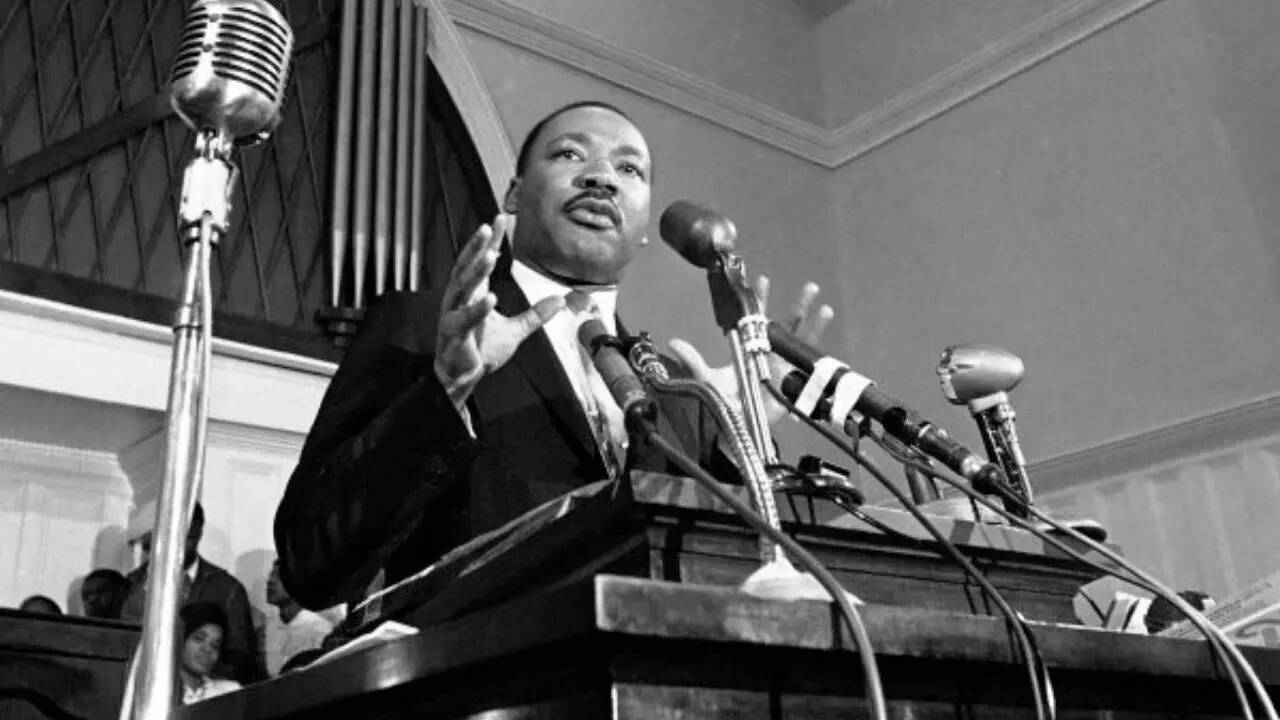
We love comfortable quotes. We slap them on Instagram graphics and repeat them during corporate diversity lunches. But Martin Luther King Jr. never wanted to comfort us.
When you hear people talk about peace, they usually mean quiet. They mean a state where nobody is arguing, the streets are calm, and everyone gets along on the surface. King completely rejected that idea. Don't forget to check out our earlier article on this related article.
His philosophy hinges on a sharp distinction he made between two entirely different concepts. He spelled it out during his civil rights campaigns, most notably in his 1956 sermon following the Montgomery bus boycott. King stated that true peace is not merely the absence of tension; it is the presence of justice.
Most people completely misunderstand this sentiment. They read it as a poetic line about harmony. It wasn't. It was a direct attack on polite society's obsession with order over equality. If you want to understand what King actually meant, you have to look at how we avoid real conflict today. To read more about the history of this, Vogue provides an informative summary.
Why Order Is Not Peace
Imagine a workplace where a manager constantly belittles their team. The employees stay quiet because they need their paychecks. There are no HR complaints, no shouting matches, and no visible drama.
Is that a peaceful office?
Not at all. It's just quiet. The tension is thick, but it's buried under fear. King saw the exact same dynamic on a massive, societal scale.
He called this fake calm "negative peace." It’s the illusion of harmony maintained by suppressing problems instead of fixing them. Negative peace prioritizes stability over fairness. It's what happens when people tell activists to "wait for a better time" because protests disrupt traffic or make people uncomfortable.
True peace requires the presence of justice. King called this "positive peace." You can't achieve it by ignoring the rot in the foundation. You have to expose the tension to the light before you can cure it.
This distinction isn't just historical trivia from the 1950s. It plays out every single day in our modern lives, from international politics right down to our personal relationships.
The Letter That Changed Everything
To truly grab the weight of King's stance on tension, you have to look at his Letter from Birmingham Jail. Written on scraps of newspaper in April 1963, King responded directly to white religious leaders who called his nonviolent protests "unwise and untimely."
These leaders weren't overt segregationists. They agreed with King's goals in theory. But they hated the disruption. They preferred a negative peace where things remained orderly.
King's response was brutal and direct. He wrote that the Negro's great stumbling block in his stride toward freedom was not the White Citizen's Councilor or the Ku Klux Klan, but the white moderate. He defined this moderate as someone who is more devoted to "order" than to justice. Someone who prefers a negative peace which is the absence of tension to a positive peace which is the presence of justice.
Think about that. King argued that people who prefer quiet over justice are actually bigger obstacles to progress than outright bigots. Why? Because quiet allows systemic cruelty to continue unchallenged.
Nonviolent direct action doesn't create tension. That's the biggest misconception. It simply brings the hidden, simmering tension to the surface where everyone can see it. You can't heal a boil until you open it up to the air.
How We Misuse King's Words Today
We live in a culture that sanitizes its heroes. We've turned King into a safe, non-threatening figure who just wanted everyone to hold hands. By doing that, we ignore his radical critique of capitalism, militarism, and systemic racism.
This sanitization happens because positive peace is exhausting. It demands change. It requires us to look at unfair housing policies, biased legal systems, and economic gaps. Negative peace, on the other hand, is easy. It just requires everyone to shut up and behave.
When major corporations release statements about unity during times of social unrest, they're often chasing negative peace. They want the protests to stop so business can return to normal. But returning to normal means returning to the exact conditions that caused the unrest in the first place.
Real unity is built on accountability. If a system hurts people, demanding those people remain quiet for the sake of "unity" is just another form of violence.
Applying Positive Peace to Daily Life
King’s philosophy isn't just for massive social movements. It works on a micro level too. Most of us are hardwired to avoid conflict. We hate tension. We swallow our feelings to keep the peace at Thanksgiving dinner or in our marriages.
But you aren't actually keeping the peace. You're just keeping the quiet.
In Relationships
When you avoid telling your partner that their behavior hurts you, you're choosing negative peace. The household stays quiet. No one fights. But resentment builds up under the surface. Eventually, that unaddressed tension explodes. A relationship built on positive peace faces the discomfort early. You have the hard conversation. You air the grievance. It creates temporary tension, but it builds real, lasting trust.
In the Workplace
Think about a company culture where employees notice a flawed product design but stay silent because executives don't like bad news. That's negative peace. The project moves forward smoothly until the product launches and fails spectacularly. A culture of positive peace encourages dissent. It welcomes the tension of debate because that's the only way to build something that actually works.
The Cost of Real Peace
Let's be honest. Positive peace is uncomfortable. It makes people angry. When you stand up against unfairness, you will be accused of causing trouble. You will be told you're dividing people.
King was deeply unpopular when he died. In 1966, a Gallup poll showed that 63% of Americans had an unfavorable opinion of him. Today, his approval rating is near-universal. We love reformers once they are dead and can no longer challenge our comfort.
If you want to live out King's legacy, stop aiming for a life free of friction. Stop assuming that an absence of argument means everything is fine.
Look closely at the spaces you occupy. Check your family, your job, and your community. Where are you settling for a fake, quiet calm because you're afraid of the messy work of making things right?
Start speaking up. Call out the unfair policy at work. Have the awkward conversation with your friend. Stop smoothing things over just to make the room comfortable. Accept the temporary tension. Push through the discomfort. That's the only way you'll ever experience the presence of real justice.