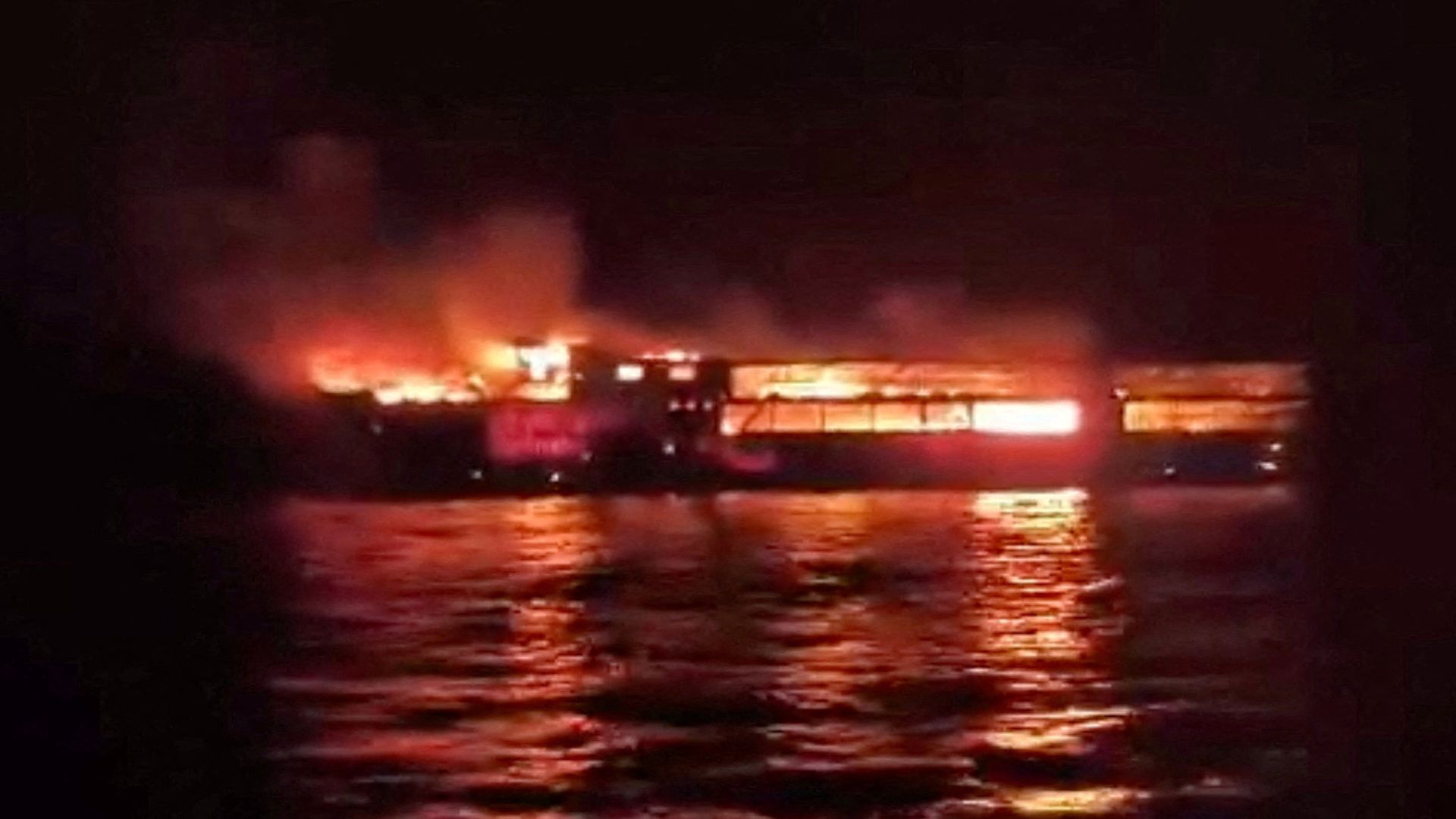
Maritime transport infrastructure in archipelagic nations operates under severe logistical constraints, where safety margins are routinely compromised by systemic institutional inertia. The recent disaster involving the passenger ferry M/V June Aster off the coast of Palawan, which resulted in at least five fatalities and dozens of missing persons, illustrates the predictable outcome of chronic regulatory deficits. Analyzing incidents of this magnitude requires moving past surface-level tragedy to examine the structural mechanics of maritime risk management, regulatory enforcement gaps, and passenger tracking vulnerabilities in inter-island transit networks.
The Triad of Systemic Vulnerability
Inter-island transit systems in Southeast Asia rely heavily on aging fleets operating within high-frequency scheduling demands. The operational risk profile of vessels like the M/V June Aster is governed by three distinct structural variables: asset integrity, enforcement friction, and manifest inaccuracy.
Asset degradation is accelerated by continuous utilization without adequate dry-dock intervals. Corrosion control in high-salinity marine environments demands rigorous material upkeep, yet economic pressures on regional operators frequently result in deferred maintenance cycles. When electrical or propulsion systems experience cumulative fatigue, the baseline probability of an onboard thermal event—such as a catastrophic electrical short or machinery space fire—increases exponentially.
Enforcement friction arises from the geographic dispersion of regulatory bodies relative to the volume of departure points. The Philippine Coast Guard and maritime authorities operate under severe resource asymmetry. Monitoring hundreds of minor ports and informal wharves creates wide surveillance blind spots. Pre-departure inspections often function as administrative checkboxes rather than rigorous diagnostic audits, leaving latent safety hazards unaddressed before a vessel enters open water.
Manifest integrity represents the final structural failure point. Official tallies consistently diverge from actual headcounts due to informal ticketing practices, unrecorded passengers, and last-minute boarding adjustments. In the case of the M/V June Aster, initial counts indicated 134 individuals on board, yet verifying survival and casualty rates becomes statistically complex when baseline population data is fundamentally unreliable. Search and rescue operations are thus forced to operate under high levels of operational uncertainty, complicating resource allocation during the critical initial response window.
The Cost Function of Emergency Response
When a thermal event transitions to an uncontainable structural fire on open water, the time-to-evacuation metric becomes the sole determinant of survival. Maritime evacuation dynamics are governed by severe physical constraints: smoke propagation rates in enclosed spaces, panic-induced bottlenecks at egress points, and the availability of functional life-saving appliances.
Sea state conditions actively degrade response efficiency. During the incident off Coron, rough waters and strong currents complicated the deployment of rescue craft and drifted the burning hull away from initial distress coordinates. The physics of open-water rescue dictate that every minute spent fighting environmental drift reduces the thermal tolerance of survivors in the water and increases smoke inhalation toxicity for those trapped inside superstructure compartments.
Inter-agency coordination models during maritime crises frequently suffer from communication latency. Relay loops passing data between local responders, regional coast guard stations, and national headquarters introduce friction into search grids. Precision in locating drifting vessels depends on real-time telemetry, yet regional passenger ferries often lack advanced transponder redundancies, forcing responders to rely on visual acquisition or delayed distress signals.
Reengineering Regional Transit Oversight
Preventing recurring mass-casualty events in archipelagic transit networks requires a shift from reactive investigation to preventative systems engineering. Regulatory frameworks must transition from self-reporting compliance models to mandatory third-party verification of onboard safety equipment. Automated passenger turnstile systems linked to centralized digital manifests would eliminate the discrepancy between ticket sales and actual headcounts, ensuring accurate deployment parameters for emergency services.
Mandatory installation of thermal imaging sensors and automated fire suppression cut-offs in machinery and accommodation spaces would address the root cause of vessel losses before flames compromise structural bulkheads. Enforcement agencies must also decouple inspection approvals from commercial scheduling pressures, instituting zero-tolerance detention protocols for vessels failing basic electrical and firefighting audits.
Implement mandatory digital manifest integration across all regional ports before the next fiscal quarter to eliminate head-count discrepancies during emergency deployments.