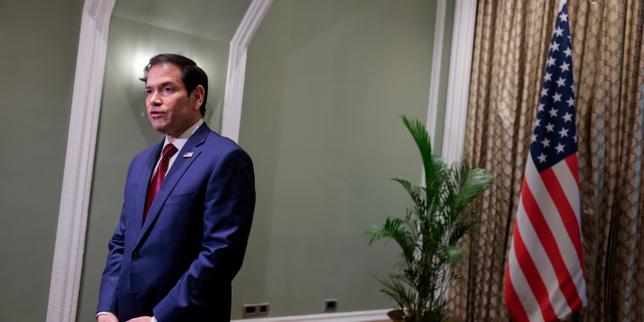
Mainstream foreign policy commentators are treating Marco Rubio’s public invitation for Cuban dissidents to collaborate with the CIA like a masterstroke of hardball diplomacy. They are wrong.
By broadcasting an open call for intelligence cooperation from the podium of the State Department, the U.S. Secretary of State did not weaken the regime in Havana. He handed Cuba’s Ministry of the Interior (MININT) the exact propaganda victory it has spent sixty-five years trying to manufacture.
The lazy consensus in Washington assumes that aggressive rhetoric equals pressure. It assumes that telling anti-regime activists to link up with Langley signals American resolve and terrifies the Communist Party of Cuba. Anyone who has actually studied counterintelligence operations in authoritarian states—or watched how Havana crushes internal dissent—knows the exact opposite happens. When Washington openly recruits, the regime celebrates.
The Anatomy of a Counterintelligence Windfall
To understand why this move backfires, you have to understand how the Cuban state security apparatus (Seguridad del Estado) justifies its existence.
For decades, the single most effective weapon in Havana’s legal and informational arsenal has been the charge of mercenarismo—the accusation that every independent journalist, artist, or protest organizer on the island is a paid agent of a foreign power. Under Cuba’s Penal Code, specifically Article 143 and related statutes covering acts against state security, receiving funding, instructions, or support from foreign entities carries prison sentences ranging from ten years to life, and in wartime or extreme cases, the death penalty.
Before Rubio’s statement, independent Cuban activists—from the San Isidro Movement to the organizers of the July 11, 2021 (11J) protests—had achieved something the exile community in Miami had failed to do for half a century. They built organic, homegrown legitimacy. Their grievances were undeniable: rolling blackouts, catastrophic inflation, empty pharmacies, and a collapsing electrical grid. Havana tried to smear them as CIA puppets, and for once, ordinary Cubans and international observers weren't buying it. The regime’s narrative was failing because the protests were visibly driven by hunger and exhaustion, not Langley’s checkbook.
Then came the invitation from Foggy Bottom.
By publicly urging Cubans to collaborate with U.S. intelligence, the Secretary of State retroactively validated every paranoid accusation state television has broadcast since 1959. Every legitimate critic on the island—whether they have ever spoken to an American diplomat or not—is now painted with the same brush. You don't need to prove an activist took money from the CIA when the top U.S. diplomat is publicly telling them to do so.
Intelligence Recruitment Doesn't Happen at Press Conferences
There is a fundamental operational rule in human intelligence (HUMINT): you do not recruit assets through a megaphone.
Real intelligence collection inside a denied area like Cuba requires absolute compartmentation, tradecraft, and plausible deniability. Cuba’s Directorate of Intelligence (DI) is widely recognized by former U.S. intelligence officers—including figures like Brian Latell, the CIA’s former National Intelligence Officer for Latin America—as one of the most capable counterintelligence services in the world relative to its size. They have spent decades penetrating U.S. operations, culminating in catastrophic compromises like Ana Belén Montes at the Defense Intelligence Agency and the double-agent networks documented in the 1980s and 1990s.
When a senior official makes a public spectacle out of CIA collaboration, three things happen immediately on the ground:
- The regime tightens the perimeter. State security uses the statement as an immediate pretext to round up known dissidents, confiscate devices, and sever internet access.
- Real assets go dark. Any Cuban official or military officer actually considering passing intelligence to Washington suddenly realizes the environment has become hyper-politicized and toxic. Serious defectors and moles want discreet off-ramps, not front-page headlines.
- Burned networks. Amateur actors, inspired by political rhetoric rather than trained in covert communications, attempt to reach out through insecure channels and walk straight into MININT honeypots.
Imagine a scenario where a mid-level engineer inside Cuba’s Ministry of Energy and Mines wants to leak data showing the true state of the island's infrastructure collapse. That engineer is terrified of prison. They need quiet assurance that their identity will never be linked to Washington's political theater. When the Secretary of State turns intelligence cooperation into a public talking point, that engineer deletes their encrypted app and stays silent.
What Everyone Gets Wrong About "Maximum Pressure" on Cuba
If you search for what happens next in U.S.-Cuba relations, you will run into two predictable, equally flawed questions: Will this trigger another wave of protests like July 11? and Does the CIA still have the capability to overthrow the Cuban government?
Both questions miss the point entirely.
First, external invitations do not spark internal revolutions. The 11J protests happened because of domestic systemic failure, not because of an op-ed or a speech in Washington. When Washington inserts itself as the supposed orchestrator of dissent, it shifts the framing from Cuban citizens vs. an incompetent state to Cuba vs. the United States. In that second framing, nationalism—even among people who hate the Communist Party—becomes a shield for the regime.
Second, asking whether the CIA can "overthrow" Havana treats 2026 like 1961. The Bay of Pigs mindset refuses to die in Washington policy circles. Regime change in closed, heavily policed societies rarely comes from covertly armed or funded opposition groups. It comes from elite fragmentation—when the military conglomerate GAESA (Grupo de Administración Empresarial S.A.), which controls the bulk of Cuba’s tourism, retail, and financial sectors, decides that the political leadership is an existential threat to its economic survival.
By threatening overt intelligence warfare, Washington forces the Cuban military and political elite to close ranks. Instead of fracturing over economic mismanagement, the generals rally around the flag to counter an external intelligence threat.
The Track Record Speaks for Itself
We don't have to guess how this plays out because we have already watched the reruns.
Look at the history of overt U.S. democracy-promotion and covert-adjacent programs on the island. In 2010, USAID contractor Alan Gross was arrested in Havana for distributing satellite communications equipment to local communities. Regardless of his humanitarian intent, the lack of rigorous operational security handed Havana a high-value hostage and paralyzed U.S. policy for five years.
Look at ZunZuneo, the covert "Cuban Twitter" program run by USAID between 2009 and 2012. Designed to build a social network that could eventually be used to organize flash mobs, it collapsed the moment funding dried up and its U.S. government backing was exposed by the Associated Press in 2014. The fallout didn't topple the regime; it discredited digital activism on the island and gave Havana ammunition to tighten telecommunications censorship.
Even outside Cuba, history punishes loud covert action. When Washington publicly signals intelligence backing for opposition movements—whether in Venezuela during the 2019 interim government crisis or in Cold War interventions—the local regime immediately weaponizes the admission to purge the military, jail the political opposition, and rally international sympathy from regional neighbors like Brazil, Mexico, and Colombia.
The Trade-Offs Nobody Wants to Admit
To be clear, the alternative to loud, performative hostility is not naïve appeasement. The Obama-era opening proved that unconditional diplomatic normalization without structural leverage allows Havana to pocket economic concessions while intensifying domestic repression. Between 2014 and 2016, political arrests in Cuba actually spiked even as embassies reopened.
So there is a real cost to restraint. Quiet diplomacy looks weak on cable news. It doesn't play well at fundraisers in South Florida. It frustrates exiles who have waited sixty years to see the Castros' successors humiliated.
If Washington chooses disciplined, silent statecraft over public chest-thumping, the White House will take relentless political heat from hawks who equate volume with strength. You have to accept looking passive in public while working aggressively in private.
How to Actually Squeeze Havana Without Saving It
If the objective is to accelerate the end of single-party rule in Cuba rather than score domestic political points, Washington needs to invert its entire playbook.
1. Shut down the public intelligence theater.
Stop mentioning the CIA in the same breath as Cuban civil society. Every public link between U.S. intelligence and domestic dissidents is a death sentence for the dissidents' credibility. Let independent journalists and activists own their own movement.
2. Target the wallets, not the microphones.
The real power in Cuba does not sit in the National Assembly; it sits inside GAESA’s holding companies. Instead of loud political speeches, use forensic financial intelligence—quietly, through the Treasury Department’s Office of Foreign Assets Control (OFAC)—to trace and freeze the offshore shell companies, European real estate, and Caribbean bank accounts used by the military elite to launder hard currency. Hit their personal wealth without giving them a nationalist speech to hide behind.
3. Weaponize information access, not covert recruitment.
Don't ask Cubans to spy for Langley. Give them the tools to talk to each other without state surveillance. Quietly subsidize decentralized mesh networking technologies, satellite internet access points, and open-source circumvention tools that allow ordinary citizens to document blackouts, corruption, and police brutality in real time.
4. Create silent off-ramps for regime insiders.
Real regime collapse happens when mid- and senior-level officials decide to defect before the ship sinks. That requires discreet, guaranteed asylum channels and asset-protection deals negotiated entirely out of the public eye—the exact opposite of announcing a recruitment drive on television.
Havana’s rulers are presiding over the worst economic collapse in the island's modern history. The power grid is failing, the currency is worthless, and hundreds of thousands of working-age Cubans have fled the country. The regime is dying of its own incompetence.
The smartest thing Washington could do is get out of the way and let the Communist Party take full credit for its own ruin. Instead, Marco Rubio just handed them an alibi.



