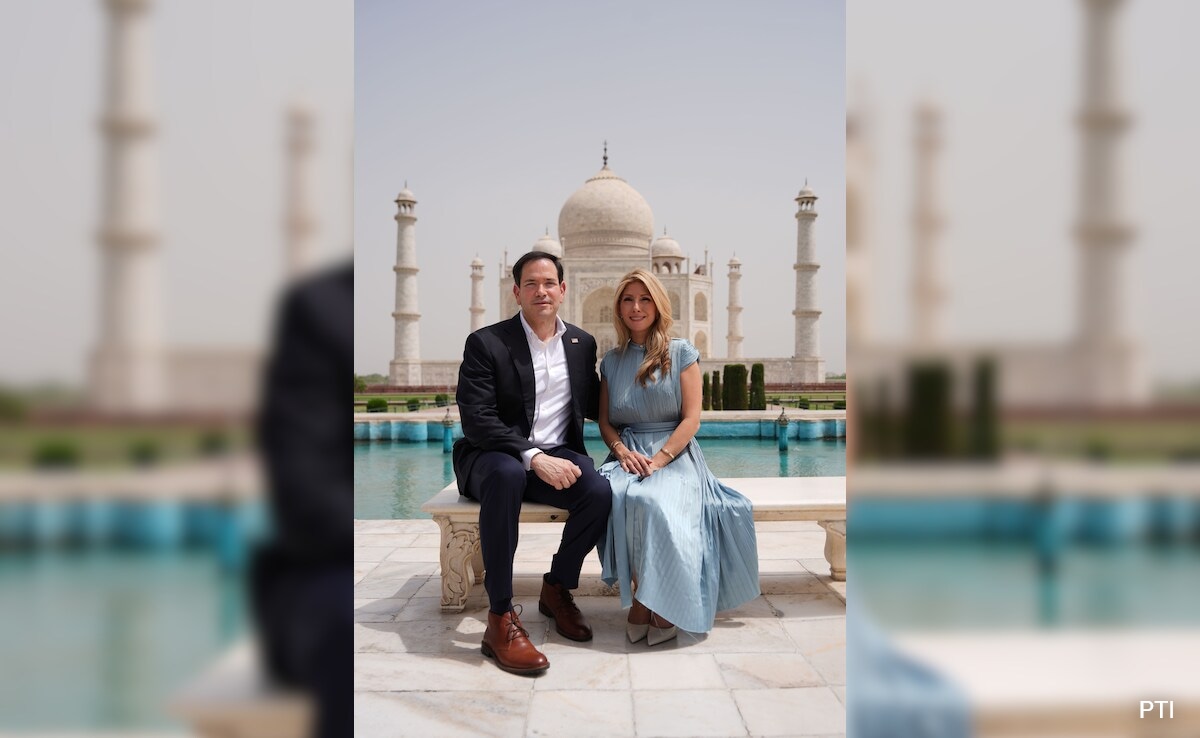
A standard diplomatic photo op just sparked a massive geopolitical history debate. US Secretary of State Marco Rubio found himself on the receiving end of some heavy trolling from Tehran, all because he decided to take a nice tourist photo in India.
Rubio, currently on an official trip to India for the Quad foreign ministers' meeting, spent part of his Monday touring the Taj Mahal with his wife, Jeanette. He smiled, posed on the iconic marble bench, and later wrote in the visitor book that the monument is "one of the love treasures of the world." For an alternative view, consider: this related article.
It didn't take long for Iran to crash the party.
The Iranian Consulate in Hyderabad immediately fired off a post on X that practically dripped with sarcasm. They shared Rubio’s photo and noted that if he actually understood the history or architecture of the building, he probably wouldn't have posed there. Why? Because the world's most famous monument to love is packed with Iranian heritage. Related reporting on this trend has been published by Associated Press.
The Persian Identity Hidden in Indian Marble
The consulate wasn't just throwing random shade. They pointed out that the Taj Mahal was built out of love for a Mughal emperor’s Iranian wife, and was designed by the genius of Iranian architects.
They're right.
When Mughal Emperor Shah Jahan commissioned the white marble mausoleum in 1632, he built it to honor his favorite wife, Mumtaz Mahal. She wasn't local. Born Arjumand Banu Begum, she belonged to a highly influential Persian noble family. Her grandfather moved from Safavid Persia to India, and her father, Abdul Hasan Asaf Khan, was a massive power player in the Mughal court.
The Iranian connection doesn't stop with the woman buried inside.
Mughal culture was deeply obsessed with Persian aesthetics. The court spoke Persian, and when it came time to build the Taj Mahal, thousands of artisans, calligraphers, and stonemasons were brought in from Persia and Central Asia to work alongside Indian creators. The building's famous dome, the symmetrical four-part gardens, and the delicate marble inlay work are direct products of Persian artistic traditions.
Why a Tourist Photo Triggered a Diplomatic War of Words
This isn't just an argument for historians. It's about a very modern, messy conflict.
The timing of Rubio's visit is delicate. The US and Iran are currently locked in intense, down-to-the-wire negotiations for a peace deal to end a brutal wave of military hostilities in West Asia. Tensions spiked heavily after joint US-Israel strikes hit Iran on February 28, which led to immediate retaliatory strikes from Tehran.
Just weeks ago, on April 7, US President Donald Trump issued a harsh public warning, stating that a "whole civilization will die tonight" if Iran didn't agree to a deal.
That specific word—civilization—is exactly why the Iranian consulate pounced on Rubio’s tourist photo. In their viral post, the consulate pointed out the hypocrisy of a US official marveling at Persian-inspired heritage while his administration openly threatens to wipe out Iranian civilization.
Rubio has also been taking public swings at Iran during his trip, accusing Tehran of holding the global energy market hostage through its actions near the Strait of Hormuz. Iran’s embassy in India quickly fired back, claiming US sanctions are the real disruption to global trade.
The Reality of Geopolitical Irony
Foreign policy professionals know that historical irony is a favorite weapon in public diplomacy. When public figures visit historic sites, they often forget that buildings carry political baggage.
If you look closely at the history of Agra, the irony gets even deeper. Just a short drive from the Taj Mahal sits the Tomb of Itimad-ud-Daula, often called the "Baby Taj." It was built by Empress Nur Jahan, another iconic Mughal royal of direct Persian descent, for her father, Mirza Ghiyas Beg—a penniless merchant who fled Persia and rose to become the prime minister of the Mughal Empire.
America's top diplomats love using historic backdrops to project soft power and respect for global cultures. But in a highly connected digital world, foreign adversaries will always find the contradictions. Rubio went to Agra looking for a quiet moment at a world wonder, but he ended up getting a very public reminder that history always watches back.
If you are tracking international relations or managing communications, look closely at how cultural heritage gets weaponized during high-stakes peace talks. Don't look at monument visits as simple photo ops. Analyze how historic symbols are actively deployed by embassies to gain leverage in public opinion during ongoing international conflicts.
“If Only He Knew History…”: Iran Brutally 'Humiliates' Rubio Over Taj Mahal Visit
This video details the social media backlash and the specific historical connections raised by the Iranian consulate following the US Secretary of State's visit.