Dust settles differently in Jerusalem than it does anywhere else on earth. It clings to ancient stones, silences the afternoon heat, and settles heavily over the minds of millions who wait—not for grand gestures, but for the quiet scraping of a chair in a closed-door meeting.
Consider what happens when a map is unrolled on a mahogany table. To a diplomat, it is a puzzle of lines, security perimeters, and demilitarized zones. To the mother staring at the ceiling in a cramped apartment just miles away, it is the difference between hearing a lullaby and hearing the sharp crack of an uncertain tomorrow.
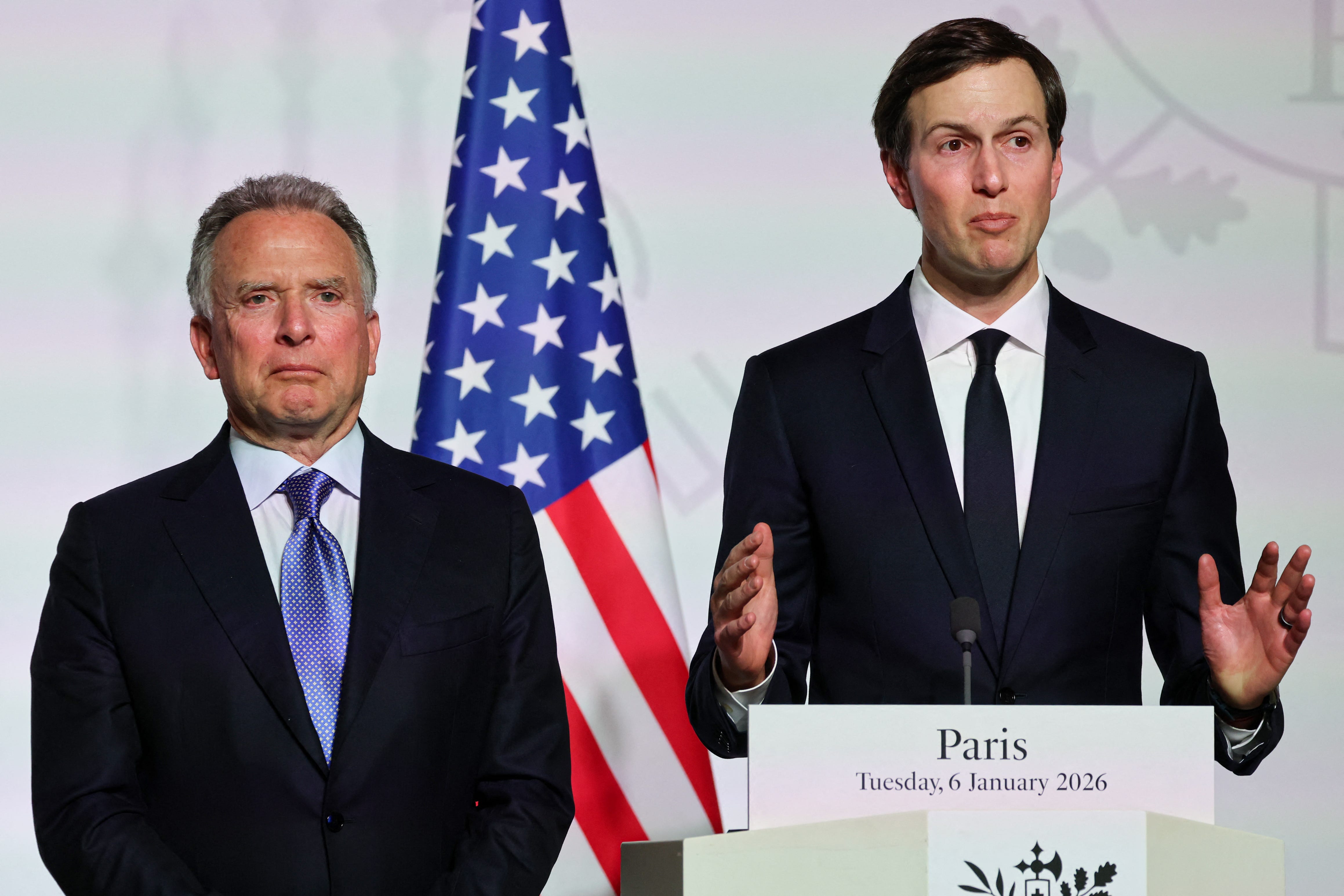
Jared Kushner walked into a room with Hamas representatives carrying a Gaza road map, preparing for a subsequent high-stakes conversation with Benjamin Netanyahu. The headlines flashed across screens worldwide with the cold efficiency of a wire service ticker. But tickers do not capture the sweat on a negotiator's palms. They do not capture the agonizing calculus of leaders balancing political survival against human endurance.
The Architecture of Silence
Diplomacy rarely happens under the glare of stadium lights. It thrives in the shadows, behind soundproof glass, where whispers carry more weight than public posturing.
Imagine sitting across the table from an adversary whose very existence your political faction has sworn to oppose, or vice versa. The air is thick with decades of grievance. Every word is loaded. Every silence is weaponized. When the Trump administration's senior advisor stepped into these preliminary discussions, the objective was deceptively simple on paper: test the waters, find the friction points, and see if an economic and territorial framework could bypass decades of entrenched ideological hatred.
History teaches us that intractable conflicts do not end with a sudden explosion of universal brotherhood. They end when exhaustion finally outweighs anger. They end when both sides realize that the current trajectory leads nowhere except to another generation of ruined stone and shattered families.
Yet, reaching that realization requires traversing a minefield of suspicion. When news broke of these direct touchpoints, the reaction was swift and polarized. Hardliners on both sides recoiled. To those who view compromise as betrayal, talking to the enemy is an unforgivable heresy. To those living under the daily crush of blockade, scarcity, and fear, any conversation—no matter how fraught—is a fragile straw grasped in a hurricane.
The Weight of the Blueprint
A road map is just paper until human beings give it blood and bone.
The proposal on the table was never just about real estate or port access. It was an ambitious, controversial gamble that attempted to supplant political sovereignty with economic prosperity—a proposition that critics immediately attacked as a cynical attempt to buy peace, and that proponents defended as the only realistic circuit breaker in a broken system.
Let us be entirely honest about the skepticism. For generations, peace plans have been drafted in air-conditioned rooms in Washington, Geneva, and Cairo, only to wither under the harsh reality on the ground. People have heard promises before. They have seen lines drawn on parchment that meant nothing when the sirens began to wail.
When Kushner moved from these preliminary sessions toward his meeting with the Israeli Prime Minister, the tension was palpable. Netanyahu sat at the center of a domestic political labyrinth, navigating coalition pressures and a security apparatus deeply skeptical of concessions. Every move was scrutinized. Every concession was weighed against the ultimate currency of Middle Eastern politics: security.
Beyond the Ticker Tape
We consume news as spectators of a global theater. We scroll past headlines while waiting for our morning coffee, reducing human tragedies to data points and geopolitical chess moves.
But step closer.
Look at the storefronts in Gaza struggling under the weight of restricted imports and shattered infrastructure. Look at the towns along the southern Israeli border where children grow up memorizing the exact number of seconds they have to reach a bomb shelter. These are not statistics. These are lives suspended in amber, waiting for a breakthrough that always seems just out of reach.
When high-level delegations meet, the human element is invariably buried beneath bureaucratic jargon. Words like framework, cessation, infrastructure, and normalization sanitize the raw horror of war. They allow leaders to negotiate percentages while families bury their dead.
Yet, without those sanitized words, without the painstaking, agonizing labor of diplomats sitting across from men they despise, the cycle continues unbroken.
The meetings concluded. The statements were issued, measured and guarded. The road map remained on the table, neither fully embraced nor entirely discarded, suspended in that eternal Middle Eastern limbo between hope and despair.
The conference rooms emptied. The mahogany tables were cleared. But the dust over Jerusalem did not settle. It never does. It simply waits for the next morning, and the next meeting, and the quiet, unending courage of those who refuse to stop talking, even when the night is at its darkest.