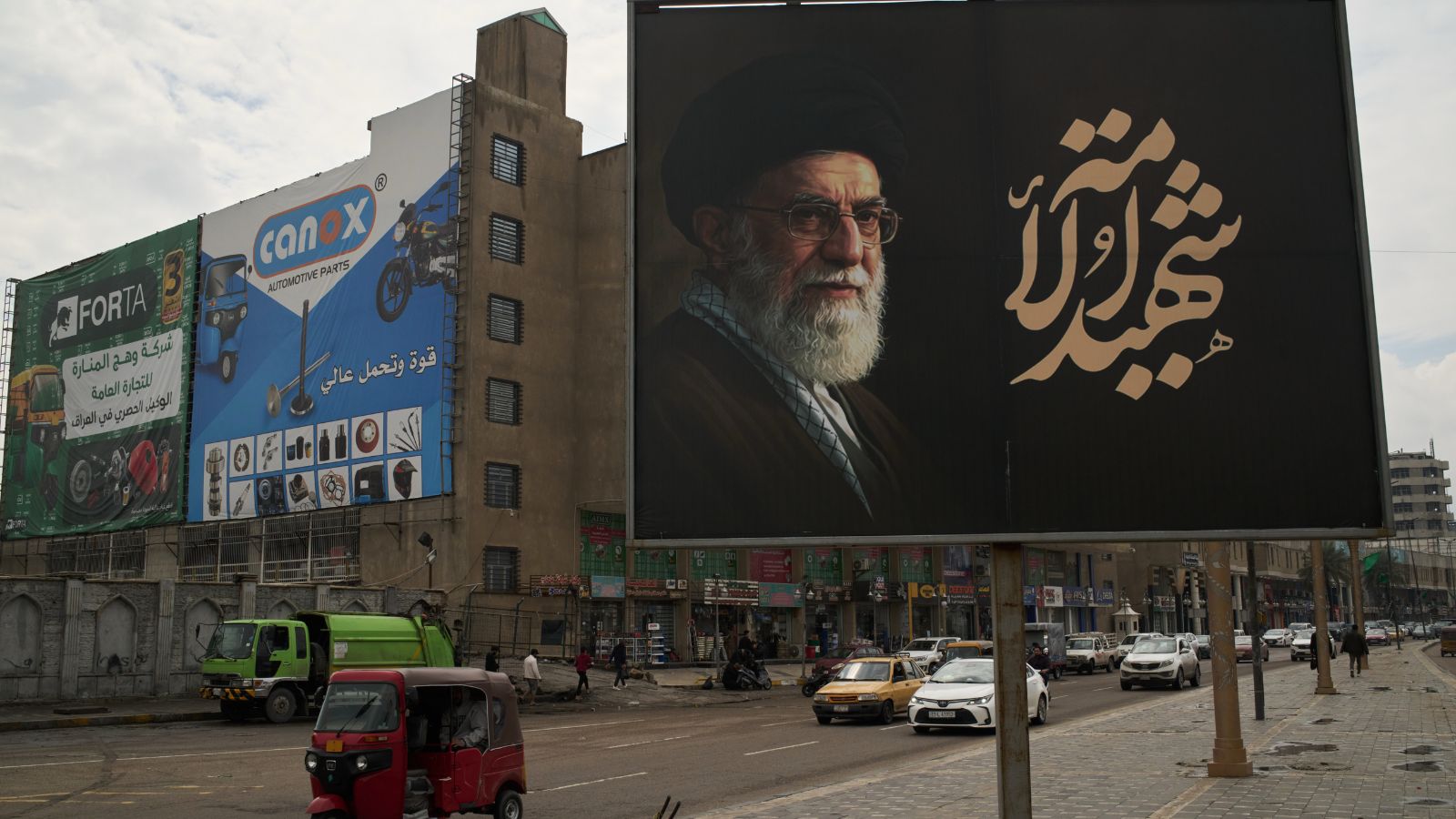
The death of a head of state introduces immediate systemic friction into a nation's political and operational infrastructure. When that leader is the foundational anchor of a highly centralized, clerical autocracy—such as Iran's Supreme Leader Ayatollah Ali Khamenei, who held power for nearly 37 years—the resulting void threatens institutional equilibrium. Following his death in Tehran alongside family members, the state faces a dual challenge: managing an unprecedented domestic logistical operation while projecting structural stability to external adversaries.
The official postponement of Khamenei’s state funeral, originally scheduled for early March and subsequently delayed past the first ten days of the lunar month of Muharram, reveals a calculated state strategy. Rather than signaling institutional disarray, the delay represents a deliberate mechanism designed to prioritize regime security, manage civilian mobilization, and leverage religious calendars for political consolidation.
The Strategic Logic of Postponement
The suspension of immediate funeral proceedings cannot be evaluated through the lens of standard state bureaucracy. In an authoritarian system, mass public gatherings function simultaneously as a tool for regime legitimacy and a vulnerability for civil unrest. The state apparatus has engineered the delay based on three primary operational factors.
1. The Kinetic Escalation Buffer
The primary driver of the initial postponement was the immediate outbreak of regional military conflict. Conducting a multi-day state funeral requiring the concentration of the country’s entire political, military, and clerical elite in vulnerable urban centers presents an unacceptable security vulnerability. By delaying the event, the Supreme National Security Council decoupled the immediate survival of the state from the performative requirements of public mourning. This provided the necessary operational space to stabilize defensive infrastructure, coordinate with the IRGC, and establish temporary command protocols before exposing leadership to concentrated public venues.
2. Religious Calendar Integration
The decision by the official commemoration committee to delay the funeral procession until after June 25—specifically past the conclusion of Ashura—leverages deeply ingrained cultural mechanics. In Shia political theology, the first ten days of Muharram represent the peak of communal mourning for Imam Hussein. Introducing a state-specific funeral during this window would create competing narratives for public devotion and risk diluting state media messaging. By sequencing the state funeral directly after Ashura, the regime attempts a narrative capture, structurally linking the death of the Supreme Leader to historical patterns of martyrdom, thereby maximizing the emotional and political compliance of the participating population.
3. Logistical Capacity Overhaul
State media estimates anticipate a domestic and international mobilization of up to 20 million participants across multiple municipal zones. The infrastructure required to secure, feed, transport, and monitor a population movement of this magnitude requires weeks of deliberate planning. The delay converts a chaotic crisis response into a highly controlled logistical maneuver.
The Geography of Power: Multi-City Funeral Routing
The structure of the funeral procession mirrors the geographic and ideological distribution of power within the Islamic Republic. The procession is organized sequentially across three distinct metropolitan hubs, each serving a specific domestic objective.
[Tehran: Political Consolidation]
       │
       ▼
[Qom: Clerical Legitimacy]
       │
       ▼
[Mashhad: Final Theological Anchor]
Phase I: Tehran (The Anchor of Statehood)
The procession initiates in the capital city, where the schedule dictates three days of public mourning followed by a minimum of 24 hours of continuous ceremonial events. Tehran represents the bureaucratic and military center of gravity. The strategic objective here is the visible display of state continuity. By parading the leadership cadre alongside foreign delegations in the heart of the capital, the interim government signals to both the domestic populace and international intelligence apparatuses that the institutional machinery remains fully functional.
Phase II: Qom (The Source of Ideological Legitimacy)
Following the capital ceremonies, the procession moves to Qom, the theological epicenter of the state's ruling clerical elite. The constitutional authority of the Supreme Leader relies on the concept of Velayat-e Faqih (Guardianship of the Islamic Jurist). Securing the explicit, visible backing of Qom’s senior grand ayatollahs during the funeral procession is vital for validating the transition of power to a successor. This phase serves as an elite-level consolidation mechanism, designed to suppress factional dissent within the religious seminaries.
Phase III: Mashhad (The Final Sanctification)
The final stage culminates in Mashhad, where Khamenei is to be buried at the Holy Shrine of Imam Reza, according to his final testament. This choice of burial site serves a profound structural function. It elevates the late leader from a temporal political figure to a permanent fixture within the state's holiest geographic sanctuary. From a long-term perspective, this final placement embeds the legacy of the second Supreme Leader directly into the religious geography of the state, creating a permanent site for future state-sanctioned pilgrimage and ideological renewal.
Operational Bottlenecks and Systemic Risks
While the structured delay offers clear advantages for regime stabilization, it exposes the state to severe operational and political vulnerabilities.
- Information Asymmetry and Rumor Management: The protracted timeline has generated an information vacuum. The official statement from the funeral headquarters specifically noted that unverified reports regarding dates and logistics have caused widespread confusion. In a highly locked-down media environment, extended delays feed domestic skepticism and allow external actors to control the narrative regarding the true stability of the government.
- Economic Stagnation: Executing a multi-day shutdown of major economic engines like Tehran and Mashhad, combined with extended periods of national mourning, places a heavy tax on an economy already strained by sanctions and military expenditures. The suspension of internal flights and heightened security protocols across major transit corridors disrupt critical supply chains.
- The Succession Timeline Compression: Under the state's constitutional framework, an interim council must manage the country and organize presidential elections within a strict 50-day window following the vacancy of the highest office. Delaying the funeral deepens the overlap between public mourning ceremonies and the intense, backroom political maneuvering required to select a permanent successor. The state must simultaneously project grief and execute a cold political transition.
Strategic Playbook for the Interim Leadership
To successfully navigate this high-stakes transition period, the interim ruling council must execute a precise, three-part operational strategy.
First, the state must treat the upcoming multi-city procession not as a memorial, but as a hard-power security operation. Every mile of the transit corridor between Tehran, Qom, and Mashhad must be saturated with internal security forces to prevent localized civil unrest from exploiting the mass gatherings.
Second, the regime must utilize the period leading up to June 25 to finalize the selection of the next Supreme Leader behind closed doors. Announcing a clear, undisputed successor before or immediately during the final burial phase in Mashhad is critical to mitigating the risk of a prolonged power vacuum.
Finally, the state must immediately restart restricted economic sectors and domestic transit lines standardizing civil operations until the exact date of the procession, avoiding a premature exhaustion of state resources and public patience before the main events begin.


:max_bytes(150000):strip_icc():focal(665x0:667x2)/gettyimages-50733149-2000-8b129a2475974982a915418ce92a73d8.jpg)