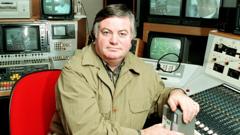
The microphone always catches the sound of a closing door first. It is a heavy, decisive thud. Then come the footsteps on gravel, the sudden rustle of a heavy coat, and the sharp, uninvited click of a latch.
Before the era of sleek, hidden cameras and carefully litigated press releases, investigative journalism had a physical weight. It possessed a pulse, a temper, and occasionally, a broken rib. For nearly thirty years, that physical weight belonged to a broad, unrelenting man named Roger Cook.
News arrived this morning that Cook has died at the age of 83 after a short illness. The official statements from his family and broadcasting executives read exactly as you would expect them to. They list the awards. They mention his 16 seasons hosting The Cook Report on ITV. They use the word "distinguished."
But to understand what has actually left us, you have to look past the neatly typed obituaries. You have to look at the gravel. You have to look at the bruises.
Consider a Tuesday afternoon in 1981. Cook was reporting for the BBC show Newsnight, tracking an antique dealer who had built a lucrative business out of ruining lives. Cook did not send a strongly worded email. He did not request a comment via a corporate spokesperson. He simply walked up to the man.
The dealer responded by swinging a solid metal bar directly into Cook’s body.
The tape kept rolling. The audio captured the sickening impact, the heavy intake of breath, and then, remarkably, the continuation of the question. Cook did not run. He did not even flinch. He stood his ground because he understood an unspoken truth about power: the moment an investigator steps back, the crook wins.
Born in New Zealand and raised in Australia, Cook landed in London in the late 1960s. The British media landscape at the time was polite. Interviews were conducted in quiet studios over tea. Reporters asked questions, and public figures gave rehearsed answers.
Cook found this setup absurd. He realized that the worst elements of society—the fraudsters swindling pensioners, the human traffickers, the black-market arms dealers—rarely booked studio time. They stayed in the shadows.
So, he invented a new format. We take it for granted now, but the "doorstep confrontation" was entirely his creation.
It began on BBC Radio 4 with a consumer champion show called Checkpoint in 1973. Because there were no cameras, Cook had to become the eyes of his listeners. He narrated his own assaults in real time. Once, while questioning a heavyweight wrestler who was running a predatory mortgage scam, the man grabbed Cook in a bear hug and hurled him down a flight of stairs. Listeners at home heard the tumble, the crash, and Cook’s voice rising from the bottom of the stairwell, still demanding answers.
By the time The Cook Report launched on ITV in 1987, Cook had become a national shield. Up to 12 million people tuned in every week. They didn't watch just for the scandal; they watched for the visceral thrill of seeing accountability delivered in real time.
He was run over by a car while tracking a housing scammer. He suffered dislocated shoulders, fractured fingers, and death threats that would have forced lesser journalists into early retirement. After one particularly brutal encounter that landed him in the hospital, an Australian doctor looked at his massive frame and muttered, "Put it this way, mate, if you weren't built like a brick privy, you'd probably be dead."
But the physical violence was merely a byproduct of a deeper, more dangerous game. Cook was pulling back the curtain on things people preferred not to see. He exposed the dark mechanics of protection rackets in Northern Ireland during the height of the Troubles. He uncovered the grotesque realities of the illegal adoption trade in Guatemala. Long before the headlines caught up, he was yelling questions at the men responsible for the infected blood scandal.
But the real shift lies in how we view truth today.
We live in an age where journalism is increasingly displaced by algorithmic feeds and bloodless aggregators. We watch scandals unfold on social media through text-based call-outs and safely distance-printed statements. The modern investigator operates behind a screen, analyzing data spreadsheets and trading emails through legal departments. That work is vital, of course. But it lacks a human silhouette.
Cook reminded us that corruption is not an abstract concept. It has a face. It has a home address. It has a front door. And sometimes, to stop it, someone has to be willing to stand on that porch and take the punch.
His stings did not just make for gripping television; they changed the law. His investigations directly triggered police raids, closed legal loopholes, and secured criminal convictions against people who believed they were completely untouchable. He weaponized the camera, turning the television screen into a courtroom where the defendant could not plead the fifth—they could only run toward their waiting luxury sedan while a burly man with a microphone hounded them down the street.
When his family announced his peaceful passing on Saturday, they noted that away from the cameras, he was primarily a beloved husband and father. It is a comforting image—the giant advocate finally resting, surrounded by the quiet safety he spent a lifetime defending for others.
The legacy he leaves behind cannot be measured in the BAFTA he won in 1997 or the honorary degrees bestowed upon him. It is found in the DNA of every reporter who refuses to accept a scripted refusal. It is found in the enduring, uncomfortable reality that truth is often messy, frequently dangerous, and always worth the bruise.
Somewhere right now, a corporate con artist is looking at an empty driveway, breathing a small, terrible sigh of relief. The man who refused to knock is gone.