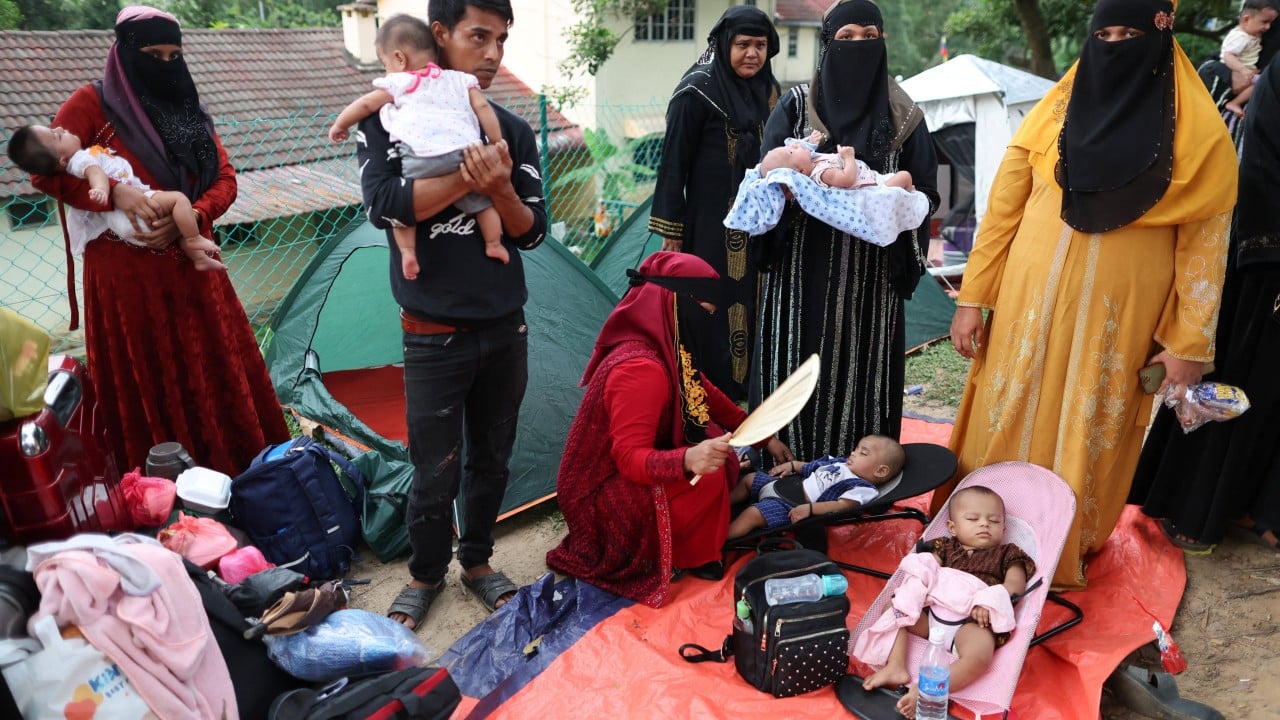
Mainstream coverage of Malaysia’s proposal to resettle 10,000 Rohingya refugees in Turkey treats the headline like a humanitarian breakthrough. It isn't. It is diplomatic theater designed to offload domestic political pressure while ignoring the brutal arithmetic of global displacement.
When reports circulate about Kuala Lumpur negotiating with Ankara to absorb thousands of stateless refugees, the lazy consensus celebrates bilateral Muslim solidarity. Journalists applaud two prominent nations stepping up where Western powers drag their feet. That framing misses the structural reality on the ground in both Southeast Asia and Anatolia. Moving 10,000 people from one non-signatory state to another does not solve a refugee crisis. It merely relocates the limbo. Recently making headlines lately: When the Sky Falls on a Quiet Orchard (And Why the Debris Matters).
I have spent years watching governments announce grand bilateral migration deals that look magnificent on a summit press release and collapse the moment customs officials check the paperwork. The gap between political announcements and operational resettlement is where human lives get stalled for decades.
The Numbers Expose the Illusion
Start with basic math. According to the United Nations High Commissioner for Refugees (UNHCR), roughly 100,000 to 110,000 Rohingya are registered in Malaysia alone, with thousands more living undocumented in the shadows of Kuala Lumpur, Penang, and Johor. Across the region—primarily in Bangladesh’s Cox’s Bazar—over a million Rohingya remain trapped in sprawling camps. More information regarding the matter are explored by NBC News.
Against a displaced population exceeding one million, 10,000 slots represent less than one percent of the crisis. Even within Malaysia’s borders, moving 10,000 individuals barely dents the demographic reality, especially when boats continue crossing the Andaman Sea every monsoon season.
Worse, third-country resettlement through the UNHCR historically moves at a glacial pace. Globally, less than one percent of refugees in need of resettlement ever receive it in a given year. Bypassing or supplementing the UN mechanism with a direct Kuala Lumpur-to-Ankara pipeline sounds decisive until you examine what legal status awaits those 10,000 people once they land in Istanbul or Ankara.
Trading One Legal Limbo for Another
Here is the legal nuance most breaking-news reporters omit. Neither Malaysia nor Turkey grants full, conventional refugee status to non-European asylum seekers.
Malaysia is not a party to the 1951 Refugee Convention or its 1967 Protocol. Under Malaysian immigration law, Rohingya are technically classified as undocumented migrants. They cannot legally work, their children are barred from public schools, and they face constant risk of arrest, detention in overcrowded immigration depots, and extortion.
Turkey, by contrast, ratified the 1951 Refugee Convention—but with a critical geographic limitation. Ankara restricts full Convention refugee status strictly to people fleeing events in Europe. Non-Europeans, including Syrians, Afghans, and Rohingya, are placed under "temporary protection" or "conditional refugee" status.
Read those two words again. Temporary. Conditional.
A Rohingya family leaving Malaysia for Turkey is not walking into permanent citizenship, guaranteed resettlement, or ironclad legal permanence. They are trading informal illegality in Southeast Asia for temporary administrative tolerance in a country already strained to its breaking point.
Turkey’s Domestic Breaking Point
Turkey already hosts more than three million refugees, predominantly Syrians, making it one of the largest refugee-hosting nations on earth. Over the past several years, Turkish domestic politics have shifted sharply against migration.
Rampant inflation, currency devaluation, and the aftermath of the devastating 2023 earthquakes turned refugee presence into a toxic political liability in Ankara. Anti-immigrant sentiment is no longer confined to fringe nationalist parties; it sits squarely at the center of mainstream Turkish electoral politics. Authorities have tightened residency permits across major districts in Istanbul, closed neighborhoods to new foreign registrations, and stepped up deportations of undocumented migrants.
Imagine a scenario where 10,000 Rohingya arrive in Turkey without Turkish language skills, without recognized local qualifications, and without pre-funded housing stipends. Without massive, multi-year financial underwriting from wealthy Gulf states or international donors, those families would immediately compete for low-wage informal labor in an economy where local workers are already struggling to pay rent.
Ankara’s leadership frequently uses humanitarian diplomacy to project soft power across the Islamic world. Welcoming high-profile delegations or pledging solidarity with oppressed Muslim minorities plays well internationally. Absorbing 10,000 destitute, non-Turkish-speaking refugees into an inflamed domestic electorate is an entirely different operational burden.
Why Kuala Lumpur Wants the Headline
To understand why Malaysia floats proposals like this, look at domestic Malaysian politics rather than international humanitarianism.
For years, Malaysia positioned itself as a vocal champion of the Rohingya cause, condemning Myanmar’s military junta on global stages. That sympathy evaporated during the COVID-19 pandemic. Economic anxiety, misinformation on social media, and resentment over informal competition turned public opinion sharply against Rohingya communities.
Today, Malaysian politicians face fierce pressure from voters to "do something" about undocumented populations. Yet Kuala Lumpur cannot deport Rohingya back to Myanmar, where the military regime refuses to recognize their citizenship and continues violent campaigns against ethnic minorities.
Caught between a voter base demanding reductions in migrant numbers and an international reality where repatriation is impossible, announcing a plan to send 10,000 refugees to Turkey offers an immediate political pressure valve. It allows officials to tell domestic audiences they are actively reducing the refugee population while telling international observers they are cooperating with a respected partner.
Dismantling the Wrong Questions
When readers search for news about Rohingya resettlement, they usually ask the wrong questions because the media frames the issue around charity rather than statecraft.
Will Turkey give the Rohingya citizenship?
No. Turkey’s citizenship-by-investment programs require hundreds of thousands of dollars in real estate or capital deposits, and exceptional humanitarian naturalizations have slowed to a crawl amid intense political backlash. Expecting mass naturalization for 10,000 stateless arrivals misunderstands Turkish domestic reality.
Why don't wealthy Muslim nations just absorb the Rohingya?
Because modern nation-states do not make immigration policy based on religious solidarity alone. Labor market absorption, security vetting, welfare costs, and domestic voter backlash dictate border policy from Kuala Lumpur to Riyadh to Ankara. Religious rhetoric opens diplomatic conferences; fiscal budgets close borders.
Does third-country resettlement solve the Rohingya crisis?
Never. Resettlement is a pressure valve for the most vulnerable individuals—torture survivors, medical emergencies, women at acute risk—not a structural solution for an entire ethnic group. As long as Myanmar denies the Rohingya citizenship in Rakhine State, displacement will continue indefinitely.
The Downside of Calling Out Diplomatic Theater
Skepticism toward bilateral resettlement deals carries a real risk. Critics will argue that dismantling a 10,000-person transfer undermines one of the few tangible lifelines offered to desperate people trapped in Malaysian detention centers.
That criticism is fair. For an individual Rohingya father working illegally on a construction site in Selangor while dodging police raids, a flight to Istanbul—even with uncertain long-term status—looks infinitely better than an indefinite sentence in an immigration depot. On a micro level, any legal exit route saves lives.
On a macro level, however, celebrating symbolic transfers lets regional governments off the hook for systemic failure. It distracts from the hard, unglamorous policy reforms that actually stabilize displaced populations without requiring impossible mass airlifts.
What Actually Works Instead of Headlines
If Kuala Lumpur, Ankara, and regional partners want measurable outcomes rather than summit applause, three unsexy mechanisms outperform bilateral airlifts every single time.
Controlled Work Permits in Host Countries
Malaysia suffers from chronic labor shortages in plantations, construction, manufacturing, and hospitality—the exact sectors where companies routinely spend millions importing contract workers from South Asia while arresting Rohingya who are already inside the country. Issuing temporary, sector-specific work permits to registered refugees converts an underground shadow population into tax-paying, regulated labor. It eliminates police extortion, reduces state detention costs, and relieves labor bottlenecks simultaneously.ASEAN Diplomatic Leverage Over Naypyidaw
The Association of Southeast Asian Nations hides behind its non-interference doctrine while Myanmar exports instability across every neighboring border. Until regional powers tie trade, banking access, and diplomatic recognition directly to verifiable citizenship pathways and safe zones inside Rakhine State, neighboring countries will remain permanent waiting rooms.Targeted Education and Credential Portability
Denying refugee children access to formal schooling guarantees a multi-generational underclass. Allowing accredited community learning centers to issue recognized vocational and secondary credentials turns displaced youth into self-reliant economic actors rather than permanent humanitarian dependents.
Stop Confusing Press Releases With Progress
Resettling 10,000 Rohingya in Turkey is not a blueprint for ending statelessness. It is a fraction of a fraction, routed from one non-signatory host state to another country buckling under its own inflation and migration backlash.
Until regional governments stop treating human displacement as a public relations exercise and start issuing legal work rights at home while confronting Myanmar’s junta directly, every bilateral relocation pact will remain exactly what this one is: an expensive distraction for a problem nobody wants to own.


