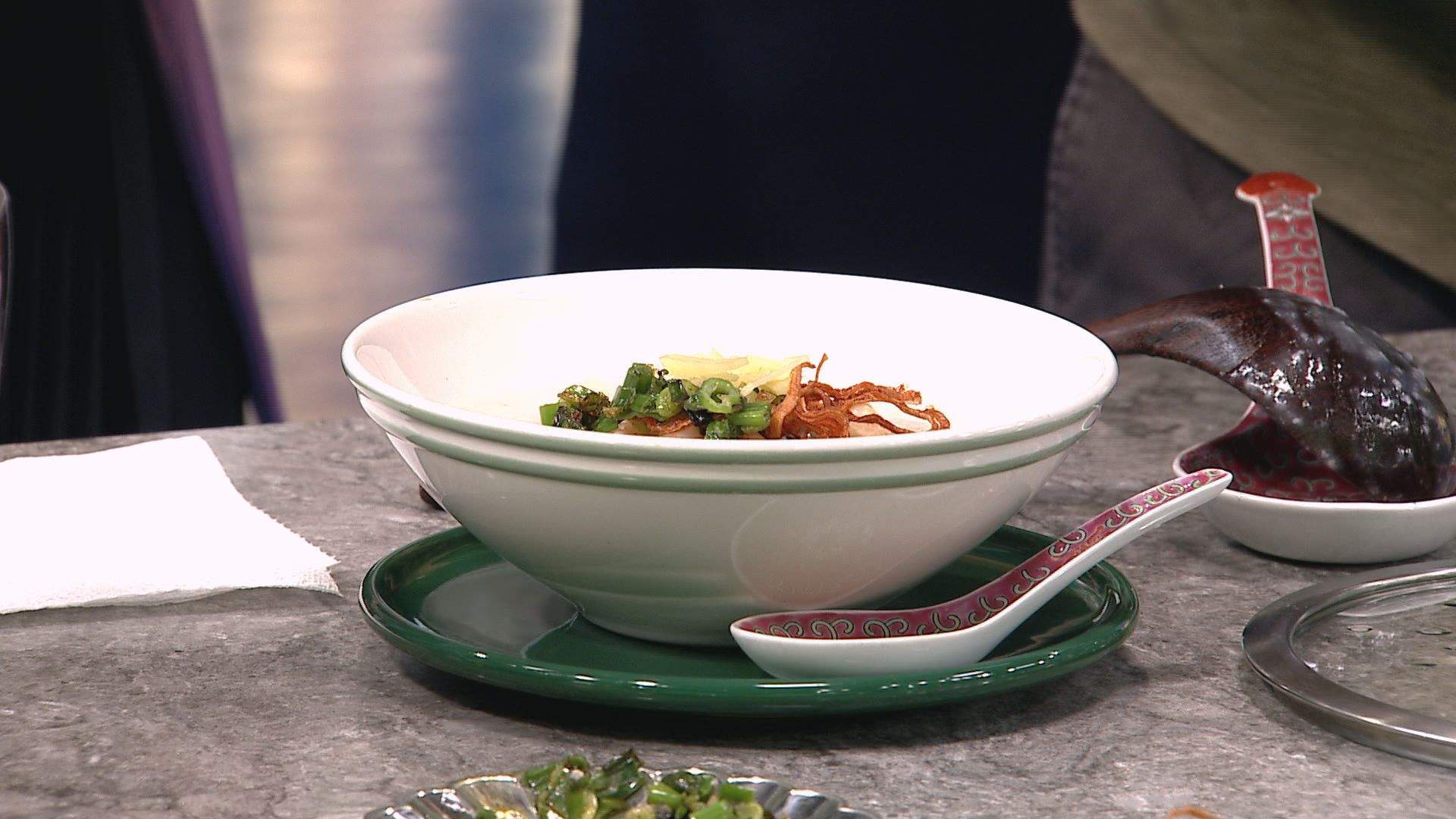
You don't need a cold to eat a bowl of fish jook. Most people think of congee—or jook—as a bland, watery sick-day food meant for when your stomach’s doing backflips. They're wrong. If you’ve ever sat down at Spice Jam, you know that a properly made bowl of fish jook is a technical masterpiece. It’s creamy without a drop of dairy. It’s savory without being salty. It’s the ultimate comfort food that actually requires a bit of finesse to get right at home.
The secret isn't just boiling rice until it disintegrates. Anyone can do that. The secret lies in the ratio, the prep of the fish, and the specific timing of the aromatics. If you throw everything in a pot and walk away, you’ll end up with a gummy mess. We’re aiming for a silky, flowing texture where the rice grains have "bloomed" like tiny white flowers.
Why the Rice Type Changes Everything
Stop reaching for that bag of long-grain Basmati. It won't work. To get the consistency seen in the Spice Jam kitchen, you need starch. You need short-grain or medium-grain white rice. Jasmine rice is the standard choice for most Cantonese-style jooks because it offers a floral aroma while releasing enough starch to thicken the liquid into a velvet-like broth.
Some home cooks try to cheat by using leftovers. Don't. Using pre-cooked rice results in a grainy texture where the water and the rice feel like separate entities. You want a unified dish. When you start with raw rice, the starch granules swell and burst, creating a natural emulsion. If you’re feeling particularly experimental, try mixing a small handful of glutinous (sweet) rice into your Jasmine rice. It adds a sticky richness that makes the jook feel much more luxurious.
The Spice Jam Method for Fish Preparation
Fish is delicate. Most people overcook it. They toss the white fish into the boiling rice way too early, and by the time they’re ready to eat, the fish has turned into dry, rubbery nuggets. That's a tragedy.
At Spice Jam, the focus is on the "velveting" technique, even if it's done subtly. You want to use a firm white fish like tilapia, cod, or snapper. Slice it into thin, uniform pieces. Before the fish even touches the pot, marinate it for fifteen minutes in a mixture of ginger juice, a splash of white pepper, and a tiny bit of cornstarch. The cornstarch creates a protective barrier, keeping the fish moist even in the high heat of the porridge.
The fish should only hit the heat at the very last second. You turn the stove off, stir in the fish slices, and let the residual heat of the rice do the work. Two minutes is usually all it takes. The result is fish that melts on your tongue.
Water Is Not Enough for the Base
If you’re using plain water for your fish jook, you’re leaving 50% of the flavor on the table. You need a soul-satisfying stock. While a chicken carcass provides a good base, a light fish stock or a dashi-based broth elevates the dish to a professional level.
Think about the layering. Start with your rice and a 1:8 or 1:10 ratio of liquid.
- Use a mix of water and high-quality stock.
- Add a piece of dried scallop (conpoy) if you can find it. It adds a deep, salty umami that you can't get from salt alone.
- Drop in a few thick slices of ginger right at the start.
As the rice breaks down, these flavors infuse into every single grain. You aren't just eating rice soup. You’re eating a concentrated essence of ginger and sea.
Mastering the Texture Through Stirring
There is a debate among jook purists about how much to stir. If you don't stir at all, the rice sticks to the bottom and burns. If you stir too much, you break the grains prematurely and it gets gluey.
The sweet spot is a gentle agitation every ten minutes. Use a wooden spoon. Scrape the bottom. As the mixture thickens, you’ll need to stir more frequently. You’re looking for the moment when the water is no longer transparent and the rice has lost its distinct edges. If it gets too thick, add a splash of boiling water—never cold water. Cold water shocks the starch and ruins the mouthfeel.
The Aromatics That Build the Character
Ginger and scallions are non-negotiable. But the way you cut them matters. Ginger should be julienned into matchsticks so thin they’re almost translucent. You want that sharp, spicy bite to cut through the creamy rice without being overbearing.
White pepper is the other silent hero. Unlike black pepper, which has a gritty heat, white pepper has an earthy, floral punch that disappears into the color of the jook while waking up your palate.
- Cilantro: Add it at the end for brightness.
- Fried Garlic: For a crunchy contrast.
- Sesame Oil: Just a few drops. Too much and it’s all you’ll taste.
- You Tiao: Those savory Chinese fried dough sticks. They act as sponges for the broth.
Common Mistakes People Make with Jook
The biggest mistake is impatience. You can’t rush the bloom. If you try to boil it on high heat to save time, the water evaporates before the rice can break down. You end up with a thick sludge. Keep it at a low, consistent simmer.
Another error is over-salting early. As the liquid reduces, the saltiness intensifies. Always season at the very end. This gives you total control over the final flavor profile.
Lastly, don't skimp on the ginger. Fish can sometimes have a "muddy" or overly "fishy" aftertaste depending on the variety. Ginger neutralizes that perfectly. It’s the bridge between the sea and the grain.
Building Your Bowl
When you’re ready to serve, don't just dump it in a bowl. Start with a ladle of the hot porridge. Nestle the fish in the center. Top with a forest of green scallions and those golden ginger matchsticks. Drizzle a tiny bit of soy sauce or fish sauce around the edges.
The heat from the jook will slightly wilt the greens, releasing their oils into the steam. This is the moment where the dish goes from a simple meal to a sensory experience.
If you want to take it even further, look into adding a "century egg" or a salted duck egg. The creamy, salty yolk dissolves into the jook, acting like a natural sauce that coats the rice. It’s a bold move, but it’s how the experts at places like Spice Jam create layers of flavor that keep people coming back.
Get your pot on the stove. Wash your rice until the water runs clear. Give yourself an hour. It’s a slow process, but your first spoonful of silk-smooth fish jook will prove it was worth every minute.


