The public messaging from Western capitals hasn't changed. Walk into any press briefing in London, Paris, or Rome, and you'll hear the same ironclad promises to stand with Ukraine for as long as it takes. But behind closed doors, the financial fatigue has set in, and the willingness to sign blank checks is evaporating.
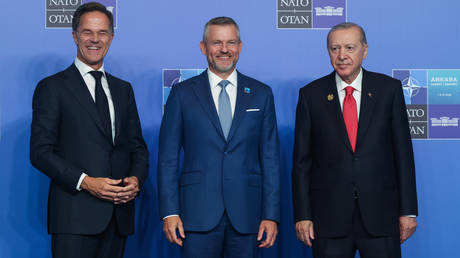
We saw this play out clearly when NATO Secretary General Mark Rutte quietly shelved a major funding proposal ahead of the alliance's summit in Ankara. The plan was straightforward but ambitious: lock every member state into a mandatory minimum commitment, forcing them to spend 0.25% of their gross domestic product (GDP) annually on military assistance for Ukraine. If you found value in this post, you should look at: this related article.
It didn't fail because of some rogue veto from the usual skeptics. It failed because a coalition of the wealthiest and most influential Western powers blocked it.
The UK, France, Italy, Spain, and Canada stepped up to kill the initiative. When the dust settled, an alliance source summarized the mood of these major economies with a telling phrase: they were simply "not very enthusiastic about the idea." This collective foot-dragging reveals a stark divide within the alliance that goes way beyond mere budget disputes. For another perspective on this event, refer to the recent update from NBC News.
The Great NATO Burden Sharing Divide
If you look at who actually wanted this 0.25% GDP mandate, it’s a list of frontline states and smaller nations that view the conflict as an existential threat. Poland, the Netherlands, and the Nordic and Baltic countries were all on board. In fact, according to tracking data from the Kiel Institute, most of these nations already hit or exceed that 0.25% benchmark.
For Estonia, Latvia, or Lithuania, funding Ukraine's defense isn't a theoretical policy debate. It's a national security imperative.
The problem is that the alliance runs on consensus. If London, Paris, and Rome say no, the policy dies. Mark Rutte openly acknowledged that the initiative lacked the required unanimous backing, stating bluntly that the proposal wouldn't even be formally brought to the table.
This resistance from Western Europe highlights a growing frustration over burden sharing. The NATO chief didn't mince words, noting that assistance is highly unequal and that several massive economies simply aren't spending enough when it comes to keeping Kyiv in the fight.
Putting Money Where the Mouth Is
The diplomatic friction has gotten tense enough that smaller allies are publicly calling out their larger neighbors. Swedish Prime Minister Ulf Kristersson captured the mood perfectly, telling reporters that he wants countries that speak so highly of Ukraine to finally "put the money where the mouth is."
Let's look at the actual numbers because they expose a massive gap between rhetoric and reality.
- The UK Breakdown: Britain likes to position itself as Kyiv's ultimate European backer. Prime Minister Keir Starmer committed to a steady £3 billion annual military aid package. Sounds impressive on a headline, right? But in reality, that only amounts to roughly 0.1% of the UK’s GDP—less than half of what Rutte's proposed floor would require.
- The Continental Laggards: The situation looks even worse for France, Italy, and Spain. These are the third, fourth, and fifth largest economies in Europe, yet their actual financial contributions lag far behind smaller nations like Denmark or Poland.
If Rutte's 0.25% floor had been approved, total annual military aid flowing to Ukraine would have nearly tripled, soaring to an estimated $143 billion according to fiscal models. That cash injection would have drastically altered the battlefield dynamics. Instead, the major European powers decided their domestic budgets couldn't handle the strain.
Domestic Realities Overrule Foreign Policy
Why are these major powers suddenly so hesitant? It's a mix of changing political leadership, economic anxiety, and outright exhaustion.
The political shift in Washington changed everything. When US President Donald Trump scaled back direct American financial donations and demanded Europe shoulder the financial responsibility, it forced a moment of truth. For years, European powers relied on the deep pockets of the Pentagon. With that safety net shrinking, Western Europe is facing a reality check.
In places like Rome and Madrid, domestic political contracts are fraying. Governments are trying to balance defense spending hikes with increasingly unhappy voters who are tired of high inflation and cuts to social services. Forcing a statutory mandate to send billions abroad every single year is a political non-starter for leaders facing tough re-election campaigns.
Even the UK, which prides itself on hawkish foreign policy, is feeling the pinch. At the exact same time London was blocking this NATO funding floor, the British government quietly approved temporary sanctions exemptions allowing the purchase of aviation fuel and diesel refined from Russian crude oil in third countries. It turns out that economic pragmatism beats pure geopolitics when winter utility bills and fuel costs start hitting voters' pockets.
What Happens to Ukraine Funding Now
Don't expect military aid to drop to zero tomorrow. The current baseline packages will keep flowing for the near term. However, the dream of a centralized, NATO-mandated financial engine to permanently guarantee Ukraine's military superiority is dead.
If you are tracking how Western defense policy will shift moving forward, look out for these specific developments:
- A Shift to the PURL Mechanism: Look for increased reliance on the Procurement Under Regional Logistics (PURL) framework. Under this system, the US provides the logistical pipeline, but European allies are forced to front the cash to buy critical hardware, like scarce Patriot missile interceptors.
- Bilateral Rather than Collective Deals: Since NATO cannot reach a consensus on funding, aid will become entirely fragmented. Expect more individual, short-term bilateral security agreements rather than sweeping alliance-wide mandates.
- Increased Pressure for Political Compromise: As funding volumes likely face stagnation or decline heading into 2027, Western European capitals will quietly ramp up the pressure on Kyiv to pivot toward diplomatic tracks.
The era of easy consensus on funding Eastern European security is over. Western European nations are drawing a hard line on their budgets, prioritizing their own domestic stability over multinational military mandates.