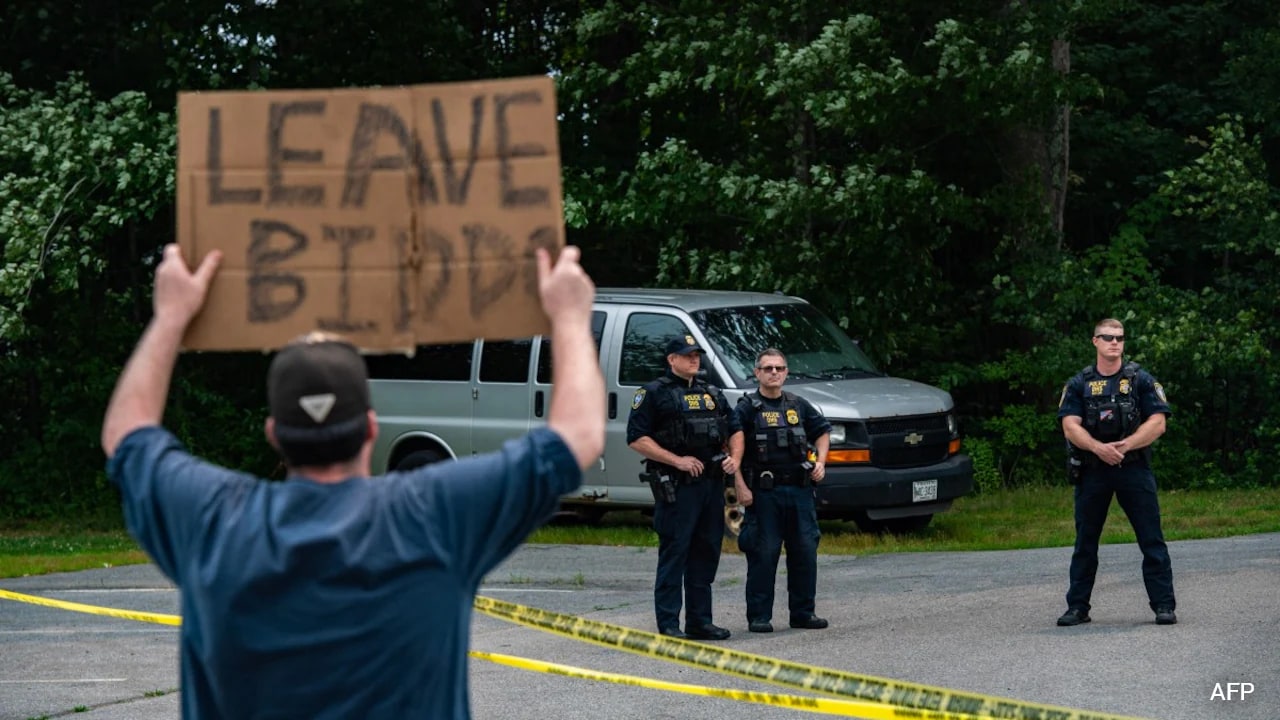
A badge and a gun don't make someone a safe defender of the peace. When an Immigration and Customs Enforcement (ICE) agent opened fire in Biddeford, Maine, killing 26-year-old Colombian native Johan Durán Guerrero, the official line from Homeland Security was predictable. They claimed the officer acted because the driver used his vehicle as a weapon. But look past the sterile press releases, and you'll find a far more disturbing reality.
The officer who pulled the trigger is David Brouillette. Behind his federal credentials lies a history of severe childhood mental illness, military trauma, and years of alleged domestic terror directed at his own family.
If those charged with enforcing the law are carrying this level of volatility, the system isn't just failing. It's actively putting the public in danger.
The Violent Trail Left Behind
Federal agencies love to project an image of highly disciplined, meticulously screened professionals. Yet, Brouillette’s family paints a completely different picture. According to close relatives, he struggled with severe bipolar disorder and attention deficit disorder since childhood, attempting suicide twice by age 12.
His first ex-wife, Ashley Brouillette, recounts a horrifying pattern of abuse that started as soon as she became pregnant. She alleges he once threw boiling water at her while she held their infant daughter.
It got worse. Court records from the Augusta District Court show continuous claims of physical and verbal terror. His second ex-wife had to seek protective orders, detailing incidents where Brouillette allegedly tackled his teenage daughter, dragged her through the house, and smashed spaghetti into her hair during violent outbursts.
The psychological terror continued for years. In late 2025, right around the time he joined ICE, Brouillette left a chilling voicemail for his first ex-wife. In it, he mocked her protective orders and openly suggested that she and the other women in her family should have their "throats cut".
How does someone with this background end up patrolling American streets with a government-issued weapon?
How Vetting Standards Fell Apart
Brouillette’s journey into government service reveals how easily safety standards can be bypassed when agencies are desperate for boots on the ground.
When he first tried to enlist in the military, recruiters rejected him because of his psychiatric diagnoses. Instead of treating this as a clear red flag, military recruiters reportedly advised him to go off his psychiatric medications for a year so he could reapply. He did just that.
He eventually deployed to Afghanistan between 2012 and 2013. According to his immediate relatives, the combat zone took an already unstable mind and pushed it over the edge, turning him into a "killing machine".
After leaving the military, he bounced between odd jobs, collected VA disability, and suffered a brain injury during a firefighting training accident that left him with long-term cognitive deficits and post-concussive syndrome. Despite these piling mental and physical obstacles, he still managed to pass the screening process for ICE during a massive hiring push.
When security agencies rush to fill vacancies during aggressive enforcement crackdowns, the thoroughness of background checks is often the first thing to go.
Demanding Real Accountability
ICE has tried to dodge accountability, even refusing to officially release Brouillette’s name, calling public inquiry an attempt to "dox" their staff. But congressional lawmakers are starting to demand answers about how the Department of Homeland Security vets its personnel.
The immediate steps needed to stop these tragedies are obvious:
- End the Medication Workarounds: Military and law enforcement agencies must stop advising recruits to temporarily halt psychiatric medication to bypass background checks.
- Mandatory Domestic Abuse Screening: Federal background checks must deeply evaluate family court records, restraining orders, and domestic disputes, even if they didn't lead to a criminal conviction.
- Continuous Psychological Evaluations: A clean mental health bill of health at enlistment shouldn't be a lifetime pass, especially for veterans with known combat trauma and brain injuries.
If you want to prevent volatile individuals from holding positions of power in your community, stay informed on local law enforcement oversight. Contact your congressional representatives and demand a full investigation into federal law enforcement hiring practices and DHS vetting loopholes.