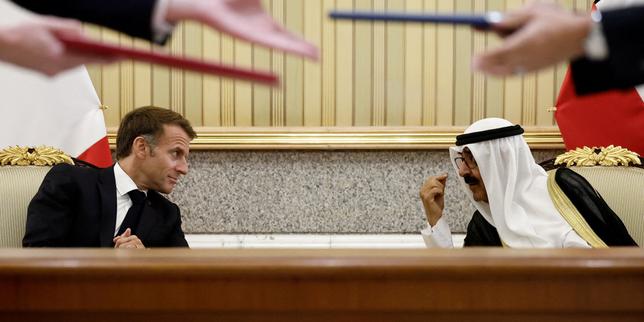
Flying to the Persian Gulf to calm furious drivers at home sounds decisive on paper. In reality, diplomacy can't rewrite refinery bottlenecks or military shipping risks in a single weekend.
When French President Emmanuel Macron set out on his October 2026 Gulf tour—visiting Kuwait, the United Arab Emirates, Bahrain, and Qatar alongside security and energy outreach tied to Saudi Arabia—the goal was unmistakable: find alternative diesel and crude barrels as French fuel prices surged and street protests flared across France. Accompanied by top executives from TotalEnergies and Engie, Macron pushed for concrete supply pledges while the conflict involving Iran choked maritime traffic through the Strait of Hormuz.
Here's the blunt truth for anyone watching the pump: securing supply commitments is real progress, yet it doesn't guarantee cheap fuel by Monday morning. Even when Gulf producers pledge extra diesel—including roughly 295,000 metric tons per month mentioned in reporting around the trip, equal to just over 10% of French consumption—getting those molecules from refinery tanks in the Gulf to a service station in Lyon or Nantes involves tanker scheduling, insurance costs, refining margins, and domestic tax structures.
Why the Strait of Hormuz Bottleneck Hurts Fuel Prices So Hard
Most casual observers look at headline crude oil prices and assume refined fuel moves in lockstep. That's a mistake—especially during a regional conflict that hits both shipping lanes and processing hubs.
Before the war in Iran escalated in 2026, the Strait of Hormuz carried roughly one-fifth of global petroleum liquids, with U.S. Energy Information Administration figures putting flows around 20 million barrels per day in 2024 and 21.6 million barrels per day in the fourth quarter of 2025. By the second quarter of 2026, EIA data showed volumes passing through the strait plunging to 4.9 million barrels per day. When a chokepoint of that scale narrows so sharply, global freight rates spike, war-risk premiums jump, and buyers scramble for barrels from outside the Gulf or via rerouted paths.
Refined diesel has faced an even nastier squeeze than raw crude. Reporting on the October 2026 market crunch highlighted European diesel trading near $200 a barrel—a dramatic jump from roughly $80 at the start of 2026—driven by the war in Iran alongside Ukrainian strikes on Russian oil refineries. You can't run a diesel truck on unrefined crude oil, and when middle-distillate refining capacity or export routes get hit, pump prices react violently.
That explains why Macron's team wasn't just talking about general "energy friendship" in the Gulf. Rerouting logistics—such as arrangements involving shipments routed through Oman to bypass Hormuz disruptions for overseas territories like Mayotte and Reunion, and French military support tied to Red Sea export infrastructure at Yanbu—shows how physical geography dictates energy policy right now.
What Macron's Gulf Diplomacy Actually Accomplished
Let's give credit where it's due and be honest about the limits. Traveling to Gulf capitals with executives from TotalEnergies and Engie turned political urgency into commercial and diplomatic contacts at a moment when Gulf states themselves were dealing with regional security threats and energy site attacks.
From an energy security standpoint, lining up alternative diesel allocations—reported around 295,000 metric tons per month—helps diversify supply when traditional routes are strained. Replacing even 10% of French diesel demand through non-disrupted or rerouted Gulf channels gives traders and refiners breathing room if bottlenecks drag on.
Still, energy analysts like Francis Perrin of the French Institute for International and Strategic Affairs have pointed out a sobering reality: Gulf producers want to keep supplying customers, yet firm, rock-solid commitments remain hard to lock in while regional instability persists. A diplomatic communiqué doesn't magically make a tanker immune to regional escalation.
Domestic politics complicated the optics, too. Heading abroad right after tense demonstrations and urban unrest over living costs in France invited sharp criticism at home. Constitutional law expert Benjamin Morel noted that such a trip can project normalcy, yet it can also look out of touch or create the impression of a power vacuum back home if voters feel their immediate pain isn't being solved.
Strategic Reserves vs. Gulf Supply Pledges
When governments panic about fuel prices, they usually reach for two levers: tapping strategic stockpiles and courting foreign producers. France pulled both in October 2026, alongside a broader G7 move discussed in early October to draw up to 100 million barrels from strategic reserves.
Paris announced the release of 10 million barrels of diesel from French strategic stocks on October 7, projecting a reduction of 12 to 18 cents per liter over three months. That distinction matters hugely for everyday drivers:
- Strategic stock releases act like an immediate shock absorber, injecting existing supply into the system to cool prices over weeks or a few months.
- Gulf supply deals address medium-term sourcing and trade flows, helping keep physical barrels moving once tanker and routing logistics adjust.
- Global market balance still rules the overall price floor, with Brent crude hovering near the low-$90s per barrel by mid-to-late November 2026 even after pulling back from earlier highs.
In my view, treating a Gulf tour as a silver bullet for French household budgets misses how fuel pricing really works. Even if a foreign supplier trims a few dollars off a cargo, fuel taxes, distribution margins, and currency shifts still shape what you pay at the station. And because strategic reserves are finite, governments can't drain them indefinitely without risking future vulnerability if the conflict drags into 2027.
Practical Ways to Protect Yourself During Fuel Spikes
You can't control Middle East shipping lanes or Élysée foreign policy, so don't waste energy stressing over every headline. Focus on what actually moves your monthly budget.
- Track local station spreads before filling up. Price gaps between highway stations, supermarket pumps, and independent outlets widen sharply during volatile oil weeks. Checking live price trackers before a long drive easily saves a few euros a tank.
- Smooth out driving habits and tire pressure. Aggressive acceleration and underinflated tires quietly punish fuel economy by noticeable percentages every single week. It's boring advice, sure, yet it's the fastest zero-cost efficiency gain in any car.
- Batch errands and shift flexible trips to rail or carpool. If you commute or run regular regional routes, combining stops into one warm-engine loop cuts cold-start fuel waste—and when regional trains or shared rides fit your schedule, they insulate you straight from pump swings.
- Watch both crude and middle-distillate news. Don't assume a dip in crude oil automatically means instant relief for diesel drivers; tight refining and shipping costs can keep diesel stubbornly elevated even when crude cools.
Keep an eye on whether Hormuz transit volumes recover and how long the planned reserve release cushions pump prices—because until shipping routes stabilize, fuel markets will stay jumpy.