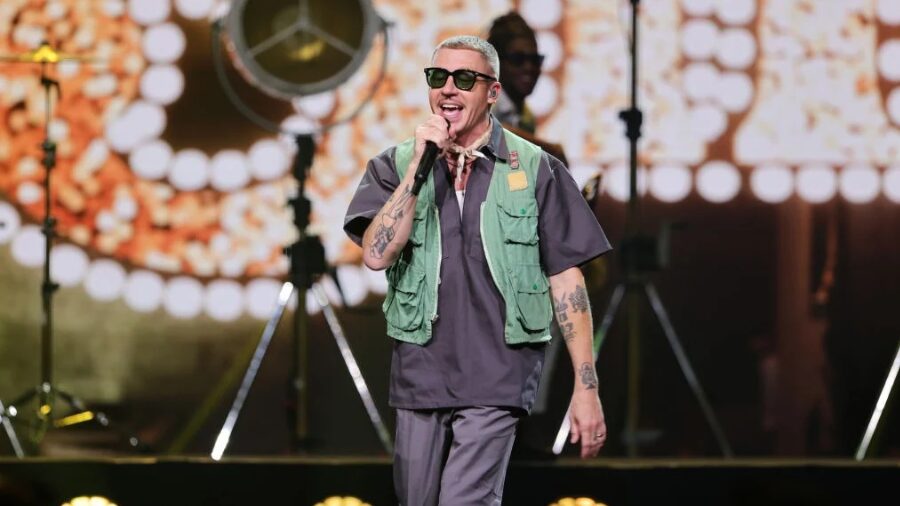
The music industry has long operated on a silent contract between artist and establishment. Stay profitable, stay marketable, and keep political friction to a low hum. Break that contract, and the fault lines appear with terrifying speed.
When Ben Haggerty, better known as Macklemore, announced his Free Palestine tour, he was not merely scheduling dates across global venues. He was institutionalizing a rupture. Months after a high-profile fallout with Ed Sheeran over political expression and industry alignment, the Seattle-born rapper has chosen escalation over appeasement.
This move lays bare the shifting economics of mainstream music activism. For decades, speaking out on polarizing geopolitical conflicts meant career suicide. Labels cushioned artists against controversy, steering them toward sanitized philanthropy rather than direct political confrontation. Macklemore’s trajectory shatters that playbook. By leveraging his independent status and remaining fan base, he is testing whether an artist can sustain a major career while openly defying mainstream foreign policy consensus.
The Anatomy of a Schism
The friction between Macklemore and British pop juggernaut Ed Sheeran did not happen in a vacuum. Industry insiders note that the tension escalated behind closed doors as cultural gatekeepers demanded musicians tread carefully around the Middle East conflict. Sheeran, deeply embedded in major label infrastructure and global commercial partnerships, represents the traditional route of cautious neutrality. Macklemore, operating with more autonomy since stepping away from major label conglomerates years ago, chose a different path.
The fallout culminated when industry relationships frayed over public statements and concert billings. When mainstream platforms tighten around an artist, the standard response is a tactical retreat. Macklemore doubled down. His track "Hind's Hall," released in honor of protesting students at Columbia University, signaled a complete break from pop music's safety protocols. All proceeds from the track were funneled directly to the United Nations Relief and Works Agency.
This was not a standard celebrity PR gesture. It was a direct operational challenge to the commercial norms of global touring.
The Logistics of Independent Protest
Touring internationally without the frictionless machinery of a major booking conglomerate is an uphill battle. Venues hesitate. Corporate sponsors vanish. Security costs skyrocket. Yet, Macklemore's upcoming tour suggests a calculated bet on direct-to-consumer loyalty.
In the modern streaming era, artists with dedicated cult followings can bypass traditional radio gatekeepers. They do not need stadium backing if they can pack mid-sized amphitheaters and theaters with audiences who share their ideological alignment. This is the new frontier of music polarization. Fan bases are no longer built solely on musical preference, but on shared worldview and political tribalism.
The financial risk remains staggering. Insurance rates for controversial tours have climbed. Promoters in certain territories are reluctant to touch events carrying heavy political baggage for fear of local protests or municipal permit denials. Macklemore is absorbing these friction points to cement his legacy not as a pop hitmaker, but as a protest artist for a digital generation.
The Wider Industry Ripple Effect
The mainstream music establishment is watching closely. If the Free Palestine tour succeeds commercially, it provides a blueprint for other mainstream acts who feel suffocated by industry neutrality. Conversely, if ticket sales slump or logistic blockades choke the tour, it serves as a warning flare to any artist thinking about stepping out of line.
Pop culture has always commodified rebellion, turning counter-culture into t-shirts and stadium tours. True geopolitical dissent, however, hits a nerve because it disrupts capital. Brands do not want their logos near police barricades or diplomatic flashpoints. By pushing forward with this run of shows, Macklemore is forcing a reckoning in boardrooms from London to Los Angeles.
The music business likes its stars compliant. Macklemore has chosen to find out what happens when the applause stops and the real friction begins.


