We are creatures of the shore. For all our cleverness, for all our titanium rockets and silicon brains, humanity has spent its entire collective existence standing on a narrow strip of sand, staring out at an infinite, pitch-black ocean. We point our fingers at pinpricks of light and invent stories about gods and monsters to keep the quiet from swallowing us whole.
Then, we build a better lens.
Dr. Elena Vance knows the weight of that quiet better than most. Sitting in a darkened office in Pasadena, illuminated only by the cold blue glow of dual monitors, she watches telemetry streams that took minutes to cross the vacuum of space. Her coffee is cold. It has been cold for three hours. On her desk sits a worn, dog-eared copy of a star chart drawn by hand in 1948—a reminder of how little we actually knew just a blink ago.
"We spent centuries mapping the neighborhood," Elena says, her voice dropping into that familiar, exhausted register shared by people who spend their lives talking to the void. "We know the names of the streets. We know where the potholes are. But nobody has ever opened the front door to see what is happening in the rest of the city."
That front door opens today.
The Nancy Grace Roman Space Telescope is not just another piece of expensive hardware tumbling through the dark. It is a paradigm shift in how we measure our own insignificance. To understand why scientists like Elena are holding their breath, you have to understand the blind spot that has haunted astronomy for decades.
Imagine trying to understand the entirety of a dense, sprawling metropolis by looking through a single drinking straw. You can see a flashing neon sign here, a window with a flickering television there. You get brilliant snapshots, but you have no concept of the grid. You miss the traffic patterns, the sprawling slums, the quiet parks, the sheer, staggering scale of the urban beast.
That was Hubble. It was, and remains, a marvel of engineering. But it looked at the cosmos through a straw.
The Roman telescope is designed to look through a panoramic window. Its primary mirror is the same size as Hubble's, but its field of view is a hundred times larger. What used to take Hubble months of painstaking, tile-by-tile observation, Roman can capture in a single sweep. It is an instrument built for breadth, designed to stare at millions of galaxies simultaneously, capturing the faint, ghostly whispers of things we didn't even know existed.
Silence. Then, the countdown begins.
In control rooms across the world, shoulders tighten. This is the moment where years of sleepless nights, caffeine-fueled calculations, and sheer human stubbornness culminate in a pillar of fire.
Why do we pour billions of dollars into machines that look at rocks a million light-years away when the ground beneath our feet is fracturing? It is a fair question. It is the question every taxpayer has a right to ask.
The answer is not about escape. We are not looking for a lifeboat. We are looking for a mirror.
For decades, astrophysicists have wrestled with a deeply unsettling truth: everything we can see, touch, weigh, and photograph—every star, every planet, every gas cloud, every human being who ever lived—makes up a pitiful five percent of the universe.
The other ninety-five percent is a ghost story.
We call twenty-seven percent of it dark matter. We know it exists because its gravity acts as an invisible scaffolding, holding galaxies together that otherwise should have torn themselves apart in the cosmic wind. It is the cement of the universe. Yet, if you passed your hand through a fistful of dark matter right now, you would feel nothing. It ignores us. It passes through our bodies by the trillions every second, entirely indifferent to our existence.
And then there is the remaining sixty-eight percent. Dark energy.
This is the real nightmare. It is not just some passive substance floating in the background; it is an active, violent force. About six billion years ago, something shifted. The expansion of the universe, which should have been slowing down due to the braking effect of gravity, suddenly put its foot on the gas. Space began to stretch faster and faster, tearing galaxies apart from one another at accelerating speeds. Dark energy is the engine of that acceleration. It is pushing the horizon away from us, ensuring that billions of years from now, the night sky will be completely, utterly black. The other galaxies will have fled beyond the edge of visibility. Future generations will look up and assume they are entirely alone in an empty room.
Roman was built to hunt these ghosts.
By mapping the shapes of billions of galaxies with unprecedented precision, the telescope will allow scientists to see how dark matter's invisible fingers warp the light traveling behind it—a phenomenon known as gravitational lensing. By charting how the universe has expanded over cosmic time, it will corner dark energy, forcing it to reveal the rules of its game.
Consider what happens next.
As the mirror focuses its first calibration targets, the data will begin to flood in terabytes at a time. Artificial intelligence and machine learning algorithms, trained on decades of stellar cartography, will sort through the noise, flagging anomalies. Somewhere in that digital avalanche lies a signature. A flicker of starlight dipping rhythmically behind a distant star. A planet the size of Earth, sitting comfortably in the habitable zone of a red dwarf, waiting to be counted.
We are not just mapping dead matter. We are hunting for neighbors.
Roman’s wide-field infrared vision is uniquely suited for microlensing—a technique that relies on the chance alignment of stars to detect planets that do not orbit close to their parent stars, or even rogue planets drifting through the void with no sun to warm them. These are the orphans of the galaxy. Worlds cast adrift in eternal winter. Roman will find them by the thousands.
Elena Vance looks down at her coffee. The ice has melted, diluting the dark liquid. She doesn't drink it. She looks back up at the screen, where a green status light has just blinked from red.
Launch confirmed.
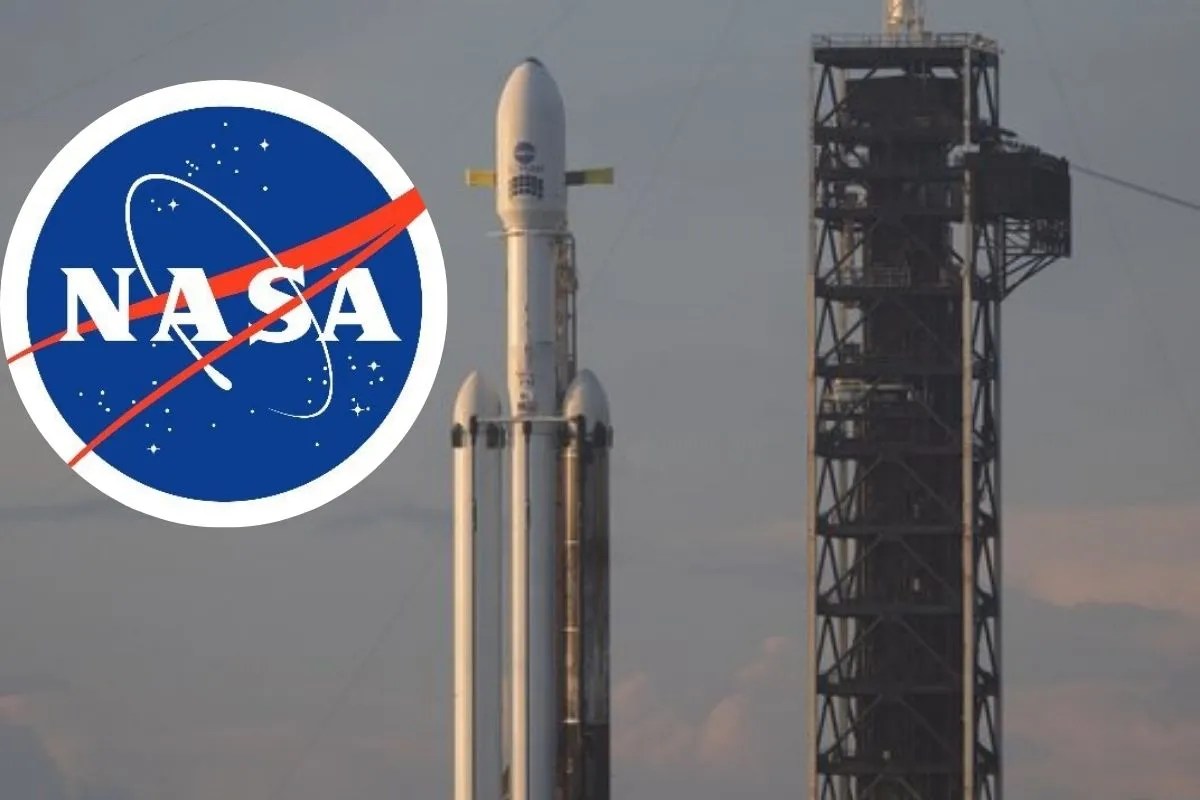
The rocket has cleared the tower. It is punching its way through the troposphere, shedding weight, burning through tons of propellant to buy a fraction of a percent of velocity. In a few short hours, it will deploy its sunshield, unfold its golden eye, and settle into its permanent home at the Lagrange point, a million miles away from the chaos of Earth.
We will wait days for the first images. When they arrive, they will not look like magic. They will look like gray, unassuming patches of pixels peppered with faint smudges of light. To the untrained eye, they will be boring.
But Elena will zoom in.
She will look past the foreground stars, past the familiar nebulae that look like painted clouds, and she will find a smudge that no human has ever seen before. A galaxy older than the Earth, shaped by forces we barely comprehend, burning quietly in the dark.
And for a second, the vast, terrifying silence of the cosmos won't feel quite so empty.
We built the machine. Now, we wait for the dark to answer.