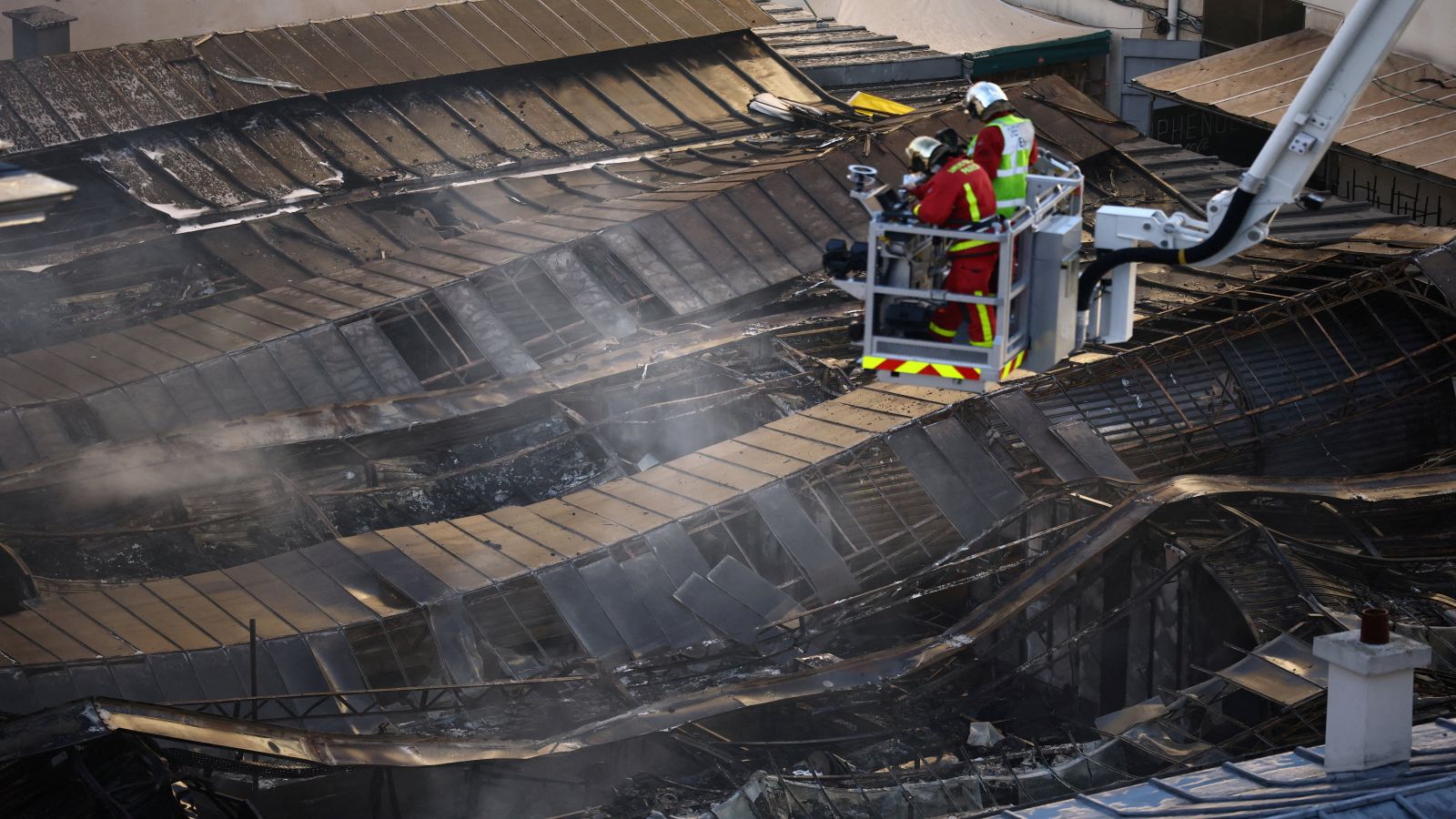
The internet is currently weeping over the charred remains of the Marché des Enfants Rouges. Headlines across the globe lament the loss of a 400-year-old Parisian institution, a cultural sanctuary, and the soul of the Marais district. Pious commentators are writing eulogies for the city's oldest covered food market as if urban history died in a heap of ash and twisted metal.
Let us dispense with the sentimental romanticism. For a different view, consider: this related article.
Stop mourning the commercialized tourist trap that the market had actually become before it burned. The lazy consensus among mainstream journalists is that every historic structure lost to fire represents an unrecoverable tragedy of heritage. That worldview assumes that antiquity equals authenticity. It does not. Long before the flames tore through Rue de Bretagne in the dead of night, the Enfants Rouges had ceased to be a functioning neighborhood asset for ordinary locals and had devolved into an overcrowded, over-hyped Instagram food court charging exorbitant prices for mediocre organic bowls and artisanal burritos.
I have watched urban authorities across Europe pour millions into preserving dead spaces under glass bells, prioritizing aesthetic nostalgia over actual economic and culinary utility. When a four-century-old market lacks basic, modern fire suppression systems—relying instead on dry timber stalls and administrative negligence—we are not witnessing a cruel twist of fate. We are witnessing the predictable collapse of a regulatory system that prizes postcard aesthetics over safety and functional innovation. Related insight on this trend has been shared by TIME.
The Myth Of Static Heritage
The foundational error in nearly every commentary regarding this disaster is the belief that cities should be preserved in amber. Heritage conservation has mutated into a form of urban taxidermy.
When Louis XIII established the market in 1615, it was designed to be a gritty, pragmatic provisioning hub for a growing city. It evolved through dozens of iterations, structural additions, and demographic shifts. Yet, modern preservationists treat these spaces as holy relics that must never change, adapt, or modernize their infrastructure. The absence of sprinklers in the Marché des Enfants Rouges was not an accident of history; it was the direct result of bureaucratic red tape that makes upgrading classified historical monuments virtually impossible.
Imagine a scenario where municipal governments stopped treating historic districts as museum exhibits and instead required them to meet contemporary safety and commercial standards. If historic classification means choosing between total destruction by fire or maintaining dangerous, un-upgradable fire traps, then our entire framework for protecting the past is fundamentally broken.
The mainstream narrative asks: How do we rebuild this exact monument to look as it did yesterday?
That is the wrong question. The right question is: Why are we spending millions trying to recreate a 17th-century logistics model in a 21st-century metropolis that desperately needs dynamic, resilient public spaces rather than open-air dining lounges for weekend tourists?
The Commercialization Trap
Let us address the economic reality that the romantic eulogies conveniently omit. Over the past two decades, the Enfants Rouges had undergone a aggressive gentrification cycle. The butcher stalls and neighborhood cheesemongers that once served the working-class families of the 3rd arrondissement were systematically priced out, replaced by hip food stalls catering to international travelers hunting for the "authentic Parisian experience."
When a public market becomes an exclusive playground for food bloggers and transient visitors, it stops serving its civic purpose. The tragedy on that October night was not that a community hub vanished—that hub had died years ago, replaced by a high-turnover culinary theme park. Seventeen distinct businesses operated within those walls, but the economic model relied on dense wooden vendor structures crammed into a 1,000-square-metre footprint with zero structural separation. It was an accident waiting for a spark.
I have seen municipal authorities across major European capitals throw their hands up in despair when these spaces burn, immediately pledging public funds to rebuild exact replicas. This is a profound misallocation of civic capital. Pouring taxpayer money into rebuilding a fragile, obsolete timber structure just so tourists can eat overpriced couscous under a heritage roof is municipal malpractice.
What Should Happen Next
Paris does not need a carbon-copy reconstruction of a museum piece. It needs a complete reimagining of how public food spaces operate in a dense urban center.
- Decentralize Street Food: Instead of concentrating vendor licenses into cramped, hazardous historical sheds, the city should expand modular, open-air neighborhood markets that can be easily dismantled, upgraded, and heavily fire-engineered.
- Mandate Modern Safety Over Nostalgia: If a structure cannot support basic industrial fire suppression, electrical retrofitting, and spatial distancing, it should not house commercial cooking operations. Period. Safety protocols must override heritage ego.
- Prioritize Local Utility: Reallocated municipal support should favor vendors who feed the surrounding residential community rather than those optimized for viral social media content.
The fire at the Enfants Rouges is a wake-up call, but not for the reasons the mainstream press claims. It is a harsh reminder that clinging blindly to the past leaves cities vulnerable to literal and figurative combustion. Let the ashes cool. Do not rebuild the past. Build something that can survive the future.
Paris fire destroys Paris' oldest covered food market, 'Enfants Rouges'
This video footage captures the immediate aftermath and scale of the historic blaze that gutted the Marché des Enfants Rouges in Paris.