The Weight of the Gravel
The sound of footsteps on gravel is usually unremarkable. It is a dry, crunching noise that signals arrival or departure. But at Windsor, on a crisp Easter morning, that sound carries the weight of a thousand years of expectation.
The public sees the hats. They see the crisp pleats of a coat dress, the shine of a polished brogue, and the practiced wave that has become a global shorthand for stability. What they don't see is the quiet, collective holding of breath. This year, the walk toward St. George’s Chapel wasn’t just a traditional march toward a Sunday service. It was a visible measurement of resilience.
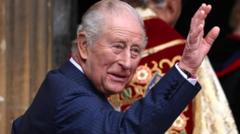
King Charles III stepped out into the air.
He didn't look like a man hidden away by the shadows of a medical diagnosis. He looked like a man who understood that his presence was the primary currency of his reign. When a monarch is ill, the world tilts slightly on its axis. The gossip mills churn, the stock markets twitch, and the dinner-table conversations across the Commonwealth turn toward the fragile nature of legacy.
By simply standing there, buttoned up against the chill, he leveled the ground.
The Architecture of a Smile
In the theater of royalty, the script is written in gestures. A smile isn't just an expression; it is a policy statement. As the King and Queen Camilla approached the chapel, the atmosphere lacked the frantic energy of a typical media circus. Instead, there was a solemn, shared understanding between the crowd and the crown.
Imagine, hypothetically, a grandfather in the front row of the spectators. Let’s call him Arthur. Arthur has watched seventy years of these walks. He remembers the stoicism of the late Queen and the boisterous energy of younger generations. To Arthur, the King’s appearance isn't about politics or the cost of the Sovereign Grant. It’s about the continuity of his own life. If the King is at the chapel, the world is still turning. The seasons are still changing. The center holds.
Charles moved with a deliberate grace. He spent time at the barriers. He shook hands. These weren't the fleeting touches of a politician on the campaign trail. They were the interactions of a man who knows that his life is no longer his own, but a vessel for the public’s need for reassurance.
The Empty Spaces
While the King’s return to the public eye provided the morning’s heartbeat, the silence from other corners of the family was deafening. The absence of the Prince and Princess of Wales was a loud reminder of the human cost of these roles.
We often treat the royals as chess pieces on a board of historical proportions. We forget they have kitchens. We forget they have hallways where children run and where bad news is delivered behind closed doors. Catherine’s absence wasn't a mystery to be solved by internet sleuths; it was the physical manifestation of a family choosing privacy over pageantry.
It was a reminder that even under the vaulted ceilings of Windsor, the most important battles are fought in the quiet rooms, away from the cameras. The King walked for them, too. He stood as the vanguard, absorbing the flashes of the photographers so that his daughter-in-law and his grandchildren could have the one thing the crown usually forbids: time.
The Duty of Being Seen
There is a specific kind of bravery in being watched while you are healing. Most people have the luxury of the duvet. They can retreat. They can be pale and tired and uncombed. The King, however, must perform health. He must project a vitality that defies the biological reality of his treatment.
The Gothic arches of St. George’s Chapel don’t care about the fleeting ailments of men. They have seen the burials of kings who died in their beds and those who died in the mud of battle. The stone is indifferent. But the people standing in the wind are not.
When the King waved before entering the south door, it was a moment of mutual recognition. The crowd wasn't just cheering for a celebrity. They were cheering for the defiance of the human spirit. They were acknowledging that while the office is eternal, the person holding it is made of the same fragile stuff as everyone else.
The Persistence of the Pattern
Easter is, at its core, a story about coming back. It is about the transition from the darkness of the tomb to the light of the morning. For the House of Windsor, this particular Easter was a literal enactment of that theme.
The Royal family is often criticized for being an anachronism, a holdover from a world that no longer exists. Yet, in moments of collective anxiety, we find ourselves looking toward the gravel path at Windsor. We look for the familiar faces, the traditional colors, and the steady gait. We look for proof that the things we built to last are, in fact, still standing.
The King entered the chapel. The doors closed. The service began.
The crunch of the gravel faded, replaced by the muffled sound of a choir. Outside, the sun hit the grey stone of the castle, warming the air just enough to hint at the spring to come. The crisis hadn't vanished. The road ahead remained long and uncertain. But for one hour, under the ancient roof, the narrative wasn't about illness or scandal or the shifting tides of public opinion.
It was just a family, a crown, and the simple, stubborn act of showing up.
The shadows on the castle walls shifted as the clouds moved, but the King’s coat remained a sharp, steady silhouette against the light.