The television in the living room hums with static and flashing graphics. It is eleven o’clock on a Tuesday night in November. Across the eastern seaboard, victory speeches have concluded. Balloons have already floated to the ceilings of convention centers in Ohio and Florida. Confetti is being swept away. Winners and losers have been decided, their fates sealed before the nightly news.
But in California, the screens tell a different story.
The anchors stare at maps painted in stubborn, unyielding shades of gray. The percentages next to the candidates' names cling to single digits, or perhaps twenty percent of the expected total. A crawl at the bottom of the screen warns that final results might take days. Weeks, even.
Then, the true quiet sets in.
For millions of citizens in the golden state, election night is no longer a climax. It is the beginning of a long, agonizingly slow bureaucratic whisper. The state has spent the last decade tearing down every conceivable barrier to the ballot box. It transformed the act of voting from a Tuesday ritual into a month-long buffet of options. Every registered voter gets a ballot in the mail. No stamps required. Drop boxes sit on street corners like blue beacons of civic duty. You can register on the very day you vote.
Yet, the grand promise behind these changes remains frustratingly out of reach. The crowds never materialized. The expected surge of frantic, enthusiastic new voters looks less like a tidal wave and more like a fickle, unpredictable trickle. Instead, the state traded the old anxiety of long lines at the polling place for a new kind of modern exhaustion: the endless count.
The Mountains of Paper
To understand where the system stumbles, look away from the capitol building in Sacramento. Look instead at a fluorescent-lit warehouse in a suburban county seat.
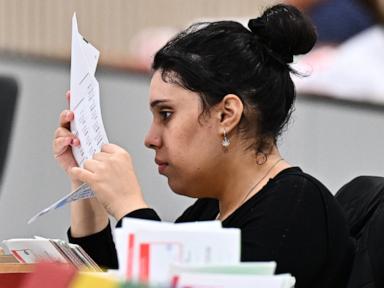
Consider a woman named Clara. She is a fictional composite, but her reality is shared by hundreds of actual county election workers from Shasta to San Diego. It is five days after the election. The rest of the country has moved on to analyzing cabinet appointments and holiday shopping. Clara is staring at a plastic crate overflowing with white envelopes.
Her fingers are calloused from paper cuts. Her back aches. Her task is repetitive, meticulous, and agonizingly slow. She must look at the signature scrawled on the back of an envelope, pull up the voter’s digitized registration form from perhaps a decade ago, and decide if the two match.
If a voter signed their registration card on a slippery digital pad at the DMV when they were eighteen, and signed their mail-in ballot on a kitchen counter at twenty-eight while holding a crying toddler, those signatures will not look the same.
When they do not match, the machinery slows to a crawl. Clara cannot simply throw the ballot away. The law forbids it. She must initiate a process called "curing." The county must mail a letter to the voter. They must send text messages. They must call them. They must give that citizen every opportunity to prove that they were indeed the person who licked the envelope.
This is democracy as an artisan craft. It is bespoke. It is intentional.
It is also incredibly inefficient.
Imagine a popular local bakery that decides to ensure every single resident gets a loaf of bread. To make it easy, the bakery drives through every neighborhood, dropping loaves on every doorstep. But before anyone can eat, the baker must personally verify that the person living in the house actually wants that specific type of sourdough. The delivery vans idle in the street for weeks. The bread sits on the porch. The hunger remains, while the baker grows gray with exhaustion.
California lawmakers assumed that if you built the infrastructure of convenience, the culture of participation would follow automatically. They believed the primary reason people stayed home was because life was too busy, lines were too long, or stamps were too expensive.
They diagnosed a logistical problem. But the real problem lies elsewhere.
The Illusion of the Ballot Box
Consider another perspective. Meet Marcus. He is twenty-four, lives in Fresno, and works two jobs. He is precisely the kind of voter California hoped to bring into the fold through its sweeping reforms.
Three weeks before the election, a thick packet arrived in his mailbox. He did not ask for it, but there it was, complete with an official voter guide the size of a small-town phone book. For two weeks, the packet sat on his kitchen island, buried under utility bills, take-out menus, and a set of spare keys.
Every day he looked at it. Every day he felt a subtle, creeping sense of guilt. He did not know who the insurance commissioner was. He did not understand the difference between Proposition 33 and Proposition 34, both of which featured expensive television commercials claiming the other would cause homelessness to skyrocket.
The sheer volume of choices felt less like empowerment and more like a surprise pop quiz for a class he had never attended.
On the final Monday, Marcus finally filled out the bubble for president, guessed on two local races, signed the back, and dropped it into a metal box outside his local library. He felt a brief flash of pride. He had participated.
On Tuesday night, he turned on the news to see who won his local congressional seat. The anchor announced that it was too close to call, with only twelve percent of votes counted.
By Friday, Marcus checked an online tracker. His ballot status read: Received, pending verification.
By the following Wednesday, the race had faded from the headlines, eclipsed by national drama. Marcus stopped checking. The pride he felt when dropping the envelope into the box was replaced by a dull, lingering skepticism. Did his vote actually matter? Was it sitting in a warehouse somewhere? Why did every other state seem to have their house in order while California dragged its feet?
When democracy takes a month to calculate a winner, the human brain fills that empty space with whatever it can find. In an era of rampant suspicion and hyper-partisan anxiety, silence is not neutral. Silence is a canvas for doubt.
The Missing Ingredient
The hard data backs up Marcus’s fatigue. Recent election cycles show that despite California boasting some of the most permissive voting laws in the United States, voter turnout continues to behave like a rollercoaster rather than a steady climb. In non-presidential primary elections, turnout routinely plummets to dismal depths, sometimes hovering around twenty percent of registered voters. Even in high-stakes general elections, the state frequently lags behind places with far stricter rules, such as Minnesota or Colorado.
It turns out that dropping a ballot on someone’s kitchen table does not automatically make them care about the school board budget.
We have confused access with motivation.
Buying a treadmill and putting it in the middle of the living room does not make a person fit. It just means they now have a very expensive place to hang their jackets. Motivation requires something deeper. It requires a belief that the exercise will change their life. It requires community. It requires a sense that the institutions being voted upon have a direct, tangible impact on the price of groceries, the safety of the neighborhood, or the quality of the local park.
When California shifted its focus toward mail-in voting, it inadvertently dismantled the communal theater of election day.
There was a time when voting was a public performance. You walked down to the local elementary school gym or the church basement. You stood in a small line with your neighbors. You saw the volunteers, usually elderly retirees who lived three doors down, checking names off a physical paper ledger. You went into a booth, pulled a lever or stamped a card, and walked out with a bright red sticker stuck to your chest.
That sticker was a badge of belonging. It said: I did my part today, alongside all of you.
Now, voting is a solitary act performed at a cluttered desk between answering emails and washing dishes. It has been stripped of its friction, yes, but it has also been stripped of its sacredness. It feels like returning a piece of unwanted clothing to an online retailer. You drop it in the box, walk away, and hope the warehouse processes the return.
The Price of Patience
This is the great paradox facing the state. The current laws are undeniably compassionate. They ensure that a disabled voter does not have to risk their health standing in a freezing rainstorm to cast a ballot. They ensure that a working mother who misses her shift does not lose her voice in the democratic process because her postmarked ballot can arrive days after the polls close and still be counted.
These are noble, vital protections. We should be wary of any system that values speed over accuracy and inclusion.
But we must also be honest about the psychological cost of this patience.
When election results take three to four weeks to solidify, power vacuums emerge. Candidates declare victory prematurely. Opponents lodge accusations of fraud without a shred of evidence, capitalizing on the public's lack of understanding about how signature verification works. The average citizen, bombarded by conflicting claims, simply tunes out.
The state’s current path has created a system that is incredibly easy to use, yet increasingly difficult to trust.
Fixing this does not mean rolling back the clock. It does not mean stripping away the mail-in ballots or closing down the drop boxes. It means recognizing that convenience is only half of the equation.
If California wants to find that elusive surge in voter turnout, it must invest as much energy into civic education and local journalism as it does into automated sorting machines. It must give people a reason to open the envelope, not just a place to drop it.
Until then, the state will continue its lonely November tradition. The rest of the nation will turn off the lights and go to sleep, while in hundreds of quiet rooms across the West Coast, the paper will continue to rustle, the clerks will continue to scan, and the silence will stretch on.