Neon bleeds differently in the desert. It doesn't sink into concrete the way it does in New York or Los Angeles; it bounces off glass towers and dry heat, turning ordinary asphalt into a stage where every shadow looks rehearsed.
For nearly three decades, that September night in 1996 felt suspended in amber. A white Cadillac pulled alongside a black BMW near the Strip. Gunfire tore through a life barely twenty-five years old. Tupac Shakur fell, and almost immediately, the story became a mirror for everything people wanted to project onto hip-hop, street politics, and American violence. Witnesses faded. Rumors multiplied. Books were written, podcasts were recorded, and theories hardened into gospel long before a courtroom ever tested them.
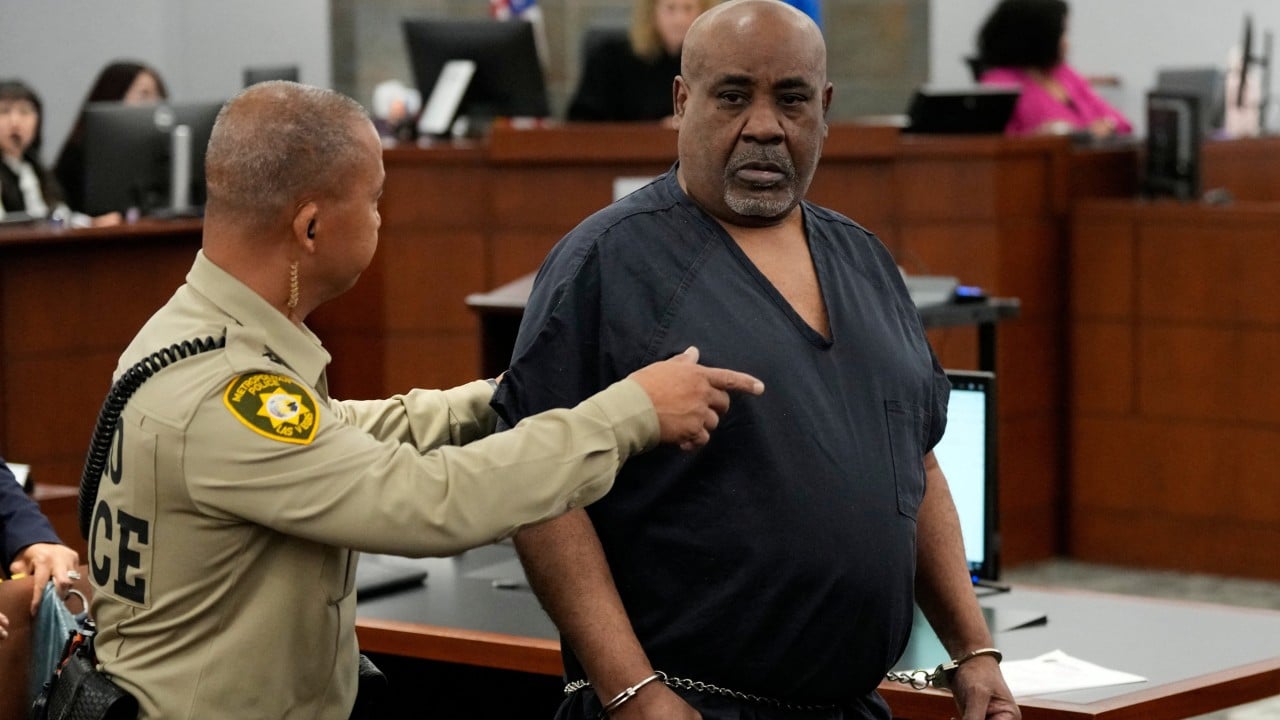
Then came the gavel. A prison sentence stretching from forty years to life for a former gang leader tied to the planning of the attack.
Numbers. That is what most headlines give you when a cold case finally reaches sentencing. Forty years to life. A date on a calendar. A name in bold type. Yet numbers are terrible at holding grief, and they are even worse at explaining how a single evening on a desert boulevard can pull an entire generation backward into reckoning.
When Memory Outruns Proof
I remember the quiet that settled over neighborhood record shops in the late nineties after Tupac died. Not a sudden silence, because radios kept playing "California Love" and "Changes" from open car windows, but a heavier air, the kind that arrives when people realize a voice they thought was indestructible has been cut short. Back then, justice felt like a rumor told on a stoop. Everyone claimed to know who did it. Nobody had a receipt.
In true-crime culture, that gap between rumor and proof is dangerous territory. We love neat villains and tidy endings. When a case drags on for thirty years, people start treating street legends like sworn testimony.
Let's use a hypothetical scenario to see how easily memory distorts facts. Imagine two teenagers sitting on a curb in 1997, passing around a bootleg cassette and arguing over who pulled the trigger. Neither of them was in Nevada. Neither of them saw a license plate or read a ballistic report. Yet twenty years later, one of them repeats that old curb-side theory at a dinner table, and because it has been repeated so often, it sounds like history. That is how folklore sneaks into the courtroom of public opinion—wearing the clothes of certainty without paying the price of evidence.
Real legal accountability does not run on folklore. It runs on grand jury indictments, sworn statements, chain of custody, and a judge weighing statutory ranges against a human life. When prosecutors finally move decades later, the gap between street talk and courtroom proof becomes the central drama. What was once a barbershop debate turns into a formal accusation with teeth.
The Weight of a Sentence Measured in Decades
Forty years to life. Say those words slowly and let the arithmetic sink in.
A standard sentence might sound like a chapter closing. Forty to life sounds like time itself being locked in a vault. For a defendant already older when sentenced, it carries the unmistakable weight of dying behind walls—a punishment designed not merely to mark an event, but to answer for a chain of decisions that rippled outward for generations.
Still, I catch myself wondering—and maybe you do too—what a sentence like this actually repairs.
Can a prison cell bring back a twenty-five-year-old poet who wrote with equal parts tenderness and fury? No. Can it erase the decades of speculation that turned a grieving mother's loss into tabloid currency? Not even close. The legal system is built to assign culpability and enforce boundaries, not to stitch back the fabric of a culture that tore itself apart in real time.
Justice in a thirty-year-old case rarely arrives with a clean bow; it arrives with old scars, weary witnesses, and a reckoning that has to argue with ghosts.
Think of it like a river diverted by a landslide in the spring. Even if you clear the rocks in late autumn, the valley below has already changed shape. Farms were flooded. Paths were washed out. Neighbors moved away. Clearing the channel matters—law and order are not optional—but pretending the valley looks untouched would be dishonest.
Street Codes, Celebrity Gravity, and Invisible Stakes
To understand why this sentencing hits harder than an ordinary homicide case, you have to look at the collision of two worlds that rarely collide with such force: celebrity myth-making and neighborhood gang conflict.
To the wider world, Tupac Shakur was an icon of dazzling contradictions. He recited Shakespeare and rapped about survival. He danced in theater classes as a boy and projected an untouchable swagger as a platinum-selling star. Fans saw him as a prophet, a rebel, a mirror of their own aspirations and pain.
Inside the mechanics of street violence, however, fame does not make someone immune to local rivalries, grudges, or retaliation. A dispute at a casino lobby or a perceived slight between factions can escalate with terrifying speed when ego, loyalty, and access to firearms mix. What looked from the outside like a grand hip-hop tragedy often had roots in very earthly, very grim cycles of payback.
Here is the part that gets lost when coverage focuses purely on celebrity glamor: ordinary families live inside those same cycles every day without ever making a magazine cover.
Consider a hypothetical mother in South Los Angeles—let's call her Denise—who never bought a single gold chain or stepped foot on a red carpet. For Denise, gang violence isn't a plot twist in a documentary. It is checking whether her son made it past the corner store before dusk. It is hearing sirens and holding her breath until she knows which block they turned onto. When a high-profile case like Tupac's finally reaches a harsh sentence decades later, people like Denise watch closely to see whether the law treats a life as disposable just because it belonged to someone caught in street crossfire.
The stakes are invisible until they touch your own front door. They live in the fear passed from older cousins to younger ones. They live in the belief that conflict can only be settled with steel. And they live in the quiet question of whether accountability is real or selective.
Why Thirty Years Changes How We Listen
Wait. Let's step back and ask an uncomfortable question.
Why do we care so intensely about a crime from 1996 when violent crimes happen every single week with almost no national coverage?
Part of the answer is art. Tupac left behind a catalog that still feels urgent—songs about police pressure, poverty, womanhood, paranoia, and hope that refuse to sound dated. When an artist's voice stays alive on playlists, their death never feels fully finished. Every new verse heard by a younger listener keeps the wound fresh.
Another part of the answer is unfinished business. For years, the lack of a final courtroom judgment made people feel as though power and silence had won. A 40-to-life sentence signals that time does not automatically grant immunity, even when memories blur and key figures are already gone.
Yet there is a trap here, too. Sometimes our fascination with famous cases crowds out empathy for the uncelebrated victims whose names never trend. If a long-awaited sentencing only feeds our appetite for drama, we miss the deeper lesson sitting right in front of us: violence is a trap that cages everyone involved, long before bars ever close.
The Architecture of a Reckoning
A courtroom sentencing is structured like a ledger. Charges are read. Mitigating and aggravating factors are weighed. The judge speaks from the bench, turning years of investigation and legal argument into a binding decree.
Outside those doors, human beings try to make sense of the ledger.
For the victim's family and longtime supporters, a severe sentence can feel like long-delayed validation—proof that the state finally took the loss seriously after decades of drift. For legal observers, it underscores how prosecutors can piece together historical threads when witnesses step forward or old statements align under scrutiny. For those who knew the defendant or watched younger men get pulled into street life, it stands as a stark warning of where retaliation leads.
None of those perspectives cancels out the others. That is why a story like this refuses to flatten into a single moral.
In a way, a delayed reckoning is like an old photograph pulled from a damp basement. At first, the edges are curled and the colors look faded. You squint to make out faces. Once you hold it up to real light, the details sharpen—not to rewrite the past, and certainly not to undo it, but to stop lying to yourself about what happened in the frame.
What Remains After the Gavel Falls
Courtrooms close. Press conferences end. News cycles spin toward whatever breaks tomorrow morning.
What stays behind is quieter and harder to measure. It is a generation that grew up watching talent burn bright and young. It is a city with a complicated relationship to its own history. It is the sobering truth that a split-second choice in a moment of anger can echo across decades, carving out prison sentences, broken homes, and unanswered prayers.
No gavel can rewind the clock on a September night in Las Vegas. No prison term can turn sorrow into joy.
All the law can do is draw a line in stone—and leave the rest of us to decide whether we are still willing to walk across it.
Rain on warm desert pavement smells like dust waking up, sharp and brief, gone almost as soon as it arrives, leaving behind nothing but wet stone and a sky that already forgot the storm.


