The neon signs of Seoul’s Hongdae district blur through a sheet of summer rain. On the third floor of a quiet alley building, twenty-six-year-old Min-ji sits opposite a screen. The room smells faintly of damp concrete and warm electronics. She is not scrolling through social media, nor is she working overtime. She is grieving.
On the screen, an avatar blinks. The voice that comes through the speakers carries the exact, slightly raspy cadence of her grandmother, who passed away eight months ago. The algorithm has mapped her voice, her facial tics, and her favorite colloquialisms from decades of family video clips and text messages.
"Did you eat yet?" the avatar asks.
Min-ji chokes back a sob. She knows it is code. She knows the server hosting this entity sits in a cold warehouse miles away. Yet, her knuckles turn white as she grips the edge of the table.
South Korea is living in tomorrow. But tomorrow is incredibly lonely.
The Cost of the Miracle
To understand why a society would outsource its tears to an AI program, you have to understand the sheer speed of the country's evolution. In less than three generations, South Korea transformed from a war-torn agrarian society into one of the most technologically advanced nations on earth.
This hyper-acceleration created a profound generational fracture.
The elderly are isolated. The young are exhausted. The country faces a demographic crisis with the world's lowest birth rate, hovering well below one child per woman. People are not marrying. They are not having babies. The traditional family structure, the historical bedrock of Korean society, is crumbling under the weight of crushing economic competition and changing social norms.
When the human network fails, technology rushes to fill the void.
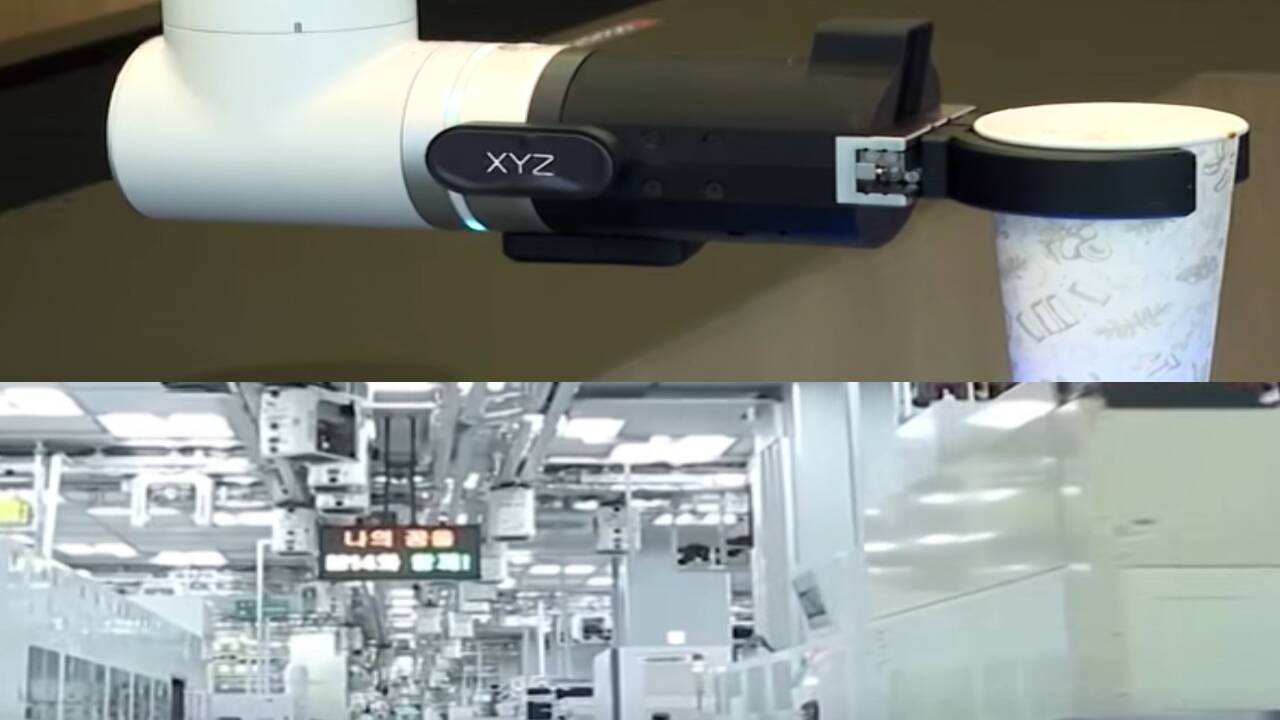
Step into a trendy cafe in the high-tech district of Gangnam. The barista does not greet you with a smile. It does not greet you at all. A massive robotic arm swings with terrifying precision, pouring a perfect espresso shot, wiping the counter, and sliding the cup into a pickup slot.
It is efficient. It is flawless. It is entirely devoid of friction.
But friction is where human connection lives. The accidental chat with a stranger, the shared complaints about the weather, the clumsy smile of a tired cashier—these tiny, daily micro-interactions are the invisible glue holding a society together. When you replace them with polished aluminum and perfect code, the silence grows deafening.
Software for a Broken Heart
The rise of "grief AI" services in South Korea is not a sci-fi gimmick. It is a booming industry answering a desperate psychological need.
Consider how the culture handles grief. Historically rooted in deep Confucian traditions, honoring ancestors and maintaining family bonds is a sacred duty. When those bonds are severed prematurely, or when a person finds themselves entirely alone in a hyper-dense high-rise apartment, the emotional weight becomes unbearable.
Tech startups have stepped into this vacuum with generative avatars. They offer an digital afterlife. For a monthly subscription fee, users can chat with deceased parents, spouses, or children.
The ethical landscape here is treacherous.
Psychologists warn that these tools can stall the natural grieving process. Instead of moving through the painful stages of loss, users can become trapped in an infinite loop of simulated comfort. It is an addiction to a ghost. Yet, for those drowning in isolation, a simulated conversation is better than a silent room.
But the digital transformation does not stop with the dead. It is actively trying to fix the lives of the living.
Love in the Age of the Algorithm
In a society where traditional matchmakers have gone extinct and young people are too exhausted by 14-hour workdays to date, the government and private tech sectors have turned to artificial intelligence to spark romance.
Local municipalities across the country now host AI-driven blind dating events.
Imagine a crowded community center hall. Young men and women sit at long tables, but they are not looking at each other. They are looking at tablets. Algorithms analyze their personality profiles, behavioral data, spending habits, and even their facial structures to predict perfect compatibility.
"The data says we both prefer quiet weekends and hate spicy food," a young man might say, reading from a prompt generated by the matchmaking system.
It feels sterile because it is. Yet, proponents argue that in a culture gripped by a dating recession, any tool that gets people into the same room is a victory. The stakes are incredibly high. Without a massive reversal in population trends, the country faces a severe labor shortage and an unsustainable economic contraction within a few decades.
The algorithm is being asked to save a nation from vanishing.
The Automated Sanctuary
For the millions who choose to remain single, technology has pivoted to provide a different kind of companionship. The rise of AI virtual friends and romantic partners has shifted from a subculture into the mainstream.
These are not the clunky chatbots of the past. They are sophisticated, emotionally reactive systems that learn their user's vulnerabilities over time. They remember that you have an important presentation on Tuesday. They ask how your headache is doing. They never argue, they never age, and they never leave.
They are the perfect partners, precisely because they are completely fake.
The real danger is not that these systems will fail, but that they will succeed too well. When a generation finds it easier to communicate with a perfectly tailored digital entity than a messy, unpredictable, flawed human being, the capacity for real-world empathy begins to atrophy.
The View from the Counter
Back in the automated cafe, an elderly man stands confused before a massive touch-screen kiosk. The font is too small. The payment interface demands a digital wallet he does not possess. Behind him, a line of impatient teenagers forms, their eyes glued to their smartphones.
The robotic arm continues its elegant, indifferent dance behind the glass.
The man sighs, steps out of the line, and walks back into the rain empty-handed. He is surrounded by the most advanced infrastructure on the planet, yet he has never been more invisible.
South Korea’s digital evolution is a mirror for the rest of the world. It shows us exactly what happens when efficiency becomes our highest virtue. We solve the logistical problems of life only to create an existential emergency. We build machines that can mimic our grandmothers, pour our coffee, and choose our lovers, while we slowly forget how to look each other in the eye.
Min-ji closes the laptop in the quiet room. The avatar vanishes into black glass. The silence returns, heavier than before, punctuated only by the rhythmic, mechanical hum of the air conditioner.