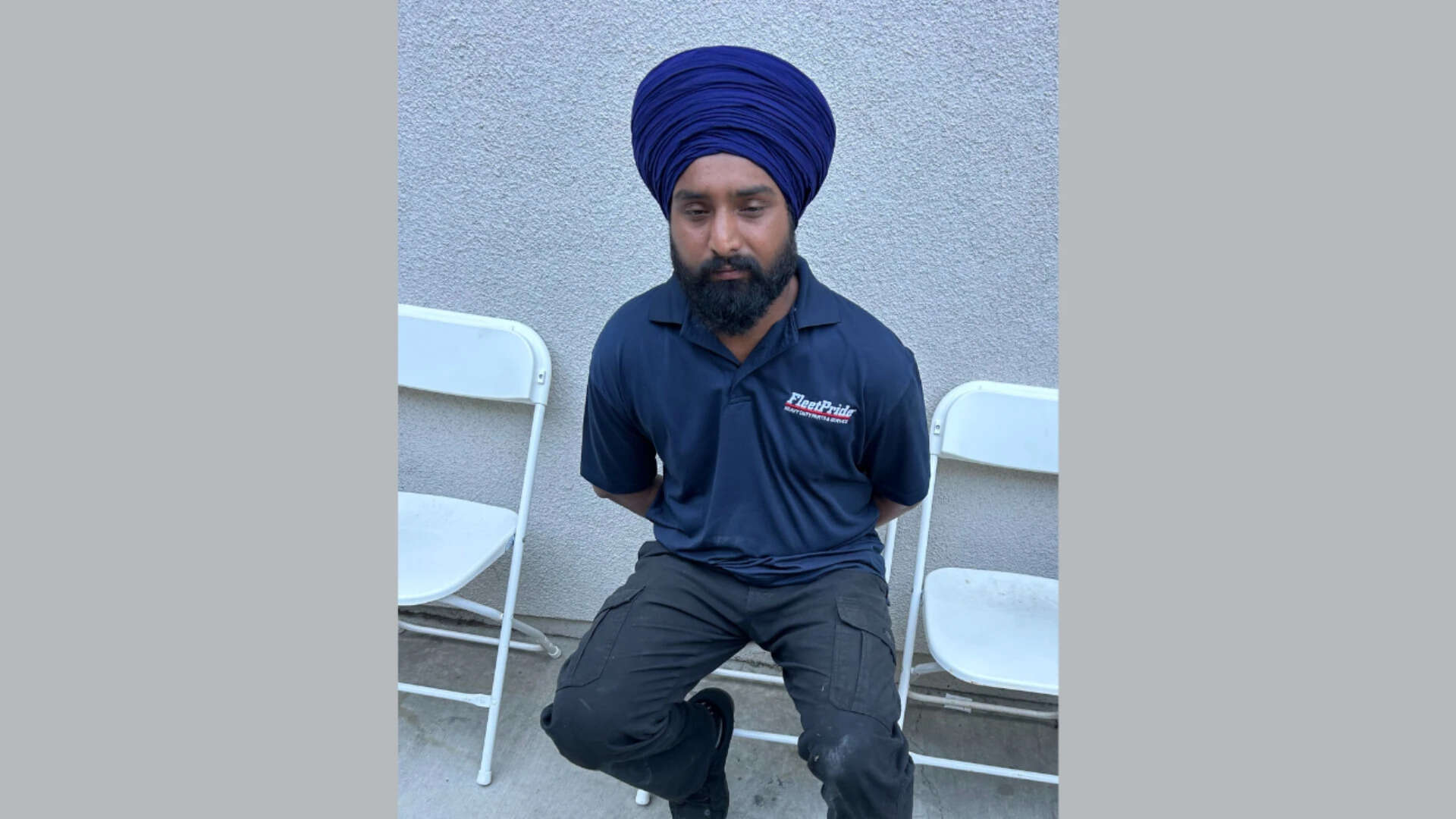
The coffee in the plastic cup had gone cold hours ago, forming a dark, stagnant ring against the styrofoam. In the fluorescent hum of an enforcement holding room, time does not move like it does on the outside. It stretches. It thickens. For Parminderpal Singh, a thirty-five-year-old Punjabi immigrant, that hum was the sound of a trap snapping shut.
One day you are walking down a sidewalk in a country you have spent years trying to call home, thinking about rent, groceries, or the shift you have to work tomorrow. The next, a hand grips your shoulder. A badge flashes. The ground beneath your feet dissolves.
When Immigration and Customs Enforcement (ICE) officials detained Singh, the official press releases did what official press releases always do. They reduced a human life to a series of cold, administrative coordinates. A name. A nationality. A violation of section such-and-such of the Immigration and Nationality Act. A pending deportation hearing. The headlines in the local papers whimpered with the standard, dry legalese of bureaucratic removal.
But bureaucracy has no skin. It has no memory of the smell of rain on Punjab soil, nor does it understand the specific, paralyzing terror of looking at a pair of steel handcuffs and realizing your American story might end in the back of a van.
To truly understand what happened to Parminderpal Singh, you have to look past the booking photo. You have to look at the invisible architecture of fear that dictates the lives of millions of undocumented or status-compromised individuals living across the United States.
The Geography of Waiting
There is a unique psychological torment born from living in the margins. It is an existence defined by hyper-vigilance.
Every knock at the door is too loud. Every police cruiser driving past at a normal speed makes the heart skip. If you have ever felt that sudden, sharp spike of adrenaline when a state trooper merges behind you on the highway, multiply that by a thousand, and stretch it out over a decade. That is the baseline of survival.
Consider a hypothetical man named Kamal, whose trajectory mirrors so many who arrive from India’s agricultural heartland. He leaves a dying family farm in Jalandhar. He sells a piece of land, borrows from uncles, and hands over thousands of dollars to a "travel agent" who promises a smooth path through a labyrinth of visas. Kamal arrives in America on a temporary document. The document expires. The system, massive and indifferent, shifts its gears.
Suddenly, Kamal is no longer a person. He is an "overstay." He is "out of status."
He works under the radar, perhaps washing dishes in a kitchen where the grease ruins his knuckles, or driving a delivery truck through the pre-dawn fog of a city that relies on his labor but refuses to see his face. He pays taxes using an Individual Taxpayer Identification Number, hoping this paper trail of good citizenship will one day count for something. He sends money home to a mother who brags to the neighbors that her son is making it in America.
Then comes the checkpoint. Or the broken taillight. Or the sudden workspace audit.
The transition from a living, breathing member of a community to a processing number is terrifyingly swift. When ICE detains someone like Parminderpal Singh, they are not just removing an individual. They are ripping a thread out of a complex domestic fabric. They leave behind landlords with unpaid rent, employers with sudden vacancies, and families whose primary economic and emotional anchor has vanished overnight.
The Illusion of the Open Door
America loves its own mythology. We build monuments to the huddled masses yearning to breathe free. We write poetry about the golden door.
But the modern immigration system is not a door. It is a mirror maze designed to make you lose your way until you collapse from exhaustion.
The average observer watches the news and asks a deceptively simple question: Why don't they just get in line and apply for legal citizenship?
It is a question rooted in a profound misunderstanding of the law. For a working-class migrant from South Asia, there is no line. The backlogs for employment-based green cards from India are so severe that the projected wait times span decades. For many, the estimated wait time exceeds a human lifespan. The legal channels are restricted to high-tech executives, wealthy investors, or those with immediate family members who are already citizens. If you do not fit into these narrow, privileged categories, the system offers no path forward. It offers a wall.
When a person faces deportation, the legal battleground is brutal. Unlike in the criminal justice system, immigration court defendants are not guaranteed a court-appointed attorney if they cannot afford one.
Imagine standing before a judge, speaking broken English, trying to navigate thousands of pages of complex statutory law while a government prosecutor argues for your expulsion. It is an adversarial system where the stakes are existential, yet the protections are minimal.
The numbers bear this out with devastating clarity. According to data tracking immigration court outcomes, individuals who possess legal representation are up to five times more likely to win their cases and remain in the country than those who stand alone at the defense podium. For Parminderpal Singh, the immediate future is a frantic scramble to secure legal counsel before the administrative machinery grinds to its final, irreversible conclusion.
The Long Flight Back
What waits on the other side of a deportation order?
For many, it is not a simple return to an old life. It is an arrival in a land that has become foreign, carrying the heavy, public stigma of failure.
In many Punjabi villages, sending a son to America is a collective community investment. It is a gamble against poverty, climate change, and economic stagnation. When a deportee steps off the plane in Delhi, stripped of their savings, their youth, and their dignity, the psychological toll is immense. They return to the debts they fled, compounded by the shame of being sent back in shame.
The system views this as deterrence. It treats the removal of Parminderpal Singh as a metric of success, a tally mark on a bureaucratic scoreboard designed to show that the borders are secure.
But deterrence assumes that the forces pushing people away from their homelands are weaker than the fear of detention. It assumes people will choose to stay in a hopeless situation rather than risk everything for a sliver of opportunity. History proves otherwise. Human beings have always crossed borders when their survival depended on it, and they always will.
The cell where Singh sits does not have a window to the outside world. It only has the pale light of the corridor and the muffled sounds of keys jingling on heavy belts. Outside that facility, the American machine keeps running. The restaurants serve food prepped by invisible hands; the construction sites rise toward the sky on the strength of undocumented backs; the politicians give speeches about law and order.
The tragedy of Parminderpal Singh is not that his story is unique. The tragedy is that it is entirely ordinary.
He is one man sitting in a holding facility, waiting for a flight that will undo years of sweat, sacrifice, and quiet hope. His absence will leave a small, silent void in the corner of America he tried to claim. And on the streets outside, thousands more will keep walking, looking over their shoulders, waiting for the hand on the sleeve that changes everything.


