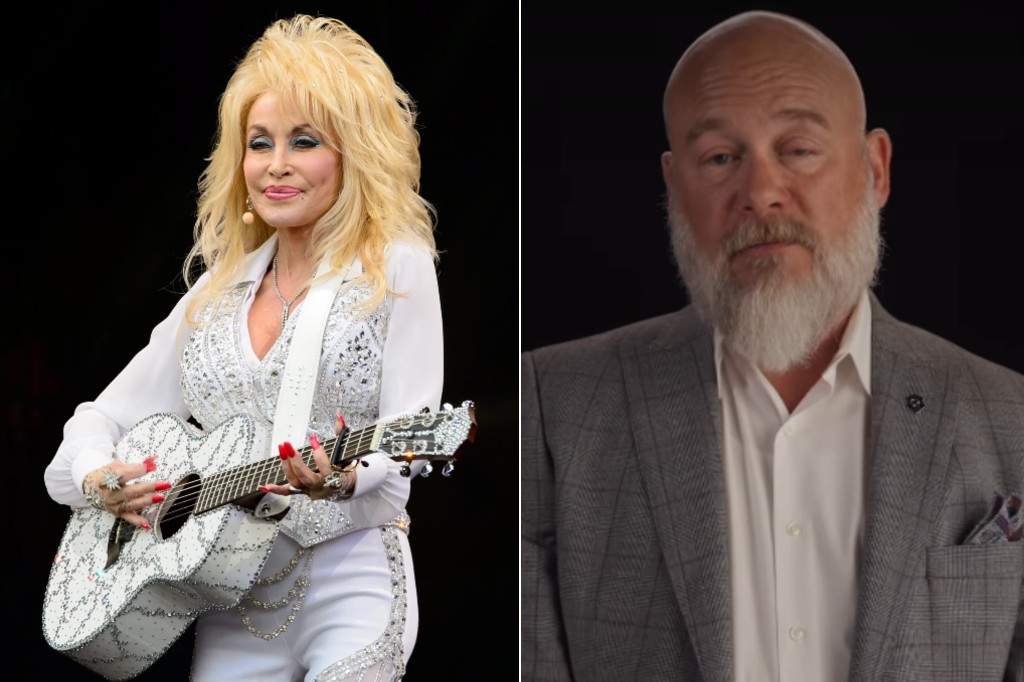
A single dismissive word spoken into a concert microphone in Dallas turns a historical figure into a shorthand cue for crowd alignment. When a mainstream country and pop-adjacent artist labels Christopher Columbus a "loser" on stage, the incident operates less as a historiographical lecture and more as a high-salience signaling event inside live entertainment.
Standard entertainment coverage treats concert banter as isolated gossip or predictable outrage bait. That approach misses the structural mechanics of how unscripted stage remarks travel from an arena floor to algorithmic feeds, how artists price reputational risk across heterogeneous audiences, and why historical figures carry asymmetric symbolic weight in American public memory.
The Architecture of Concert Banter as a Signaling System
Live music venues compress social proof into real time. Inside an arena, audience reaction functions as an immediate feedback loop: applause, laughter, or silence tells the performer whether a remark lands as inside humor, shared values, or jarring friction. Unlike a studio interview or a prepared press release, stage patter carries the presumption of spontaneity, which lowers defenses among sympathetic listeners while heightening scrutiny among critics who watch clips stripped of surrounding context.
A one-word dismissal works through semantic compression. Calling a historical explorer a "loser" strips away centuries of competing narratives—schoolbook mythmaking, maritime navigation, imperial conquest, and Indigenous displacement—and collapses them into a contemporary playground insult. Compression makes a line easy to chant in the moment and effortless to quote in a headline, though it sacrifices analytical precision.
In strategic terms, an artist's on-stage commentary sits at the intersection of three variables:
- Audience composition variance: Live crowds vary by city, ticket tier, tour routing, and festival billing, meaning a joke that plays effortlessly in one market can draw mixed reactions in another.
- Clip portability: Short audio or video snippets detached from a two-hour set lose tonal cues such as pacing, vocal inflection, and preceding banter.
- Identity anchoring: Performers who cultivate a candid, rebellious, or counter-cultural persona pay a lower authenticity penalty for off-the-cuff remarks than performers branded strictly around wholesome neutrality.
The causal chain from stage to screen is straightforward rather than mysterious. A remark occurs during a live set; attendees record fragments on phones; secondary accounts and entertainment outlets isolate the sharpest phrase; and social platforms reward high-emotion framing—either celebratory validation or moral indignation—with wider distribution than neutral reporting.
Historical Memory and Symbolic Asymmetry
Christopher Columbus occupies a uniquely contested slot in American civic symbolism. For generations, October commemorations framed him through celebratory exploration narratives, while Indigenous scholars, historians, and critics emphasized conquest, enslavement, demographic collapse, and the erasure of Native sovereignty. Over recent decades, many municipalities and institutions shifted toward Indigenous Peoples' Day or re-evaluated public monuments, turning Columbus from a consensus icon into a flashpoint.
This shift creates symbolic asymmetry. Defending Columbus rarely mobilizes the same emotional intensity among younger or culturally progressive audiences as criticizing him, whereas dismissing him can alienate listeners who view such remarks as disrespectful to heritage traditions or needlessly political at a music show. Because the underlying historical debate involves deep moral and political disagreements, even a casual dismissal inherits heavy ideological baggage.
Consider a practical example from live entertainment operations. Suppose a touring act makes a pointed remark about a contested historical or political figure during a mid-tour stop. Within hours, two distinct interpretations compete online: fans treat it as a witty nod to modern historical awareness, while detractors frame it as a performer lecturing paying customers or chasing cheap applause. Neither side needs a full historical treatise to argue; the compressed label does the heavy lifting.
A critical distinction separates known facts from educated hypotheses in analyzing such moments:
- Known facts: Public concert reports document that Kacey Musgraves called Christopher Columbus a "loser" during a Dallas performance, and live entertainment clips routinely circulate beyond the venue walls. Without the full primary source text of a competitor article or complete concert footage, exact surrounding lines and crowd proportions remain bounded by available reporting.
- Educated hypotheses: Analysts can infer that such a remark likely reinforces rapport with segments of a modern pop-country audience skeptical of traditionalist mythology while risking friction with tradition-minded attendees who prefer apolitical escapism. That inference is plausible based on audience dynamics, not an established measurement of ticket sales or fan retention.
The Cost Function of Unscripted Remarks
Every public utterance by a commercial artist carries a reputational cost function—a trade-off between short-term emotional resonance and longer-term brand equity. Calling someone a "loser" costs almost nothing in production budget and requires zero preparation, yet its downstream effects depend on how well the line aligns with the artist's established positioning.
When a remark matches an artist's existing identity, the marginal cost is often low and can even strengthen loyalty among core fans who value unfiltered speech. When a remark feels out of character—or when an artist relies heavily on broad, cross-demographic radio appeal—the cost rises because it introduces cognitive dissonance for listeners who treat concerts as neutral territory.
Three operational mechanisms govern how that cost materializes over a tour cycle:
- Attention capture vs. narrative control: A viral clip drives impressions fast, but short quotes invite multiple competing frames that the artist cannot easily police mid-tour.
- Expectation calibration: Audiences who buy tickets for escapist entertainment judge abrupt value statements more harshly than audiences attending explicitly activist or satirical shows.
- Downstream press amplification: Entertainment coverage favors punchy verbs and insults over nuanced commentary, turning a passing line into the primary takeaway from an entire concert.
A second conceptual illustration highlights this trade-off. Picture two performers playing the same amphitheater a week apart. Artist A has built a brand around blunt honesty and cultural friction; a sharp one-liner reads as consistent with the persona. Artist B has built a brand around gentle nostalgia and universal harmony; the same one-liner feels like a sudden tonal break. The words are identical, yet the reputational impact differs because baseline expectations differ.
Why Standard Coverage Misses the Mechanism
Conventional music journalism tends to treat stage remarks through two narrow lenses: celebratory cheerleading ("artist roasts historical figure") or manufactured culture-war alarm ("fans divided over shock remark"). Both lenses flatten cause and effect. Cheerleading ignores why a single word can trigger pushback among segments of a mainstream audience, while alarmism inflates fleeting concert banter into a career-defining crisis when most attendees focus on setlists, sound quality, and production.
A sharper analytical lens looks at signal-to-noise ratio in live entertainment. Arenas generate thousands of sensory inputs—lighting cues, arrangement changes, guest appearances, crowd sing-alongs—most of which never leave the building. A provocative phrase acts as a high-contrast filter: it strips away the surrounding concert experience and leaves behind a single portable artifact for online commentary.
At the same time, analysts must acknowledge the limitations of observational media analysis. Without internal ticketing data, post-show survey responses, or verified streaming shifts tied specifically to a single city's banter, no one can claim with certainty that one remark moved album sales or alienated a specific percentage of listeners. Correlation in social media feeds is not proof of commercial impact. Treating every viral clip as a permanent market shift is a classic analytical error.
Strategic Play for Artists and Entertainment Strategists
For artists, managers, and live-event strategists operating in high-clip environments, the practical play is intentional tonal calibration rather than scripted censorship. Performers do not need to sanitize every thought into corporate talking points—over-rehearsal kills live energy—but they benefit from treating high-salience lines as deliberate brand choices rather than throwaway filler.
Before leaning into historical or cultural shorthand on stage, teams should test three practical questions: Does the phrasing communicate the artist's actual point clearly without relying on a reductive insult? Does it fit the room and the tour's core positioning? And if a five-second clip surfaces tomorrow morning without context, does the line still represent what the artist wants associated with their name? When the answer to those questions is clear, spontaneous stage banter becomes a controlled expression of identity rather than an accidental distraction from the music.