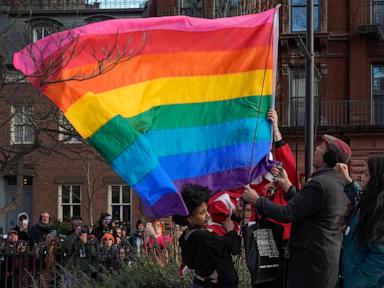
The streets of Manhattan and San Francisco are shutting down today for a reason that goes far deeper than rainbow confetti and corporate-sponsored floats. Today, Sunday, June 28, 2026, marks the climax of Pride Month with the simultaneous kickoff of the NYC Pride March and the San Francisco Pride Parade. If you think these events are just massive street parties, you're missing the point entirely. Millions of people are gathering on opposite coasts not just to celebrate how far queer rights have come, but to vocalize a collective resistance against a rising tide of restrictive legislation targeting trans youth across the country.
People search for these events looking for routes and celebrity grand marshals, but the real story is the palpable tension between corporate celebration and radical political protest. In New York, the march steps off at noon from 26th Street and Fifth Avenue, expected to draw over two million spectators. Meanwhile, San Francisco kicks off its historic run down Market Street at 10:30 a.m. sharp. Both cities are using their massive cultural platforms to send a message that cannot be ignored. Here is exactly what is happening on the ground today, why it matters, and how to navigate the madness if you are attending. You might also find this similar article interesting: Why Everything the Media Tells You About the Iran Conflict Is Wrong.
The Reality Behind the NYC Pride March This Sunday
New York City doesn't call this a parade. They call it a march. That choice is deliberate. It honors the event’s roots as an unpermitted political protest that began in 1970, exactly one year after the Stonewall Uprising. This year, the organizers are operating under the official theme "For All Of Us." It is a direct nod to a legendary quote by activist Marsha P. Johnson who famously noted that there is no pride for some of us without liberation for all of us.
The logistics of moving 75,000 marchers down the spine of Manhattan are staggering. The route begins at 26th Street, tracking south down Fifth Avenue before cutting across 8th Street into Greenwich Village. It passes right by the historic Stonewall Inn on Christopher Street before wrapping up near 15th Street and Seventh Avenue. The skies are a bit cloudy this morning but the afternoon promises clear weather with temperatures hovering around 86 degrees. Thankfully, the humidity is low today, saving millions of spectators from total exhaustion. As discussed in detailed coverage by BBC News, the effects are notable.
This year's grand marshals bring serious cultural weight to the front lines. You have actor and comedian Bowen Yang from Saturday Night Live, alongside Pose star Dominique Jackson and Drag Race icon Peppermint. Joining them is Bernie Wagenblast, the familiar voice behind the New York City subway system announcements, and the activist group Gays Against Guns. This lineup isn't just about star power. It represents a cross-section of media representation, historic trans advocacy, and aggressive political action against gun violence.
If you are planning to watch the NYC march, avoid the starting area or the immediate vicinity of the Stonewall Inn unless you enjoy being crushed by a wall of humanity. A veteran insider trick is to stake out a spot on Fifth Avenue between 18th and 14th Streets. It is easily accessible by multiple subway lines and offers slightly more breathing room while still giving you a perfect view of the 700 distinct groups and floats making their way down the avenue.
Parallel to the march, PrideFest is taking over Fourth Avenue from 14th Street down to Astor Place. This massive street festival runs from 11:00 a.m. to 6:00 p.m. and features hundreds of local vendors, community resource tents, and live performances. It is completely free, meaning you don't need to shell out cash to participate in the core of the city's queer culture.
Why the San Francisco Pride Parade Cuts Through the Noise
On the west coast, San Francisco Pride remains one of the few massive cultural celebrations in the world that refuses to charge an entry fee. It is a point of pride for the city that gave the world Harvey Milk. The parade steps off at 10:30 a.m. from Market and Beale Streets, charting a direct course down Market Street for about four hours before concluding near 8th Street at Civic Center Plaza.
The energy in San Francisco hits differently because of how the community takes physical ownership of the city streets. Leading the charge, as always, are the Dykes on Bikes, a roaring contingent of hundreds of motorcycle riders whose engines signal the official start of the parade. This year, the grand marshals leading the pack are drag legend Peaches Christ and political powerhouse Honey Mahogany.
The Civic Center Plaza has been converted into a massive community space running from 11:00 a.m. to 6:00 p.m. featuring more than twenty independent stages. These aren't just commercial music stages. They are curated cultural spaces like the Faerie Freedom Village, which showcases avant-garde cabaret, and Leather Alley, an educational space dedicated to BDSM history and culture. There is even a Country-Western Dance Corral for same-sex two-stepping.
Getting into the city for this event via car is a nightmare you want to avoid. The San Francisco Municipal Transportation Agency has shut down major arteries including Polk, Larkin, and Hyde streets. Your best bet is utilizing the Market Street Subway. If you are marching, use the Embarcadero station. If you are just spectating, get off at Montgomery, Powell, or Civic Center stations to drop right into the action.
The Modern Friction of Corporate Floats and True Liberation
Let's be honest about the elephant in the room. Major corporate sponsors fund a significant portion of these events. Walking down Fifth Avenue or Market Street means seeing tech giants, multinational banks, and massive retail chains sporting rainbow logos. For many attendees, this corporate presence feels hypocritical, especially when some of those same corporations donate to politicians who vote against LGBTQ+ rights during the rest of the year.
This tension is why activists continue to push back against the commercialization of Pride. On Saturday, New York held its Youth Pride events at the South Street Seaport, which included a fierce trans youth rally. Organizers explicitly noted that trans youth have become political targets across the nation, making it essential to show up for them outside of commercialized spaces. The real work of Pride happens in these community-led rallies and mutual aid funds, not inside a corporate VIP tent.
The history of these marches reminds us that visibility was once a dangerous act. In 1972, the Twin Peaks Tavern opened in San Francisco's Castro district. It became the first gay bar in the country to feature giant, floor-to-ceiling glass windows. Before that, gay bars were hidden behind unmarked doors and blacked-out windows to protect patrons from police raids and public shame. Standing in the bright afternoon sun on a major city street today is a direct continuation of that refusal to hide.
Local Logistics and Survival Tips for Spectators
If you are out on the streets today, you need a survival strategy. These crowds are massive, cell service will likely fail due to network congestion, and public transit will be delayed.
First, download your route maps and transit schedules directly to your phone before you leave the house. Do not rely on live data connections when you are surrounded by a million people.
Second, map out your hydration stops. While vendors are everywhere, lines are long and prices are inflated. Pack your own water container and high-protein snacks.
Third, secure your valuables. Pickpockets target large, distracted crowds at major festivals. Keep your phone and wallet in your front pockets or a secure crossbody bag.
For New Yorkers dealing with transit, remember that the NYPD is enforcing strict pedestrian crossings along the march route. You cannot simply cross Fifth Avenue whenever you want. Major crossing points like 23rd Street are managed by police and open only periodically when there is a gap in the march. Plan your travel time to account for these rolling delays.
In San Francisco, Muni buses are completely rerouted around Market Street, shifting their paths down to Mission Street. If you usually take a surface bus, check the temporary terminal locations at Davis and California streets. Relying on the underground BART and Muni metro lines will save you hours of sitting in gridlock traffic.
Both events conclude their official programming around 6:00 p.m., but the neighborhoods surrounding the routes will remain packed long into the night. In New York, the crowd naturally flows into the historic bars of Greenwich Village and Chelsea. In San Francisco, the party migrates directly to the Castro and SoMa districts, where local venues are hosting block parties and independent fundraisers.
Support the local queer-owned businesses, bars, and community bookstores that anchor these neighborhoods every single day of the year, not just during this single weekend. The true impact of today's gathering is measured by how that energy is sustained when the barriers come down and the streets reopen tomorrow morning.