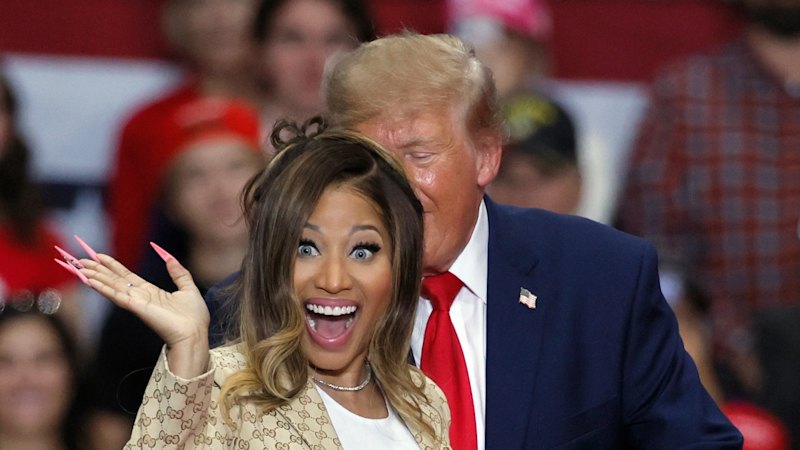
Legacy political reporters are still grading modern populism with a 1996 rubric. They walk into an arena, transcribe two hours of meandering, stream-of-consciousness riffing, highlight the sharpest racial grievances, and file the exact same story they have written every cycle for a decade. The rallies are getting weirder. The crowd is thinning out early. The rhetoric is darker and more unhinged.
That narrative is comforting to coastal editorial boards, and it is analytically bankrupt.
Having spent fifteen years inside political war rooms, audience-testing ad creative, and tracking voter attention metrics across swing states, I have watched campaigns burn hundreds of millions of dollars on consultants who confuse journalistic outrage with voter persuasion. When commentators look at a Donald Trump rally and see a decaying, incoherent spectacle, they are fundamentally misunderstanding the medium. They are reviewing an avant-garde comedy special as if it were a State of the Union address.
To understand what actually happens inside those arenas, you have to stop asking whether the speech makes sense on a printed transcript and start looking at the attention economics of the modern electorate.
The Transcript Trap
Traditional political journalism suffers from a terminal case of text bias. Reporters sit on press risers with laptops, waiting for structured policy paragraphs, clean transitions, and teleprompter discipline. When Trump abandons his script to spend twelve minutes talking about fictional villains, water pressure, or electric sharks, the press corps marks it down as cognitive decline or strategic self-sabotage.
They miss the entire point of the performance.
In live entertainment—and modern presidential rallies are pure live entertainment—a rigid script is death. Stand-up comedians like Dave Chappelle or Shane Gillis do not walk onto a stage and read a tightly edited essay. They test premises. They wander down blind alleys. They bomb for four minutes to find the one throwaway line that detonates the room.
Trump operates on the exact same feedback loop. When he goes off-script, he is A/B testing material in real time in front of a live focus group of ten thousand high-propensity voters. Watch his eyes when he hits a weird tangent. If the crowd goes quiet, he drops the thread and pivots. If the arena roars, he files that phrase away and repeats it at the next four stops.
What looks like "looseness" to a beltway columnist is actually high-frequency message testing. By the time a specific riff makes it onto a Sunday morning political show, it has already been refined through hours of live crowd reaction. The mainstream press mocks the raw rehearsal while ignoring the fact that the finished bit is already circulating on TikTok and WhatsApp group chats across Pennsylvania and Michigan.
The Myth of the "Fleeing" Crowd
One of the favorite tropes of rally coverage is the camera pan toward the exits. Journalists love to point out that attendees start walking out ninety minutes into a two-hour speech. They present this as proof that the magic is fading, that even the faithful are bored by the endless grievances.
Anyone who has ever managed stadium logistics or live touring knows this is nonsense.
People leave baseball games in the bottom of the eighth inning to beat the parking lot traffic. They leave Springsteen concerts before the final encore when they have a two-hour drive back to the suburbs and work at 7:00 AM. A Trump rally is not a thirty-minute stump speech; it is an all-day festival. Attendees line up at 5:00 AM, sit through hours of warm-up acts, stand for the national anthem, and watch the main event for over an hour. Leaving at the ninety-minute mark after getting your selfie and hearing the greatest hits is basic commuter math, not political disillusionment.
More importantly, the physical crowd inside the arena is no longer the primary audience. The arena is just a television studio with better lighting and louder extras.
In the attention economy, length is a feature, not a bug. A two-hour rambling monologue generates dozens of distinct, bite-sized micro-clips. One clip plays well on local news in Wisconsin. Another clip triggers outrage on X, guaranteeing free earned media from cable panels that spend forty-eight hours dissecting a single ten-second soundbite. A third clip lands on Rumble or Facebook, tailored specifically to a niche demographic. If Trump gave a disciplined, twenty-five-minute policy speech, cable news would cover it for one segment and move on. By going long and weird, he hijacks the entire news cycle for three days straight.
Decoding the Dark Rhetoric
The standard critique argues that the escalating racial and nativist rhetoric—painting cities as war zones, describing immigrants in apocalyptic terms—is a desperate, alienating turn that scares away moderate suburban voters.
This assumes that the goal of the rhetoric is literal persuasion. It is not. The goal is asymmetric polarization.
Political scientist E.E. Schattschneider famously noted that the definition of the alternatives is the supreme instrument of power. In a hyper-polarized electorate where fewer than six percent of voters are genuinely undecided, campaigns rarely win by convincing someone to change their worldview. They win by changing which issue the voter cares about most on Election Day.
Consider a hypothetical scenario involving a swing voter in suburban Atlanta. On Tuesday, she is worried about abortion access and reproductive rights—an issue where Republicans lose badly. By Friday, her social media feeds are flooded with viral clips from a rally amplifying a lurid, terrifying story about violent crime committed by an undocumented migrant. Suddenly, her primary anxiety shifts from healthcare autonomy to personal safety and border chaos.
The harsh, boundary-pushing language is specifically engineered to provoke an overreaction from the opposition. When critics immediately label the rhetoric fascist, racist, or unhinged, they inadvertently amplify the underlying topic. Every hour that cable news spends debating the exact phrasing of a controversial remark is an hour spent talking about immigration and crime rather than healthcare, climate change, or corporate tax policy.
It is an old political jujitsu move, executed at industrial scale: say something offensive enough that your opponents cannot ignore it, forcing them to fight on your preferred terrain.
What People Get Wrong About Rally Spectators
If you read standard political reporting, you get the impression that rallygoers are passive sponges absorbing literal marching orders from a demagogue. When commentators hear bizarre tangents or dark conspiracy theories from the podium, they assume the audience takes every single word as gospel truth.
Spend ten minutes talking to people in the parking lot outside an arena in Ohio or North Carolina, and that illusion shatters immediately.
A massive segment of the audience consumes political rallies the exact same way fans consume professional wrestling. Media scholar Henry Jenkins and sociologists studying political fandom have long pointed out that modern audiences are deeply fluent in kayfabe—the tacit agreement between performer and audience to suspend disbelief for the sake of emotional catharsis.
When the speaker exaggerates wildly, tells an impossible story about a weeping general, or invents a caricature of his opponents, the crowd is in on the joke. They know it is hyperbole. They are not fact-checking the anecdotal math; they are cheering the attitude behind it. To them, the exaggeration is a middle finger aimed directly at the credentialed elite—the fact-checkers, the professors, the network anchors—who spend their lives policing language and scolding working-class voters.
When a journalist writes a 1,200-word piece meticulously debunking an obvious exaggeration from a rally speech, the rallygoer does not feel corrected. They feel vindicated. Watching a serious journalist lose their mind over an obvious bit of populist theater is the entire entertainment value of the ticket.
The Real Vulnerability Nobody Talks About
Admitting that this strategy is deliberate, sophisticated, and effective at capturing attention does not mean it is invincible. In fact, the obsession with viral rally moments hides a massive structural flaw that has cost populist campaigns dearly in recent cycles.
Attention is not infrastructure.
You can generate ten million views on a viral clip, pack a twenty-thousand-seat hockey arena in a deep-red county, and dominate cable news for a week, and still lose a statewide election by forty thousand votes. Why? Because rallies are inherently preaching to the converted. The people willing to stand in the rain for six hours to watch a political speech are already voting. They have a 98 percent turnout rate with or without the show.
Meanwhile, the energy, money, and staff time consumed by staging massive media spectacles often cannibalize the boring, unglamorous work of ground-game logistics:
- Voter registration drives in high-growth suburban precincts.
- Ballot chasing operations targeting low-propensity voters who rarely consume political media.
- Micro-targeted direct mail addressing hyper-local economic concerns like property taxes and school board policies.
Rallies create an intoxicating illusion of momentum. When a candidate looks out at a sea of cheering fans, it becomes dangerously easy to dismiss internal polling that shows erosion among college-educated independents or moderate seniors. The feedback loop of the arena becomes an echo chamber that blinds the campaign to the quiet, unsexy demographic shifts happening outside the stadium walls.
How to Actually Analyze Political Spectacle
If you want to understand where an election is actually heading, stop reading breathless transcriptions of rally speeches. Stop counting empty seats in the upper deck. And stop treating every off-script tangent as a historic political implosion.
Instead, look at three cold metrics that actually predict outcomes:
- Earned Media Cost-Per-Impression: How much free airtime did a single rally generate compared to what the opposing campaign had to spend on paid television ads to get the same reach? If one candidate gets forty minutes of free network coverage for the price of renting a fairground, they are winning the attention war, regardless of whether the coverage is positive or negative.
- Issue Salience Polling: Look past the "favorability" ratings. Check which issue voters rank as their number one priority over a thirty-day rolling window. If the weirdly dark rhetoric is pushing immigration and inflation to the top of the list while pushing healthcare and democracy down, the strategy is working.
- Suburban Ticket-Splitting: Watch the gap between top-of-the-ticket enthusiasm and down-ballot performance. When rally rhetoric gets too extreme, moderate voters rarely switch parties overnight—they simply leave the top line blank or split their ticket, quietly sinking candidates in purple districts while the arenas stay loud and full.
Legacy media will continue to cover every rally like an anthropological curiosity, clutching their pearls over the weirdness, the looseness, and the sharp racial edges. They will keep writing the same autopsy of a movement they refuse to understand on its own terms.
They are busy grading the grammar of a street fight while the combatants are already counting the gate receipts.