Reconstructing a nation state following extensive military conflict is fundamentally an exercise in macroeconomic triage, capital allocation, and fiscal capacity assessment. When the Lebanese government declared its operational inability to finance the reconstruction of zones devastated by hostilities with Israel, it did not
The Structural Insolvency of Post Conflict Reconstruction in Lebanon
news, business
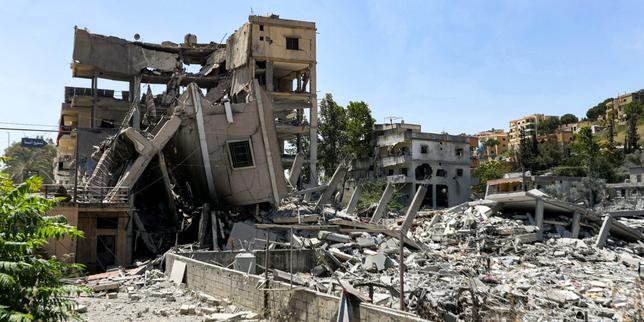
Lebanon faces a structural solvency crisis regarding the physical rehabilitation of territories impacted by hostilities with Israel. While political discourse often reduces this challenge to a lack of political will or temporary liquidity shortages, the reality is rooted in a fundamental macroeconomic impasse. Sovereign insolvency, compromised public balance sheets, a fractured banking sector, and the systematic absence of foreign direct investment create a compound failure mode. This analysis deconstructs the mechanics of this reconstruction failure, mapping the financial, institutional, and systemic variables that prevent capital formation in war-torn zones.
The Macroeconomic Mechanics of Sovereign Insolvency
The inability to finance structural recovery stems from a collapsed fiscal architecture. Lebanon's sovereign debt-to-GDP ratio exceeded two hundred percent prior to the intensification of hostilities, driven by decades of structural deficits and an unsustainable monetary model managed by the central bank. When physical infrastructure faces systemic destruction, the state requires three primary fiscal levers to fund reconstruction: domestic tax revenues, sovereign borrowing, and international grants or concessional loans.
Each of these levers is currently non-operational. Domestic tax generation has contracted sharply due to economic stagnation, widespread business closures, and the informalization of commerce. Sovereign borrowing is impossible because international capital markets view Lebanese sovereign debt as deeply distressed, resulting in a zero-percent credit rating and a complete exclusion from foreign bond issuance. Concessional multilateral financing from institutions like the World Bank or the International Monetary Fund remains stalled, conditional upon prior structural reforms that successive political administrations have failed to execute.
Without domestic revenue generation or debt issuance capacity, the state operates under a hard budget constraint. Public expenditures are functionally limited to recurring administrative costs, primarily public sector salaries, leaving zero fiscal space for capital expenditure on infrastructure.
The Banking Sector Impasse and Capital Lockup
In a functioning economy, private capital markets channel domestic savings into fixed asset formation through commercial banks. In Lebanon, the financial sector is technically insolvent. Following the systemic financial collapse that began, bank balance sheets were impaired by massive holdings of sovereign debt and loans to the central bank that cannot be serviced.
This financial architecture creates a liquidity trap for reconstruction. Depositors cannot access their foreign currency savings freely, and commercial banks lack the liquidity required to issue new credit for real estate or infrastructure development. Private sector capital—traditionally a major driver of post-war rebuilding through remittances and diaspora investments—faces severe friction. Diaspora capital inflows continue, but they are increasingly channeled into immediate consumption and subsistence support for families rather than long-term capital investments, because property rights enforcement is weak and title deeds in contested zones are often legally ambiguous or physically destroyed.
Institutional Fragmentation and Donor Fatigue
Capital allocation requires institutional transparency, legal predictability, and execution capacity. Lebanon's governance structure features deep institutional fragmentation, where jurisdictional overlaps and political gridlock prevent the formation of an empowered, centralized reconstruction agency. International donors, particularly Gulf states and Western nations, have shifted their foreign assistance frameworks. Rather than providing direct budgetary support to central government entities—which historically suffered from governance vulnerabilities—aid is channeled exclusively through non-governmental organizations and specialized United Nations agencies.
This delivery mechanism introduces severe inefficiencies. While humanitarian aid and emergency patching of water and electrical networks can be managed through decentralized NGO networks, macro-level infrastructure reconstruction requires centralized engineering procurement, long-term supply chain management, and regulatory coordination. Decentralized aid prevents the scaling necessary to rebuild entire urban sectors, transport corridors, and energy grids. Furthermore, traditional donor nations experience donor fatigue, conditioned by the lack of structural reforms in governance, electricity sector reform, and judicial independence.
The Opportunity Cost of Unresolved Regional Friction
The calculation of reconstruction costs cannot be isolated from ongoing security risks. Private capital is acutely sensitive to political risk premiums. Investors demand a high internal rate of return to compensate for the probability of renewed military escalation. When a ceasefire remains fragile and deterrence frameworks are unstable, the net present value of any long-term infrastructure investment drops below zero.
Consequently, capital flees rather than enters. Contractors and engineering firms demand upfront cash payments in hard currency before mobilizing equipment, terms that neither local municipalities nor the central government can satisfy. This risk premium acts as a permanent tax on physical recovery, ensuring that even if micro-loans or small grants become available, the scale of destruction outpaces the velocity of capital deployment.
Strategic Capital Allocation Under Insolvency
Given that the central state lacks the balance sheet capacity to finance reconstruction, recovery models must bypass traditional sovereign debt channels entirely. The financial burden shifts inevitably toward decentralized micro-recovery, localized public-private partnerships backed by ring-fenced escrow accounts, and conditional international trust funds managed directly by multilateral auditors. Municipalities and regional actors must transition from reliance on national treasury allocations to direct bilateral partnerships with international developmental entities, utilizing transparent digital procurement ledgers to rebuild critical lifelines without routing funds through impaired national institutions.